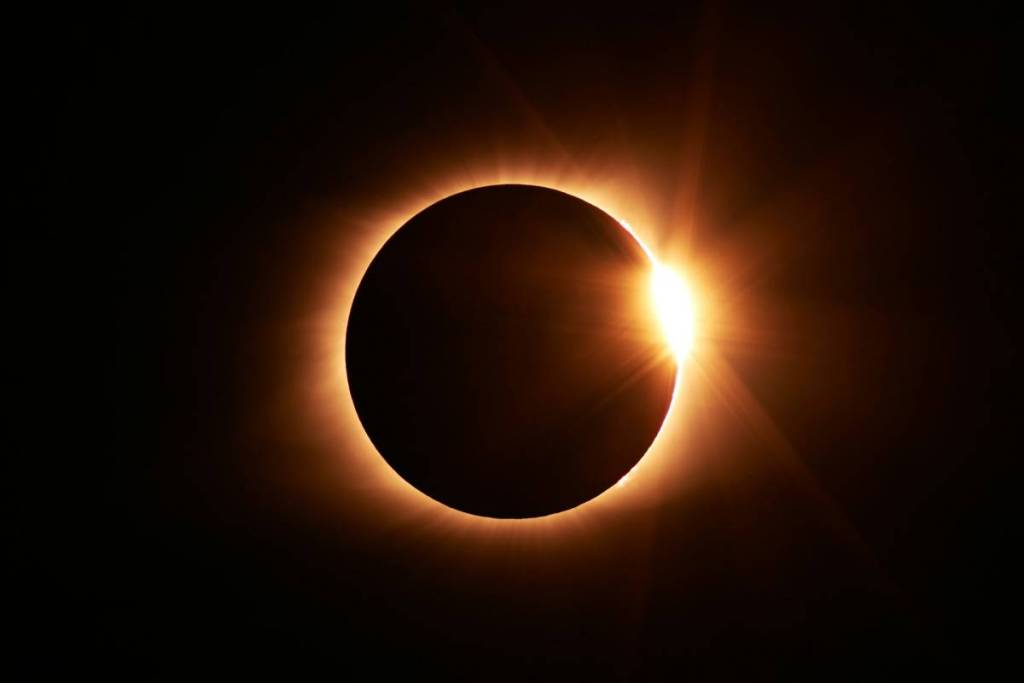

As if Munich’s August weren’t already packed with numerous cultural highlights, there’s also a rare natural spectacle to witness. After experiencing a total lunar eclipse—a “blood moon”— just last year, a partial solar eclipse awaits us in a few days. With approximately 89% coverage in Munich, this brings us closer to a total solar eclipse than we’ve been in a long time. We’ll tell you everything you need to know—exactly when it starts, and where and how you can safely observe the eclipse.
How does a solar eclipse occur?
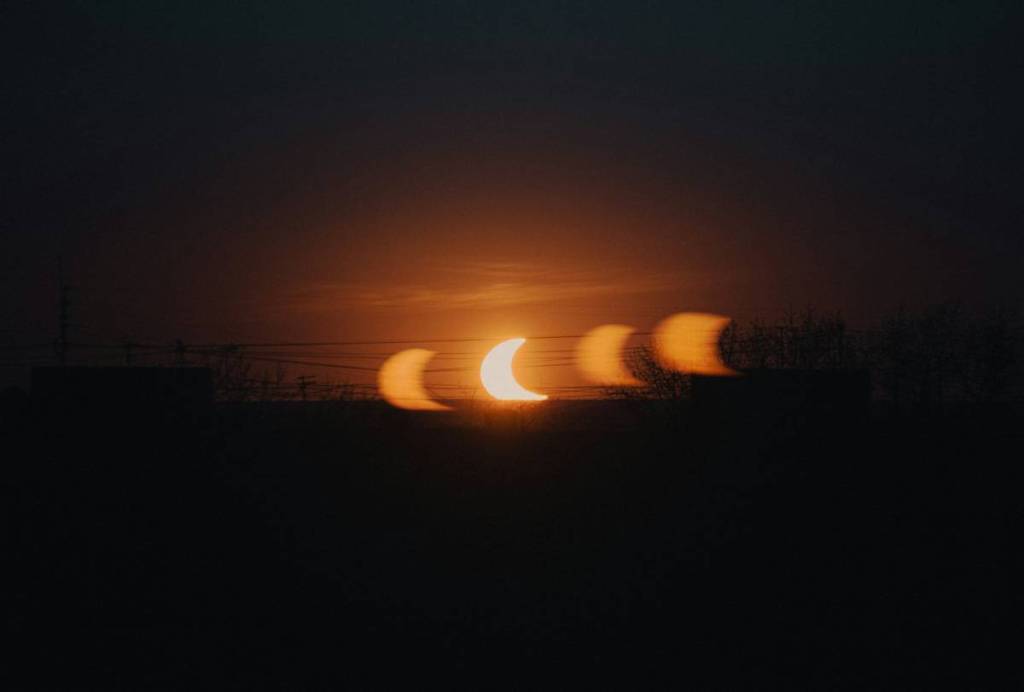
During an eclipse, the Sun enters the Moon’s umbra, so that the Sun, Moon, and Earth are aligned. As this happens, the new Moon casts its shadow onto the Earth, and the Sun is eclipsed . Only a few areas on Earth will see a total solar eclipse, but many more regions will fall within the penumbra. The last total solar eclipse visible in Germany occurred in 1999. During this year’s eclipse, Spain, Iceland, and Greenland will be the main areas to experience the total eclipse. Here in Munich, on the other hand, we’ll be in the penumbra, though with 89% coverage, a noticeable darkening will still be visible.
In Munich, you can observe the partial solar eclipse on Wednesday, August 12, starting at 7:23 p.m. That’s when the moon’s shadow first touches the sun’s disk. The sun will then continue to darken until it reaches its peak around 8:15 p.m. By then, it will already be low on the horizon. A quarter of an hour later , the sun will set, and shortly after 9:00 p.m., it will have completely emerged from the new moon’s shadow. And as if one astronomical highlight in a single day weren’t enough, the Perseids will reach their peak during the night of August 12–13 . So if you have a big wish right now, it’s worth taking a look up at the night sky.
Here’s how to observe the partial solar eclipse in Munich
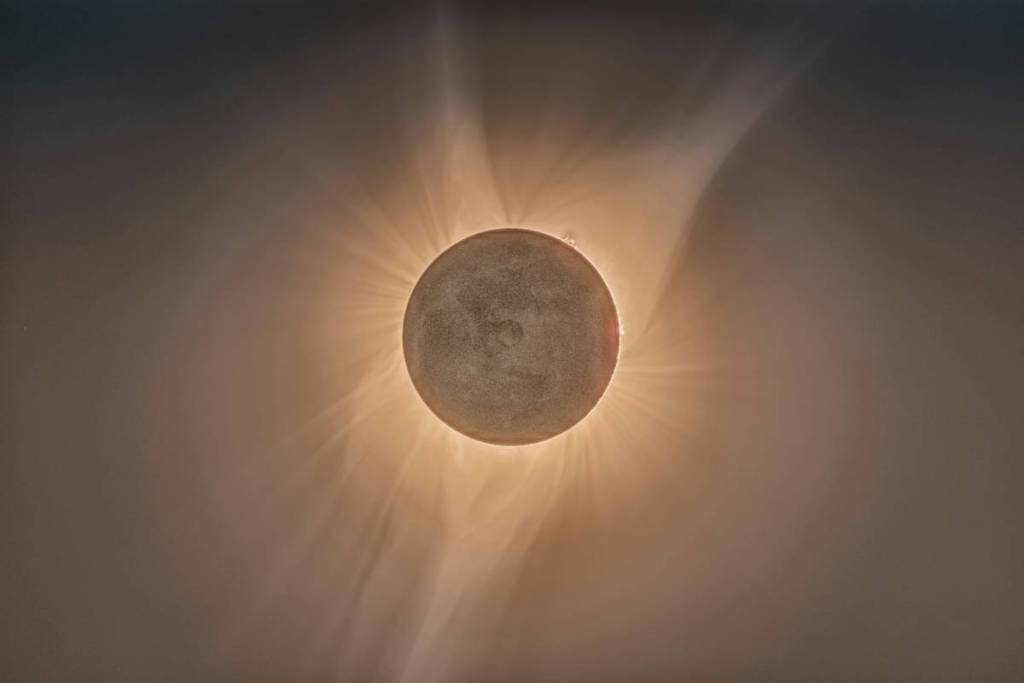
If you want to witness the partial solar eclipse, two things are important. First, you should have an unobstructed view toward the west so you can see the horizon. Good spots for this include, for example, the Olympiaberg, the Fröttmaninger Berg, or rooftop terraces like the Kulturdachgarten. There shouldn’t be any tall buildings or other obstacles blocking your view. And second, under no circumstances should you look directly at the sun without protection. To prevent damage to your eyes, you’ll need special glasses, as regular sunglasses don’t provide enough protection. You can get these glasses, for example, at the Munich Public Observatory for €6. Another way to safely observe the partial solar eclipse is with a camera obscura. You can find instructions online on how to build one.
In addition, the Munich Public Observatory is hosting a special event to mark the eclipse. It kicks off at 6 p.m. at Absolutely Upside East in the Werksviertel. Learn more about the Sun and the Moon and enjoy refreshing drinks accompanied by live music. Your ticket includes a pair of solar eclipse glasses, so you don’t have to worry about your eyes. There will also be a few solar telescopes available for you to take a look through. If the weather doesn’t cooperate and the sky is too overcast, there will be a live stream of the total solar eclipse from Greenland instead.
📍 Location: Absolutely Upside East, Gisela-Stein-Str. 20
📅 Date: Wednesday, August 12, starting at 6 p.m.
💶 Pricing information: €20 (reduced), €30 (regular)