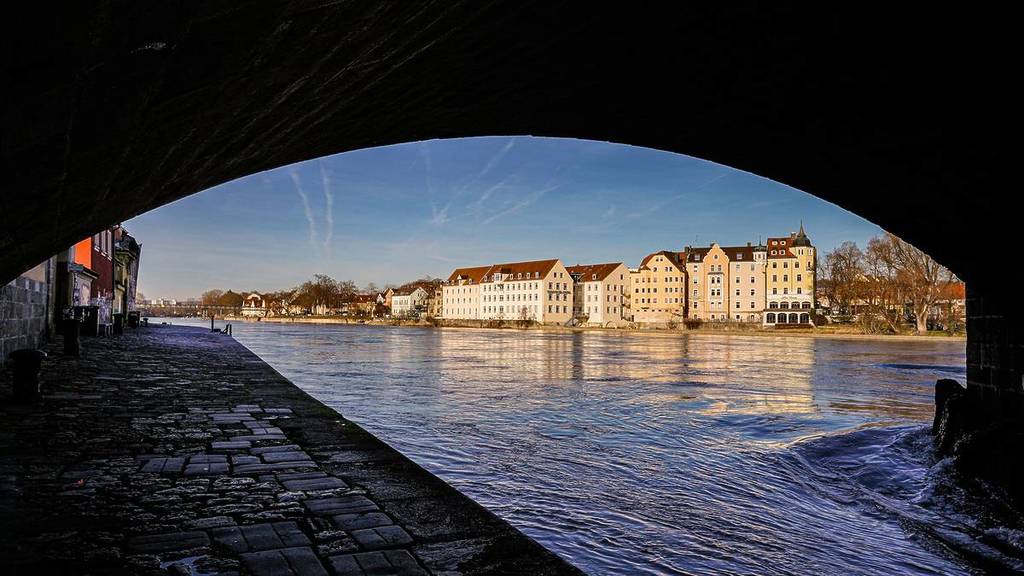
The tour operator Tourlane has selected the most beautiful old towns by continent and the European ranking also includes a Bavarian town. It is ranked third in Europe and is the only German city in the top 20. You can reach it in just 90 minutes by train from Munich and spend a nice day trip here.
A city with history
Today’s major city has Roman roots dating back to 175 AD. At that time, the settlement was surrounded on three sides by large city walls and situated on the Vitusbach stream. However, the area was already inhabited long before that, with traces dating back to 5000 BC. The first documentary reference was made in 179 AD and is therefore considered the official foundation of the town.
The city flourished in the High Middle Ages and had important trade connections to Venice, Paris and Kiev. With 40,000 inhabitants, it was one of the largest cities in the empire, and in 1050 it was even the largest, ahead of Rome and Cologne. In the 13th century, the city was granted far-reaching privileges, including the right to appoint a mayor and a council, and was elevated to the status of an imperial city.
During the Second World War, the city was the victim of air raids by the Royal Air Force and the US Army. However, the historic core survived the attacks largely unscathed. The city continued to grow over the centuries and after the end of the Second World War, its population passed the 100,000 mark, making it officially a major city. In the 1970s and early 1980s there were a number of incorporations, which is why the population continued to grow. Today, the city is the fourth largest in Bavaria.
Special features of the location
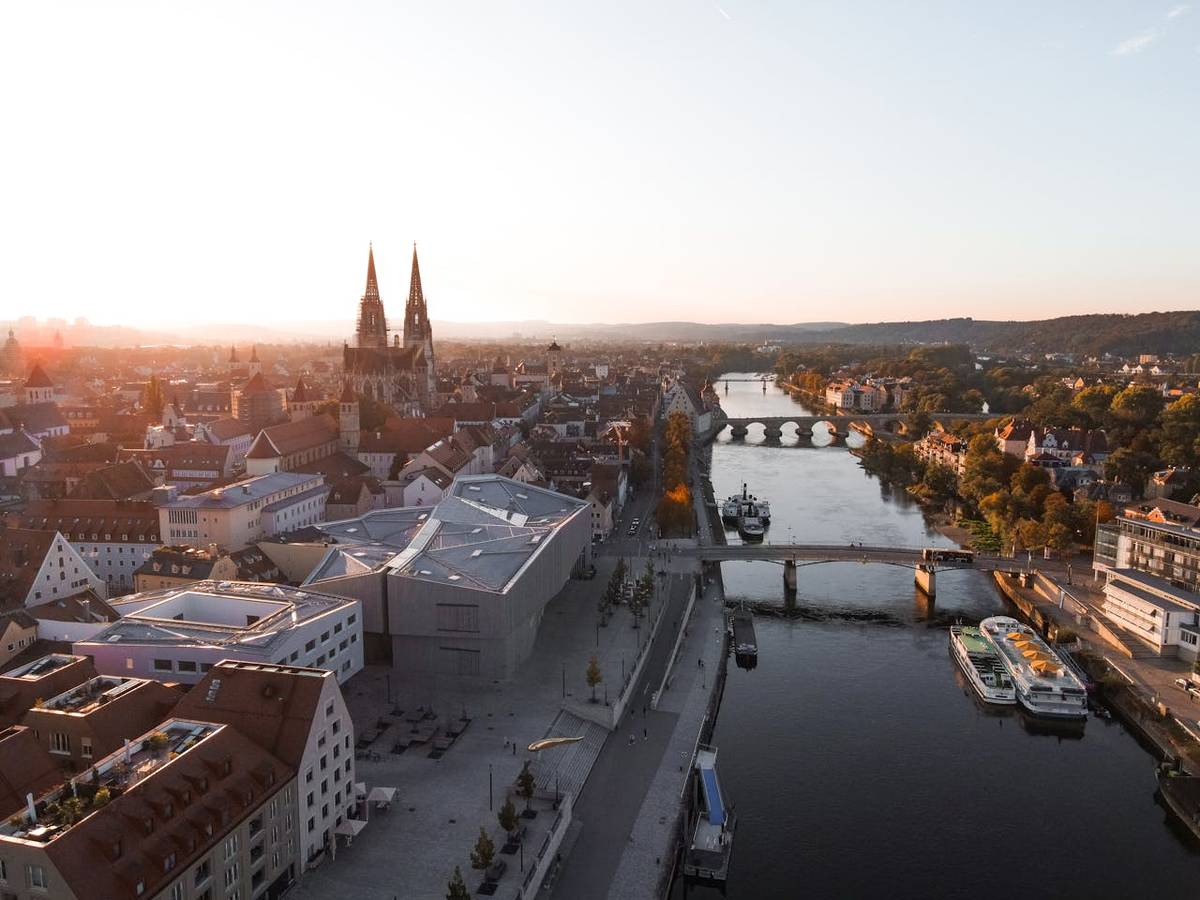
Located on the Danube, the city combines the Franconian Jura, the Bavarian Forest, the Danube Plain or the Lower Bavarian Loess Plain and the Lower Bavarian Tertiary Hills in its area. These transitions result in a gateway location, which is noticeable in the city area and makes expansion to the north and west more difficult due to natural boundaries.
The Bavarian Iron Road, on which metals and semi-finished products were brought into the city, ends in Regensburg. There are many cultural and industrial monuments along the road. Another special feature is the northern district of Stadtamhof, which was incorporated in 1924 and forms a kind of island. It is only connected to the old town by the Stone Bridge and has been a UNESCO World Heritage Site together with the old town since 2006.
Visit Regensburg
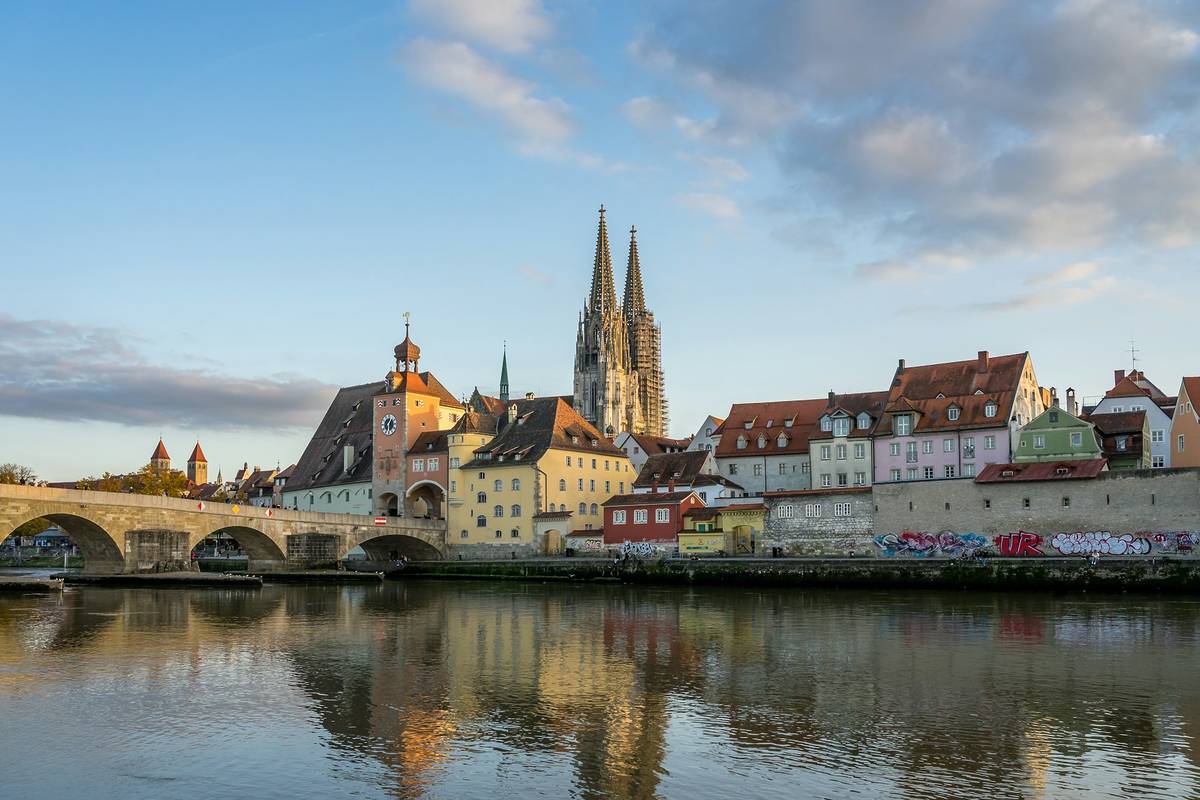
Regensburg is perfect for a day trip from Munich. You can reach the city by train in around one and a half hours. In the numerous parks, you can stroll through beautiful green spaces and unwind. Combine your visit to the palace park with a detour to St. Emmeran Palace, the former residence of the Thurn und Taxis. You can also take a wonderful stroll along the Danube and visit the two islands of Untere and Obere Wöhrd and the island park. The Danube is also crossed by various bridges that are among Regensburg’s sights, such as the aforementioned Stone Bridge and the Iron Bridge.
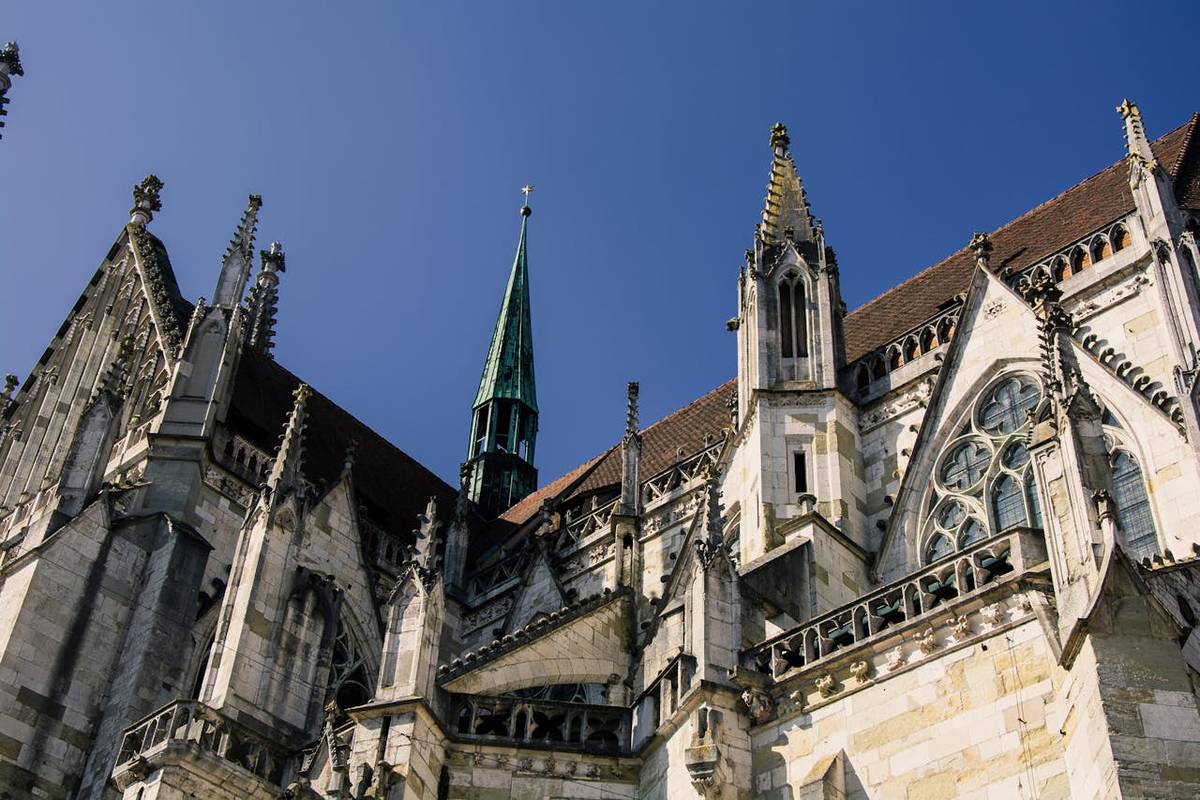
The absolute highlight, however, is of course the historic Old Town, with its narrow alleyways, Gothic and Romanesque buildings and cobblestones. St. Peter’s Cathedral with its two towers dominates the cityscape, so be sure to stop by. Not far from the cathedral is the Neupfarrkirche church, on whose forecourt the Christmas market takes place during Advent. The old town hall and Haidplatz square with the Golden Cross are also not to be missed. If you want to marvel at the remains of the Roman settlement from 179, you can do so at the Porta praetoria.
Regensburg also has a number of museums that are well worth a visit. First and foremost, of course, is the Dachshund Museum, which you should not miss if you are a dog lover. But the Clock Museum, the Reichstag Museum and the Upper Bavarian Natural History Museum are also worth a detour. If you have more time, you can also drive out of Regensburg and visit the Walhalla Hall of Fame and enjoy the view of the Danube.