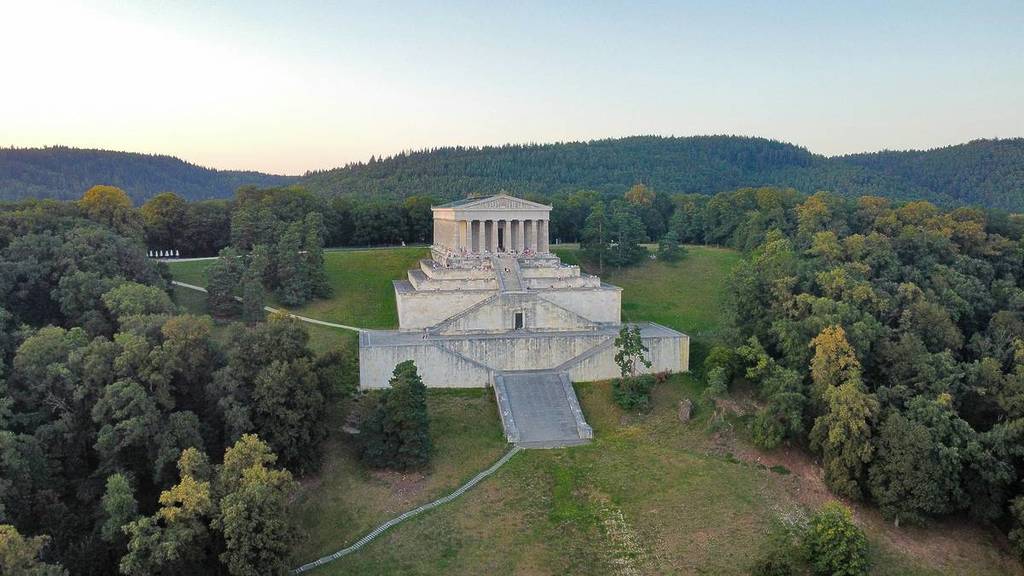
The name suggests Norse mythology, the appearance is reminiscent of Greek antiquity. However, this memorial was actually commissioned by Ludiwg I of Bavaria and is located on the Danube near Regensburg. Emperors, kings, researchers and artists were honored at this memorial. The only criterion: “to be of German tongue”.
The lengthy construction of the Hall of Fame
Ludwig I wanted to start building the hall as early as 1807. However, the planning was delayed so that the first busts were finished long before the foundation stone for the temple had even been laid. The English Garden in Munich was initially considered as the construction site, but it was ultimately decided to build the temple outside the city.
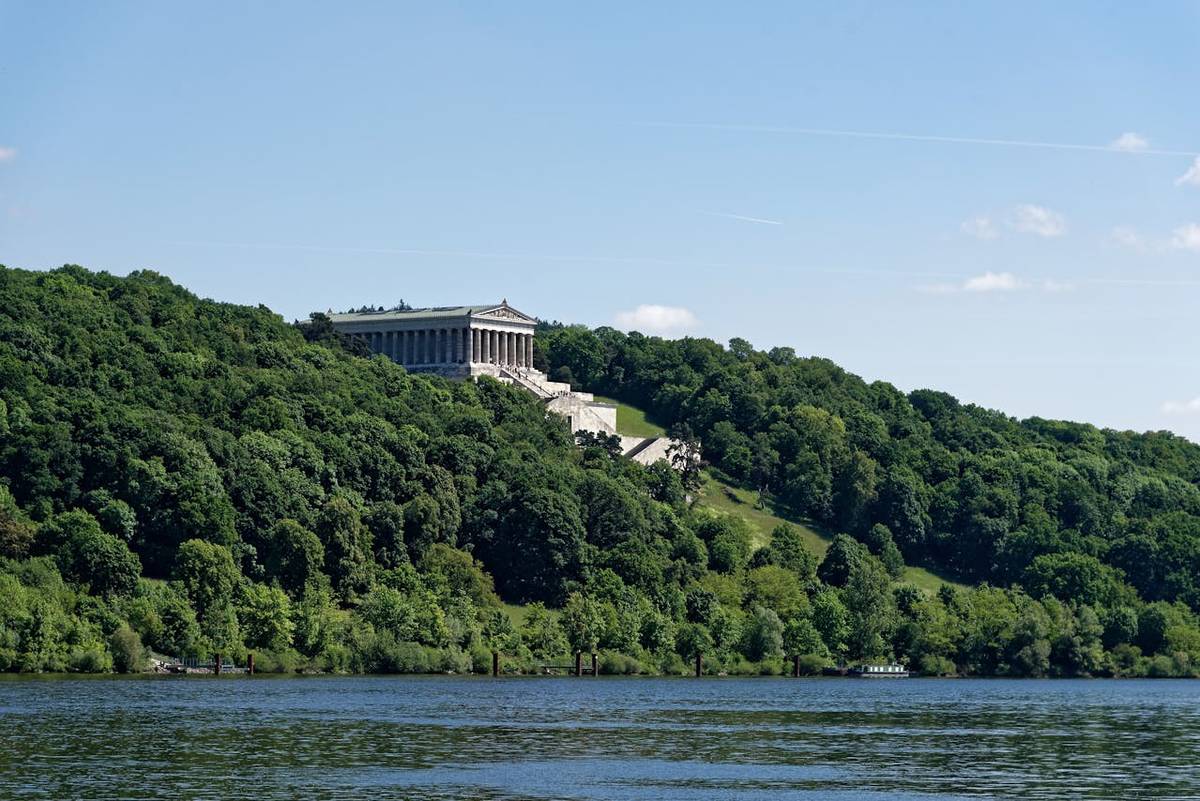
Together with the architect Leo von Klenze, the Bräuberg in Donaustauf above the Danube valley was finally chosen in 1825. The foundation stone was finally laid five years later. Klenze finally completed the memorial site in 1842: Walhalla was opened. It was named after the Valhalla of Norse mythology, the resting place for fallen warriors. At a cost of 4 million guilders, it was Ludwig’s most expensive project. Over 200 German-speaking men and women are immortalized in the Walhalla.
The Valhalla from the outside

The entire building measures 125 meters long and 55 meters high. The memorial was clearly inspired by ancient Greek temples, as can be seen from the Doric order of columns, among other things. The Partheon in Athens was the model for Valhalla. It is also a peripteros, a so-called ring-hall temple. The gable relief was created by the Bavarian sculptor Ludwig Michael Schwanthaler. Both the hall itself and the exterior are clad in marble.
The interior architecture of the Walhalla
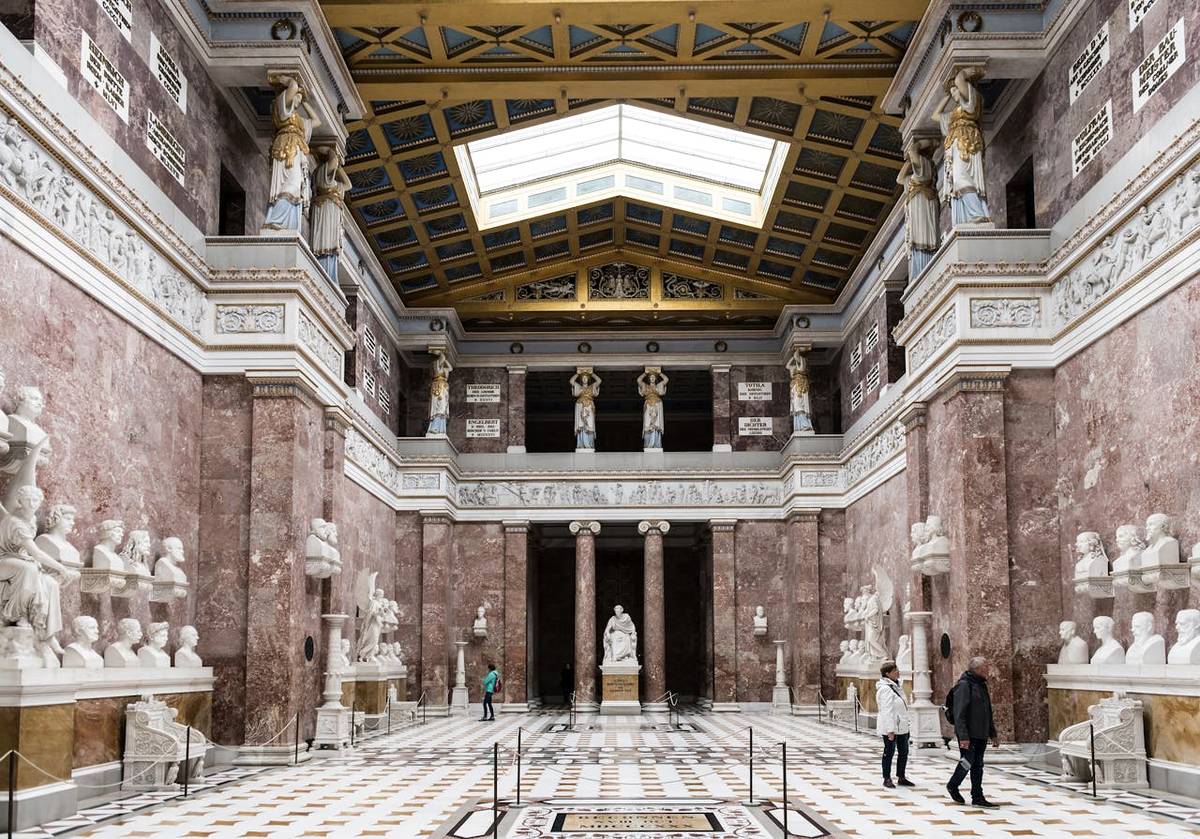
Inside the Hall of Fame there are 132 busts and 65 memorial plaques. These are visually separated by a surrounding frieze depicting the history of the Germanic tribes. There are also 12 marble armchairs and 8 marble chandeliers in the Valhalla. The hall itself is divided into three compartments. Busts were also added in more recent times, such as those of Gotthold Ephraim Lessing and Sophie Scholl.
The Walhalla today
You can reach the Walhalla by car or by public transport. It takes around 90 minutes by car from Munich. Alternatively, you can take the train to Regensburg and change to the bus there.
Admire the amazing architecture and take a seat on the steps from where you can enjoy the “Walhalle view” over the Danube. Be careful, however, as many a visitor has fallen from the mighty stone steps. You can also visit Valhalla from the inside. Tickets can be purchased online. There is also an audio guide that leads you through the marble hall.