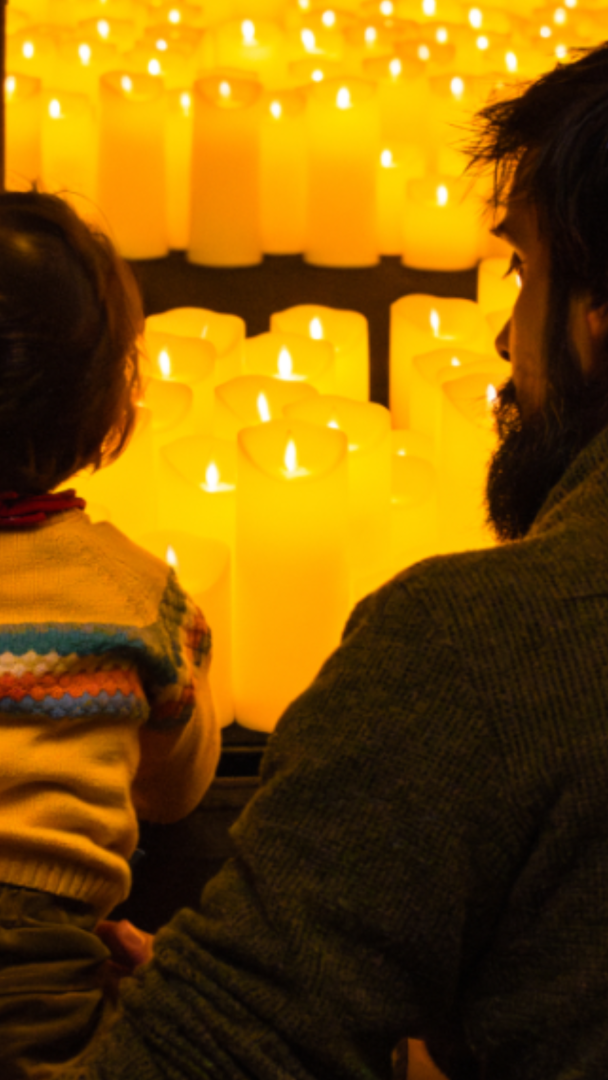
It was clear from the start that the Fat Cat wouldn’t last forever. That doesn’t mean, however, that saying goodbye is any less painful. After all, the end of this temporary use also marks a turning point in Munich’s cultural landscape. For three years, the cultural center provided us with over 50 events a month and offered numerous artists a space for their creative work. Now the final day has arrived, and the Fat Cat is closing its doors for good. Following the Blitz and the DNA, yet another institution of our city’s cultural life is disappearing.
Urgent need for renovation: Why the Fat Cat is closing

The history of the Gasteig dates back to the 1980s. That’s when the cultural center “am gachen Steig” was founded, deriving its name from its geographic location in Haidhausen, overlooking the Isar. Spanning approximately 80,000 m², the building complex offers space for music, art, exchange, and social interaction, becoming a central hub for Munich’s cultural scene. In 2018, the city decided to carry out a complete renovation of the building, and the Gasteig had to temporarily relocate. It set up its new home in 2021 in Sendling, at Hans-Preißinger-Straße 8.
And the Gasteig on Rosenheimerplatz? It will remain empty for the time being—until 2023, when the Fat Cat moves in for temporary use and turns the old Gasteig back into a cultural center. It was allowed to stay for three years, but now the end is imminent. Wednesday, September 30, 2026, is the day the Fat Cat closes, and all tenants must vacate the premises. The remaining equipment and installations will be removed by October 31 so that water, electricity, and gas service can be shut off in November. The city then plans to begin removing hazardous materials, such as asbestos, in 2027. The complete renovation is scheduled to be finished by 2034, when the old Gasteig will shine in new splendor.
1,000 artists are leaving

The Fat Cat wasn’t just a venue; it also rented out the old seminar rooms and offices at the Gasteig. This led to the creation of around 200 studios, workshops, and rehearsal spaces. Even the band Sportfreunde Stiller used the Fat Cat to rehearse their songs. Some of the artists have already found a new home, while others are still searching. Michael Mittermeier’s comedy club, Lucky Punch, will continue to entertain us on various stages throughout the city . There is no permanent new location—at least not yet. The Ballet of Lights, on the other hand, has swapped the Carl-Orff-Saal for the Freiheitshalle.
As for other projects, it remains to be seen whether, where, and when we’ll see them again. The Kulturdachgarten has already moved once, from the former Alpina parking garage to the Fat Cat. So there’s hope that it will find a new home again for next summer. The Tool Library, on the other hand, has additional locations in the Werksviertel and in Trudering that you can visit instead. Nevertheless, the Fat Cat’s closure marks the end of an era. Let’s hope that in the near future there will be a similar project in Munich that brings artists together and fosters new creativity.