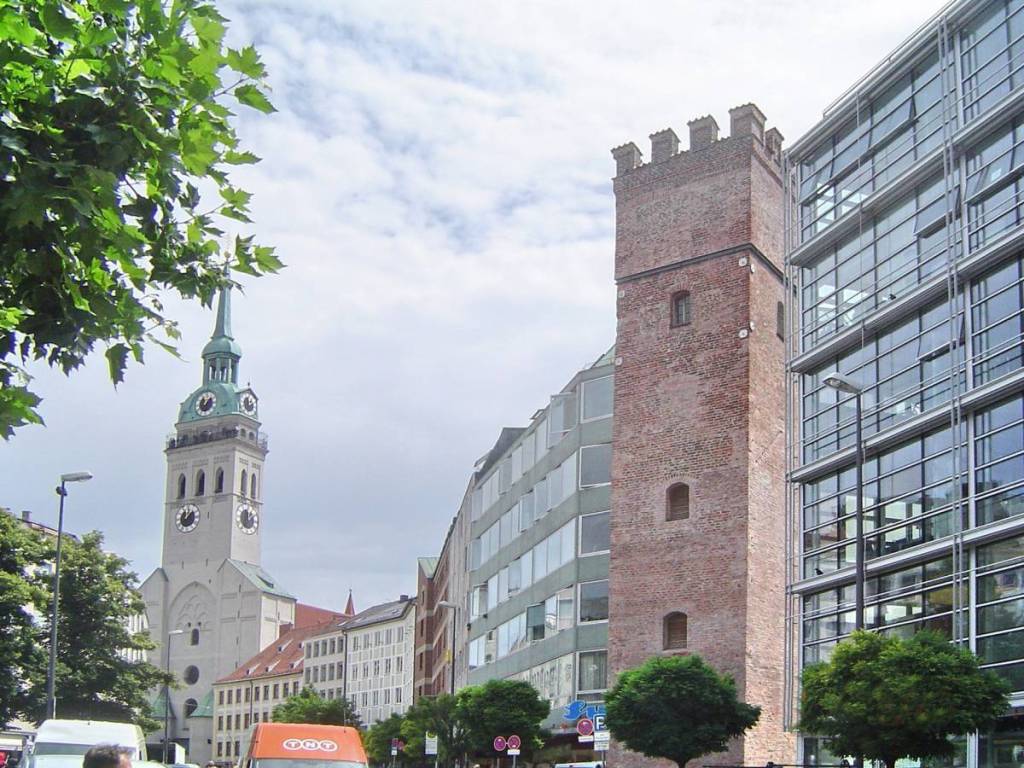

It immediately catches the eye: the red brick tower at Rindermarkt. While other Bavarian cities such as Dinkelsbühl or Rothenburg ob der Tauber have retained their old fortifications—and thus their medieval charm— in Munich, only a few remnants remain to remind us of those times. That is precisely why the Lion Tower stands out so much, as it is so atypical of the cityscape of the metropolis on the Isar. To this day , no one knows exactly what the story behind the structure is, which makes it all the more intriguing.
What was the function of the Lion Tower?
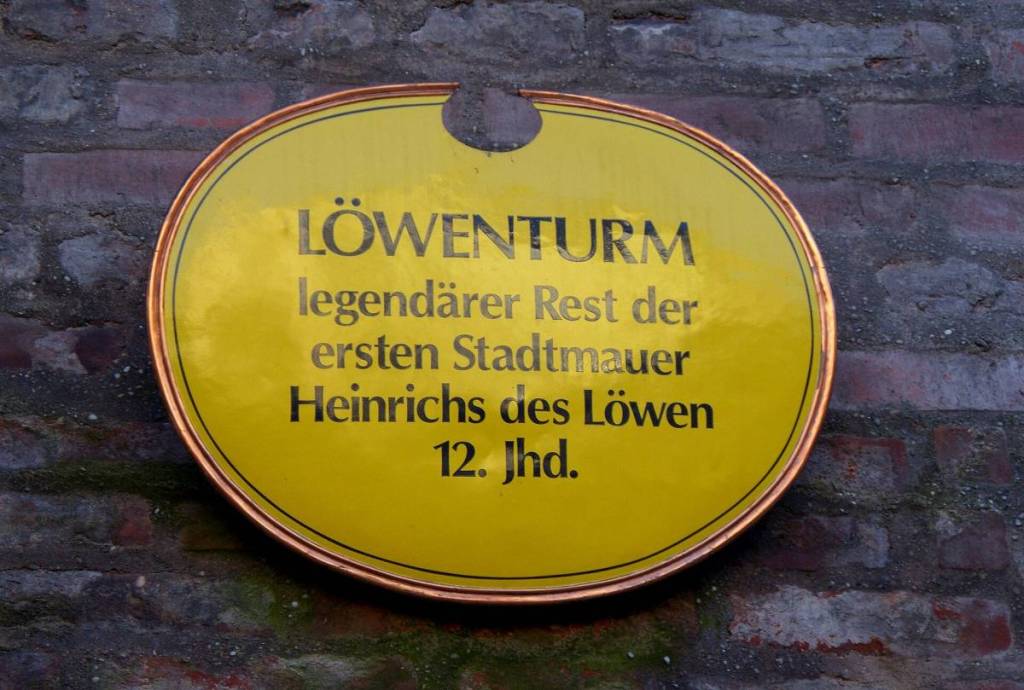
Even the exact date of construction raises questions: Initially, it was assumed that the Lion Tower was part of the first city fortifications, which Henry of Löwen had built in the 12th century. This is also the origin of the Lion Tower’s current name. However, this theory is now considered disproved, meaning that the information plaque on the outside of the tower is incorrect. It is more likely that it was built in the 14th century. Thus, unlike the Jungfernturm, the Löwenturm did not serve to defend and guard the city.
Since it was located directly above the former Angerbach stream, it may have been used to irrigate an earlier garden. However, the city moat served primarily to dispose of waste from the outhouse projections of the surrounding houses, which is why this theory is also considered unlikely. Instead, the Lion Tower may have been part of a stately courtyard complex , as suggested by the paintings and decorations inside it. Unfortunately, you can’t see these for yourselves—the Löwenturm has no entrance.
The Tower Without a Gate
The Lion Tower stands about 25 meters tall, spread over seven stories. Yet there are no stairs inside, nor does it have an entrance. So how does one get inside? In the past, the tower was surrounded on three sides by buildings through which one could access the individual rooms. A separate entrance was therefore not necessary. During World War II, however, the neighboring buildings sustained such extensive damage that they had to be demolished.
The Lion Tower, however, has survived and stands alone today on Rindermarkt, where it’s a real eye-catcher. The magnificent frescoes inside, however, remain hidden from view. The tower’s windows are all bricked up, so you can’t even peek inside through them. Nevertheless, it’s worth taking a detour to see this enigmatic brick structure, which stands out strikingly against the modern glass facades of its surroundings. Together with the Alter Peter in the background and the fountain at Rindermarkt, it forms a diverse ensemble that invites you to marvel at it.