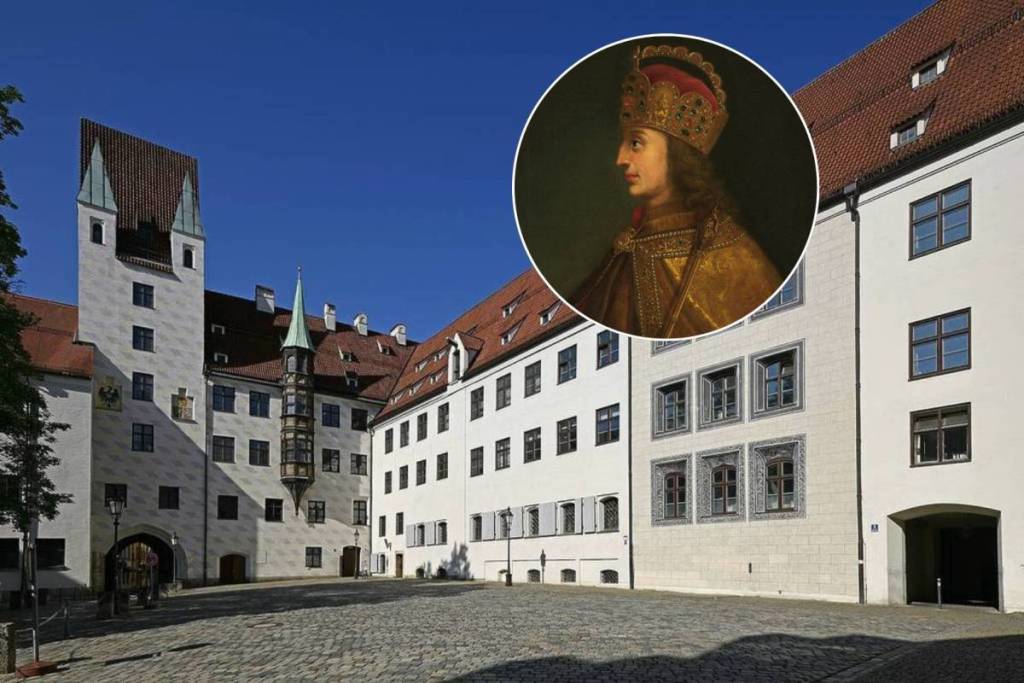

Many of Munich’s landmarks are shrouded in myths and legends, such as the story of the “Devil’s Footprint” in the Frauenkirche or the other “Devil’s Footprint” at the Alter Peter. The Alte Hof fits seamlessly into this tradition and is every bit as fascinating as the other tales. Here, we’ll tell you exactly what the Affenturm is all about and what else there is to discover at the Alter Hof.
The Old Imperial Castle
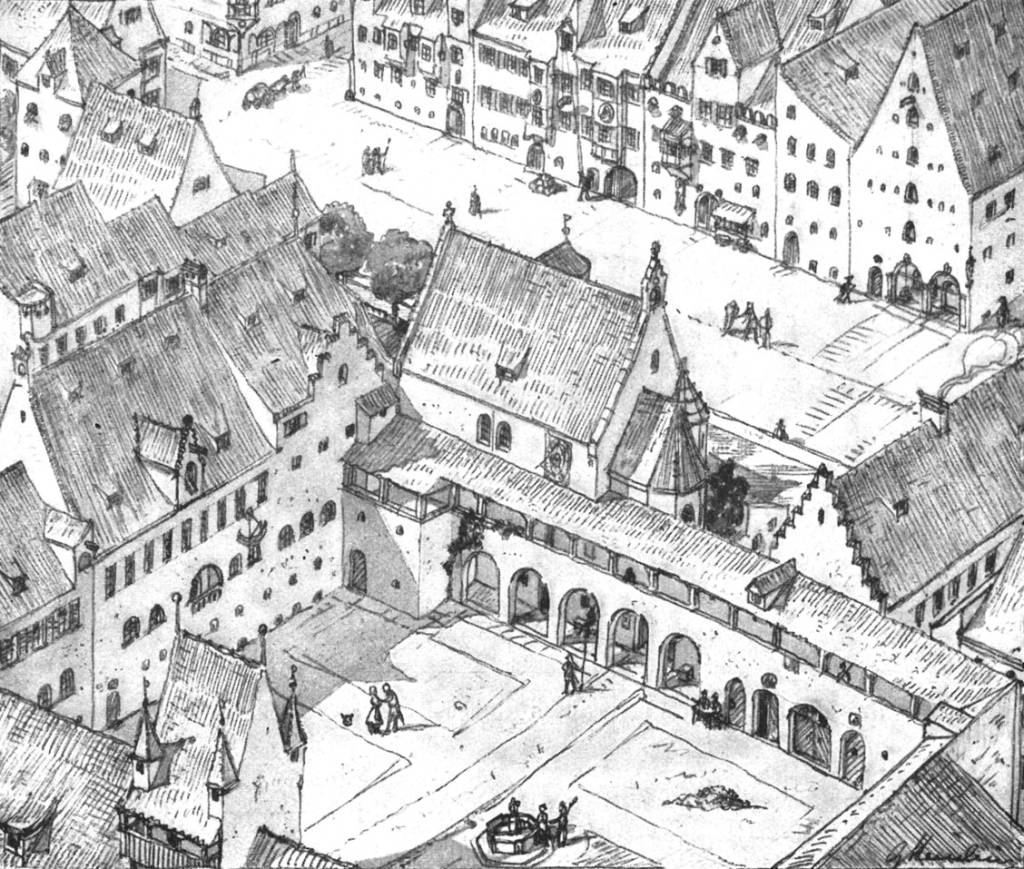
It’s not entirely clear exactly how old the Alte Hof is. The Wittelsbach family had their residence here starting in 1255, though there are theories that a castle complex may have stood on the site even earlier. By the 13th century at the latest, however, the Alte Hof was one of several residences of the Bavarian ruling family, who also had castles and palaces in other cities such as Kelheim, Regensburg, and Landshut. Surrounding the complex was a 1.80-meter-wide brick wall and a moat that provided protection against attacks.
When Ludwig the Bavarian finally ascended the throne as Holy Roman Emperor in the 14th century, he chose a permanent residence. His choice fell on the Alter Hof in Munich, which thus became the Imperial Castle . Nevertheless, he still traveled frequently throughout the empire. He was, however, born in Munich and reportedly had an encounter with a monkey at the Alter Hof—one that accompanied him on a journey to lofty heights.
The Legend of the Monkey Tower
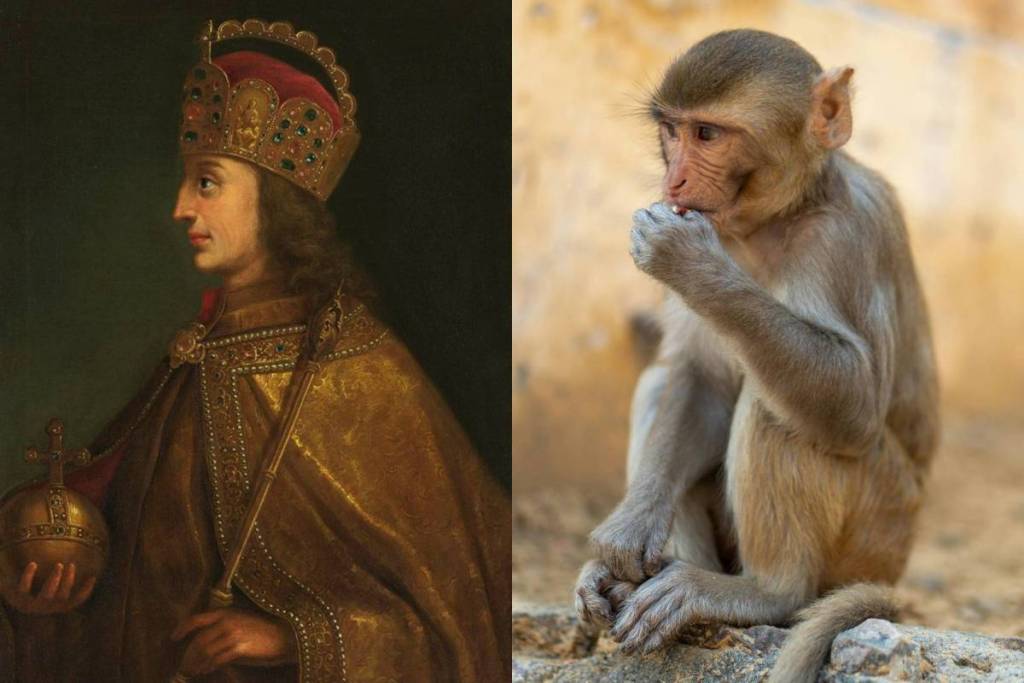
According to the story, Duke Ludwig II kept a monkey as a pet that was allowed to roam freely. This freedom proved to be its undoing one day when the animal snatched his son Ludwig from his cradle. Together with the child, the monkey is said to have climbed the Erkerturm, throwing both servants and parents into a frenzy. After much coaxing, they finally managed to persuade the monkey to climb back down with the baby.
And so Ludwig ended up back in his bed safe and sound, and the bay window is now nicknamed the “Monkey Tower” or “Little Monkey Tower.” No one really knows how much truth there is to this story. Some experts believe that the Gothic bay window was added at a later date . But that doesn’t take away from the charm of the story or its firm place among Munich’s urban legends.
A Visit to the Alter Hof
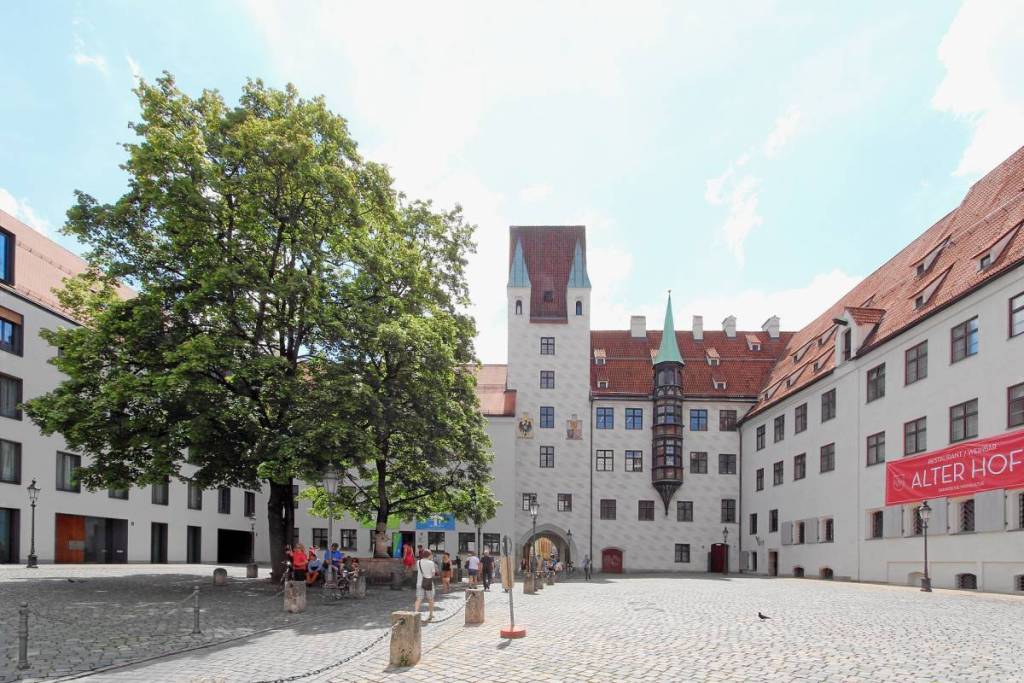
With the construction of the Residenz, the Alte Hof lost its significance. Nevertheless, it has been preserved, and you can visit it today. It consists of five building sections: the Burgstock with its gate tower, the Zwingerstock, the Lorenzistock, the Pfisterstock, and the Brunnenstock. The Affenturm is located on the Burgstock, where the dark brown bay window stands out clearly against the otherwise white walls. In the courtyard’s Gothic vaulted cellar, you’ll find a permanent exhibition on the Imperial Castle. It tells you more about the history of the former Wittelsbach residence.
The Alte Hof also serves as the venue for the “Sommerquartier” in the summer and the “Winterquartier” in the winter. Here you can make yourself comfortable and, depending on the season, enjoy a spritzer or mulled wine along with other delicacies. In the summer, the Franconian Wine Festival also takes place here, where you can sample Franconia’s fine wines. But even when there’s nothing going on, it’s worth a visit—if only to see the legendary “Affentürmchen” (Monkey Tower).