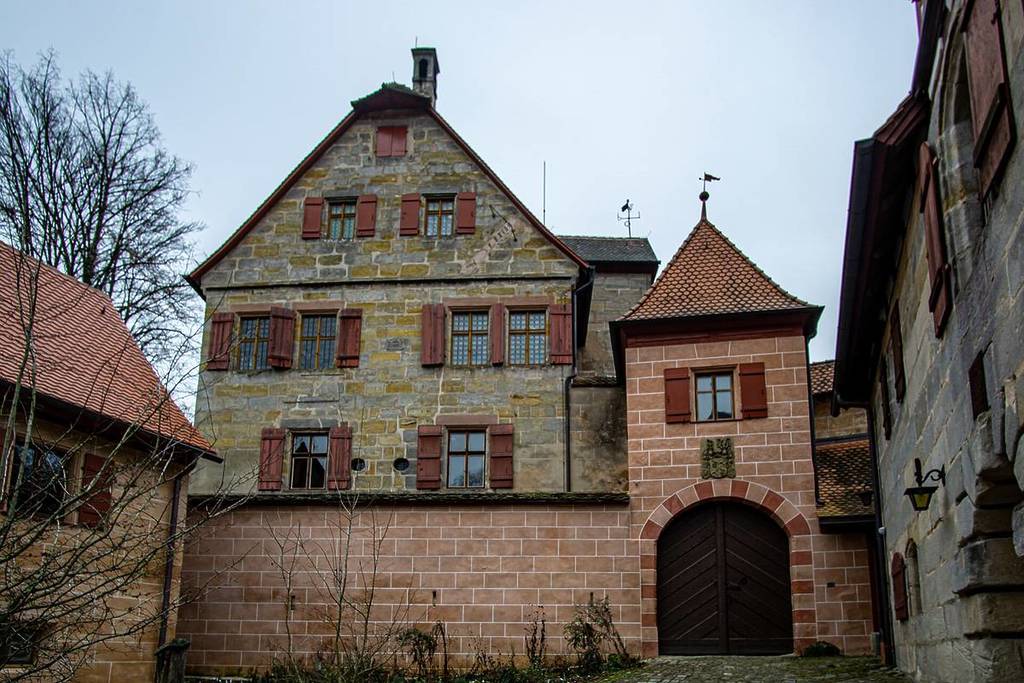

Bavaria offers a wealth of castles and palaces, each unique in its own way. Sisi grew up in this palace, that one has no right angles, and this ruin was actually supposed to become a second Neuschwanstein. There is certainly no shortage of history within these centuries-old walls, that much is certain. If you are particularly interested in life in the Nuremberg region, then be sure to visit Grünsberg Castle. It features a large collection of everyday objects and furniture that offer a glimpse into the history of its inhabitants.
First a fortress, then a palace
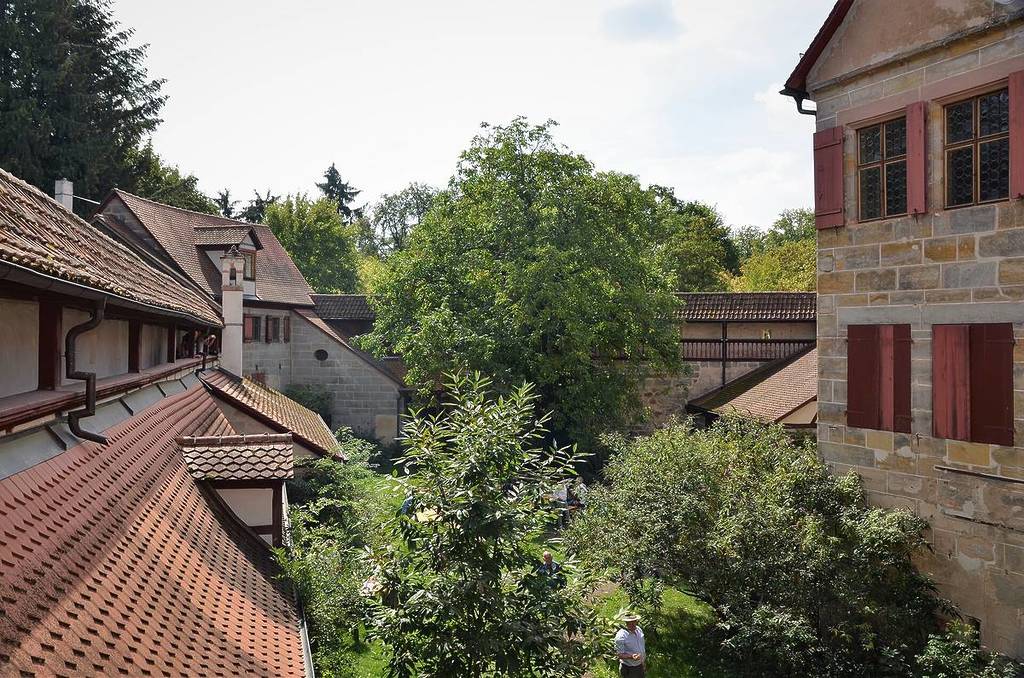
Grünsberg is a district of the former university town of Altdorf near Nuremberg and has been home to Grünsberg Castle since the 13th century. It is what is known as a “hidden castle,” as it is only visible when you are right in front of it. It sits atop a hill spur overlooking the Schwarzach Valley and was originally owned by the Rindsmaul family, imperial ministers.
Over the centuries, the castle changed hands frequently until it eventually came into the possession of the Nuremberg patrician Paumgartner. The last member of the family, Johann Paul III, had the castle largely rebuilt starting in 1717, transforming it into a Baroque palace complex in which little of its medieval roots remained recognizable. It was also he who built the Sophienquelle in honor of his wife, from which water still bubbles into a pond today. Despite the transformation from castle to palace, Grünsberg is still largely referred to as a castle.
The valuable collection at Grünsberg Castle
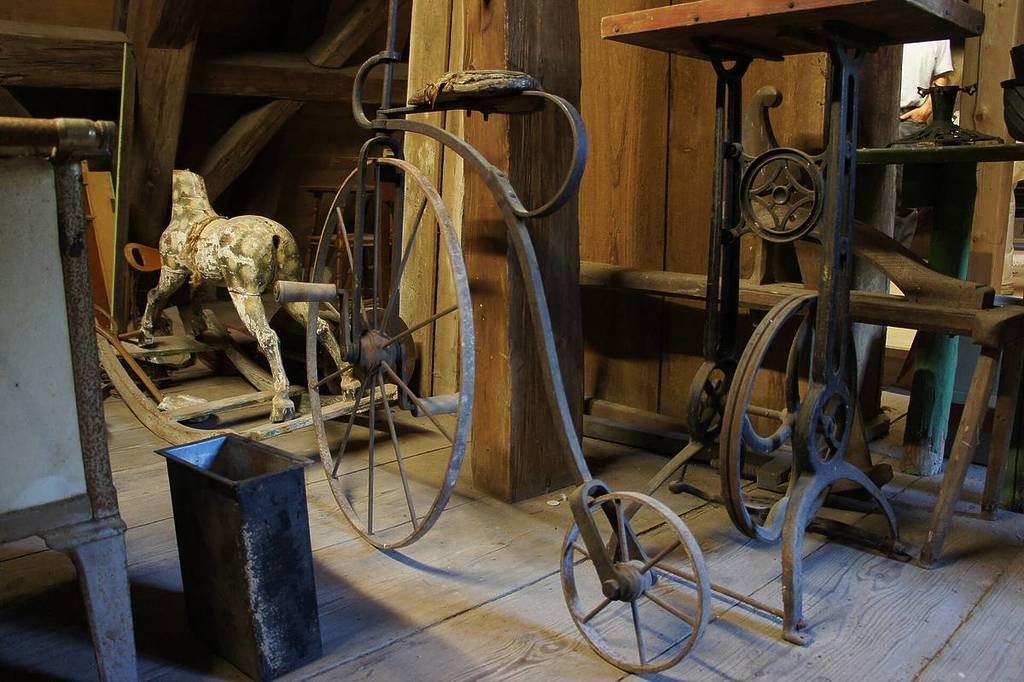
If you’d like to visit Grünsberg Castle near Altdorf, you can do so as part of a guided tour. Advance registration via email is required, and admission is €7 (regular) and €5 (reduced); children under 13 pay only €3. On Open Monument Day, which takes place every September throughout Germany, admission is free. During the approximately 60-minute guided tours, you’ll explore the great hall of Grünsberg Castle and its contents. The artifacts take you on a journey from the 13th to the 20th century and show you how life has changed over time.
Among the objects are not only works of art, everyday items, and furniture, but also a wooden model of the Rialto Bridge in Venice. City architect Wolf Jacob Stromer is said to have owned this and used it as a model for the Fleischbrücke in Nuremberg. The Fleischbrücke resembles the Rialto Bridge in its construction, although it is less steep and has a different visual design. However , whether this model actually served as the inspiration for the bridge in Nuremberg remains a matter of debate to this day.
If you’re less interested in the interior of Grünsberg Castle, you can also attend one of the classical concerts held in the castle chapel and courtyard . Proceeds from the concerts go toward the preservation and maintenance of the complex. After visiting Grünsberg Castle, you can continue your hike to see the nearby Sophienquelle spring or the Löwengrube.