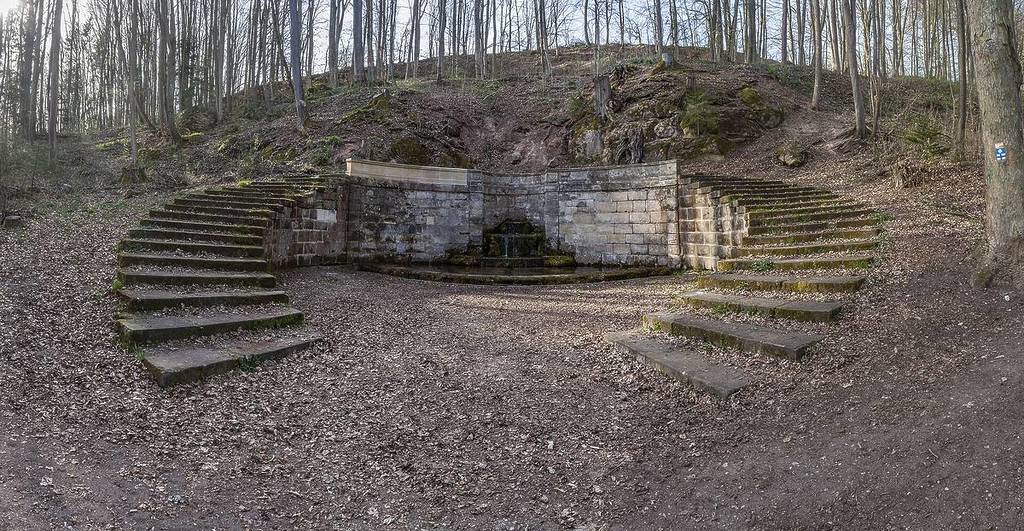

The forests of Bavaria hide many mysterious places, such as abandoned chapels or Roman villas. If you want to see more than just trees on your next forest walk outside Munich , you can do so at Grünsberg near Nuremberg. Here, near the old castle, the Sophienquelle is hidden in the forest, surrounded by trees, and still feeds a pond today.
A fountain for his wife
The Sophia Spring was constructed beginning in 1724 on the orders of the patrician Johann Paul III Paumgartner, who did not live to see its completion. He had intended to dedicate the spring to his wife, Sophia-Maria Nützel-Paumgartner-Haller von Sündersbühl, from whom the spring takes its name. She ultimately oversaw the completion of the construction herself, which took place in 1726.
The Sophia Spring was built in the Italian style and is one of the largest of its kind north of the Alps. It is part of Grünsberg Castle, located about 500 meters away, which in turn belongs to the town of Altdorf. The fountain was a popular gathering place for students at the University of Altdorf, as was the nearby Löwengrube. Today it is regarded as a testament to Baroque garden culture and is designated as both an architectural and natural monument.
The Impressive Sophia Spring
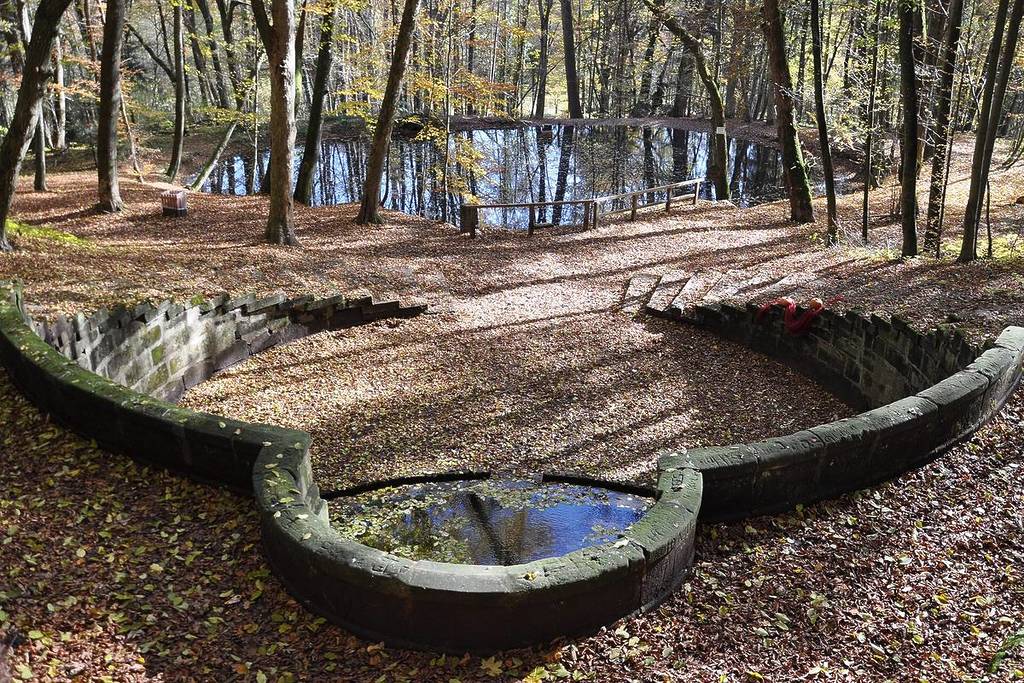
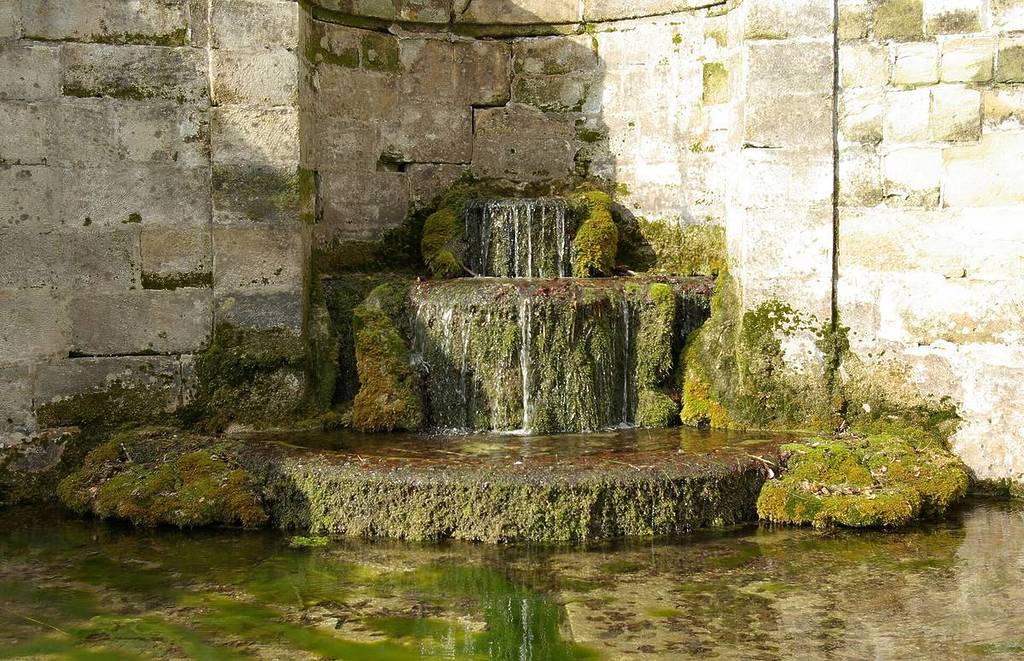
The Sophienquelle is considered a typical example of a tiered fountain. The fountain wall forms a semicircle that opens to the left and right into a wide open staircase without a railing, via which you can ascend the structure. With this shape, the Sophienquelle resembles an amphitheater. The water bubbles up from the center of the fountain wall, cascading down several tiers into the fountain basin and from there, via an overflow, into a pond. The spring feeds the pond with about four liters of water per second.
You can visit the Sophienquelle at any time during a walk through the forest. It is freely accessible and can be reached from the castle via the Franconian Way of St. James. Nearby is another, smaller spring complex, the Dolderlesbrunnen. You can also visit this if you’re already in the area. If you can’t make it to the Sophienquelle in person, you can also admire it in the music video for “May It Be” by The Dark Side of the Moon.