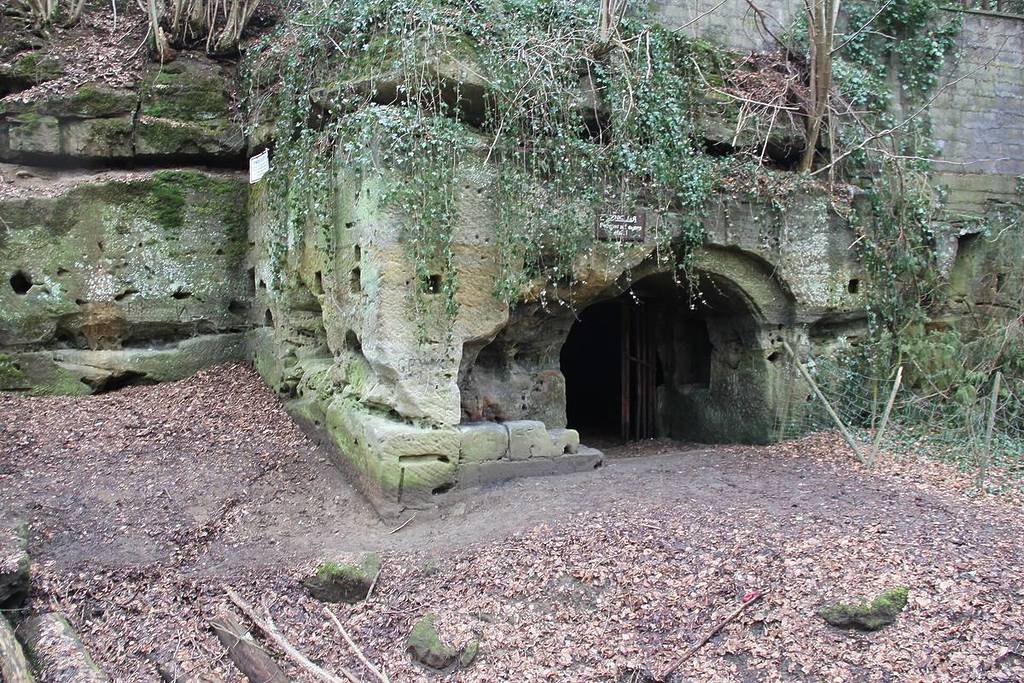

Munich has its fair share of mysterious places that tell exciting stories, such as the Jungfernturm on Salvatorplatz or the Herzkabinett in the Residenz. But eventually, you’ll have explored all the spots within the city, and it’ll be time for something new. Fortunately , the rest of Bavaria also offers numerous such places that invite you on an adventurous day trip. One such place is the Löwengrube near Altdorf, close to Nuremberg, which takes you back to a boozy past.
From Quarry to Festival Grounds
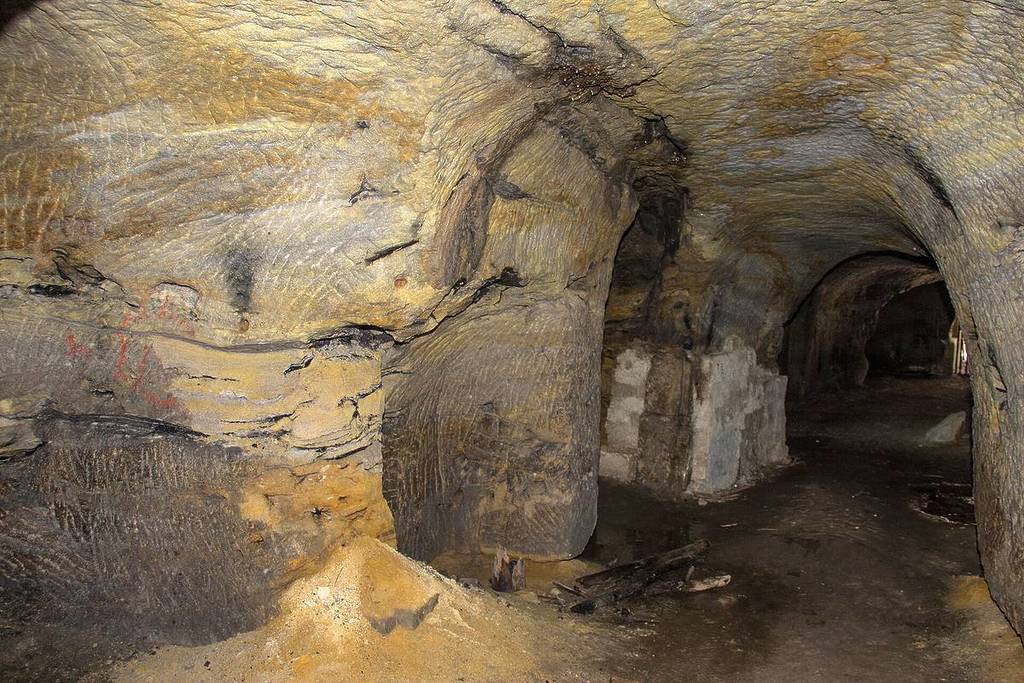
From the 14th to the 16th century, the Löwengrube served as a quarry where sandstone was mined. This stone was used to build the city walls of Altdorf and the university. After the latter was completed in 1575, the quarry was no longer needed and fell into obscurity for the time being.
On March 11, 1686, the then-court master Johann Christian Christ rediscovered the site, whereupon Baron Friedrich Gottlieb von Löwenstern pushed forward with the clearing of the area . The Löwengrube owes its current name to him. Seating was carved into the rocks, and the quarry was transformed into a festival grounds that was particularly popular with students. Above the gate that forms the entrance to the Felskeller, the following is inscribed: “Whoever is not devoted to our way of life shall never enter the cave.”
Forbidden student duels in the Löwengrube
Soon after its expansion, university students claimed the Löwengrube for themselves and held boisterous parties there. They staged illegal student duels, known as “Mensuren,” in which members of different fraternities engaged in fencing matches. When the university closed in 1809, however, the festivities also came to an end.
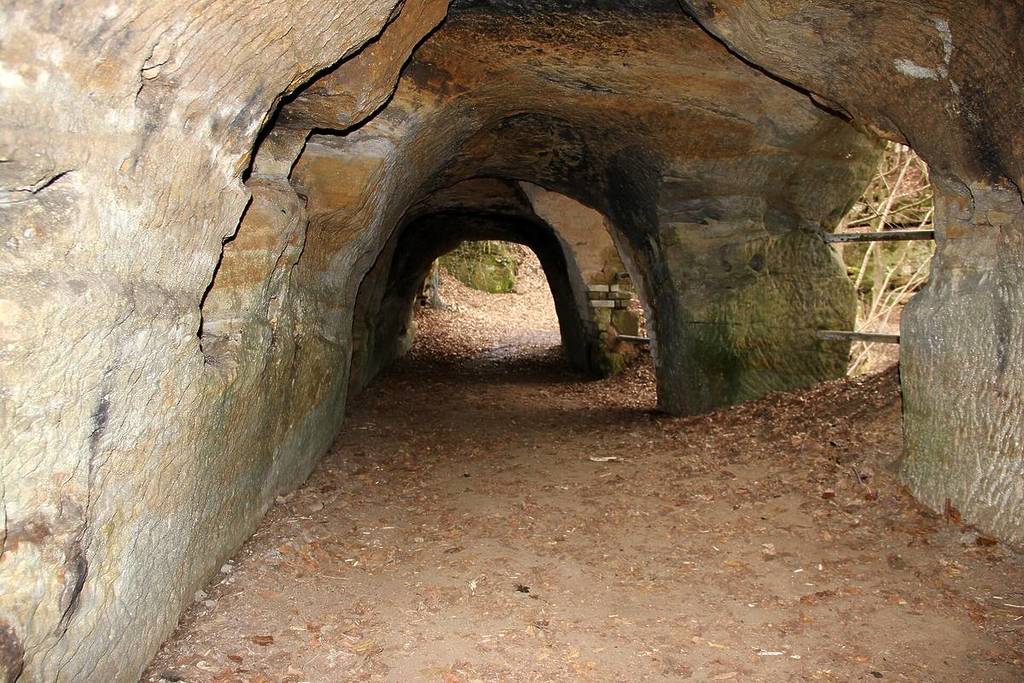
Subsequently, a beer cellar and a bowling alley were built in the Löwengrube. You can still see traces of them today in the arched hall. From the entrance to the cave, you look out onto a rock gallery where the bowling alley used to be. You can visit the rock cellar of the Löwengrube for free, though entry is at your own risk. In the immediate vicinity is also the former Auer’sche Bierkeller, a charming little half-timbered house where exhibitions are sometimes held. You can discover both places on your hike.
From Munich, you can reach the Löwengrube in about two hours by car, and you can park on Weidentalstraße. If you decide to explore it, we recommend bringing a flashlight. If you’d rather admire rock formations under the open sky, then a hike through the Klumpertal might be more your style.