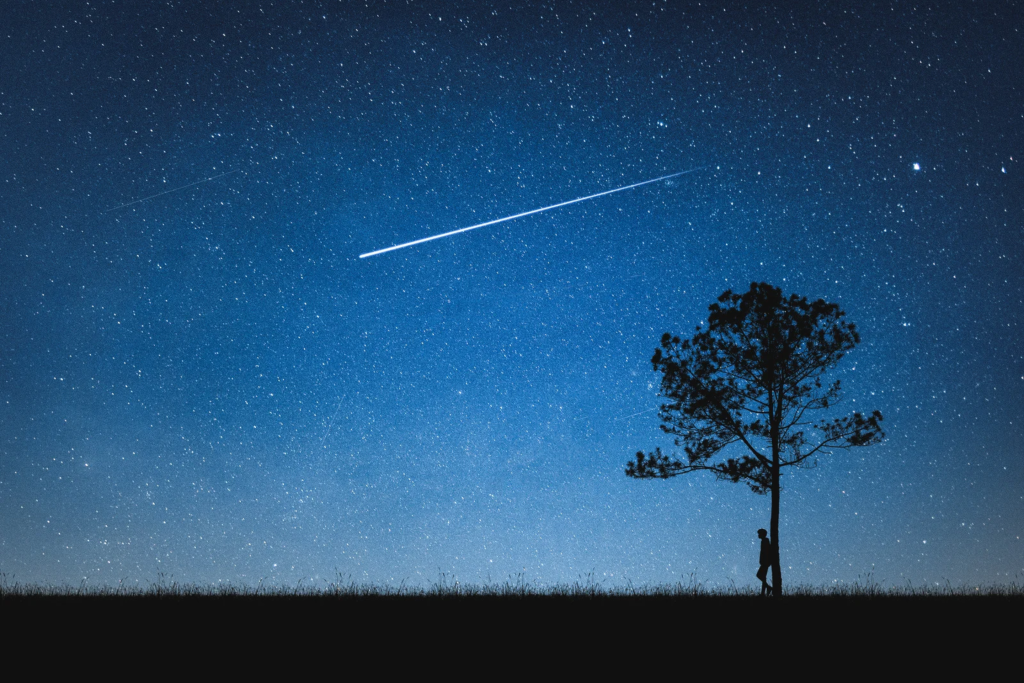

After the Perseids in August, September was rather lackluster when it came to shooting stars. Fortunately, that’s changing again this month, as three meteor showers are active, two of which will reach their peaks in October. The Draconids kick things off; they’re active for only a few nights. So it’s worth looking up at the night sky over the next few days —and maybe one or two of your wishes will come true.
Here’s how to observe the Draconids

Unlike other meteor showers, which are active for weeks, the Draconids occur only during a short window of time. From Tuesday, October 6, through Saturday, October 10, the shooting stars will be visible, reaching their peak on the night of October 8–9. The Draconids originate from the constellation Draco, whose radiant is particularly high in the northern hemisphere, which is why they are especially visible to us. Furthermore, October 10 is a new moon, so no moonlight will illuminate the night sky—making for perfect conditions to observe the meteor shower.
They’re best seen in the early evening hours after sunset. That way , you don’t have to stay up all night to watch the Draconids. Just find a spot with an unobstructed view toward the northwest, where the constellation Draco is located. In Munich, the Olympiaberg, the Fröttmaninger Berg, the Perlacher Mugl, and the Allacher Lohe are particularly good spots for this. And now all you have to do is wait— five to ten shooting stars will streak across the sky every hour.
Other meteor showers in October
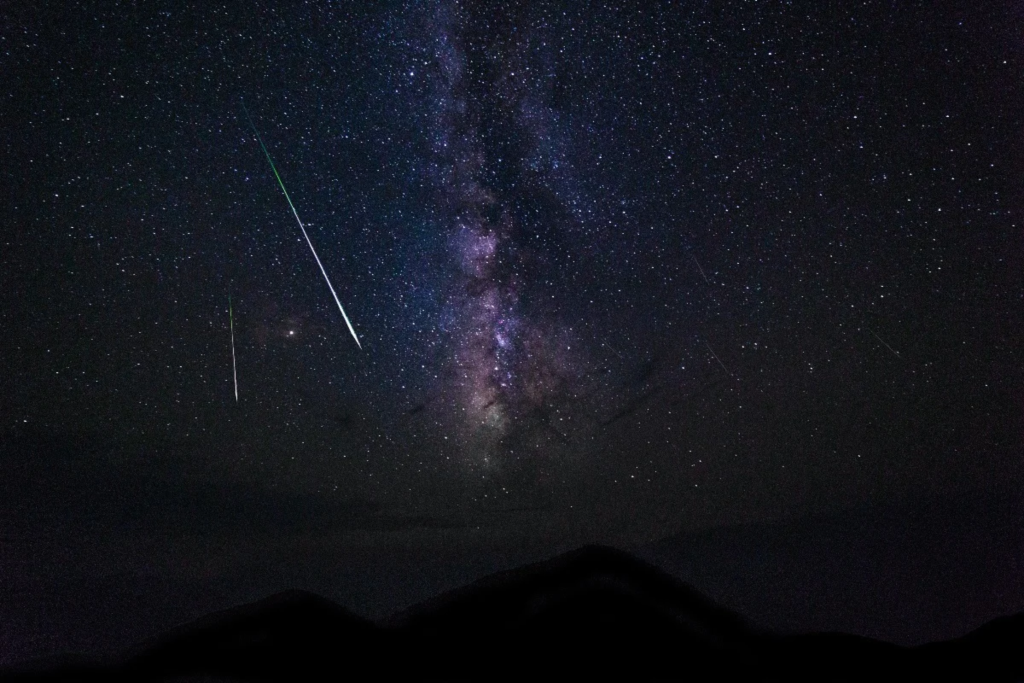
The Draconids aren’t the only meteor shower you’ll see in the night sky this month. The Orionids—one of the five strongest meteor showers of all— have been active since October 2. You can expect them to peak on October 20, so be sure to mark the date on your calendar right away. The Taurids are also currently streaking across the night sky and will be most active in early November . So even if you miss the Draconids, you’ll still have other opportunities to catch a few shooting stars in the coming weeks.