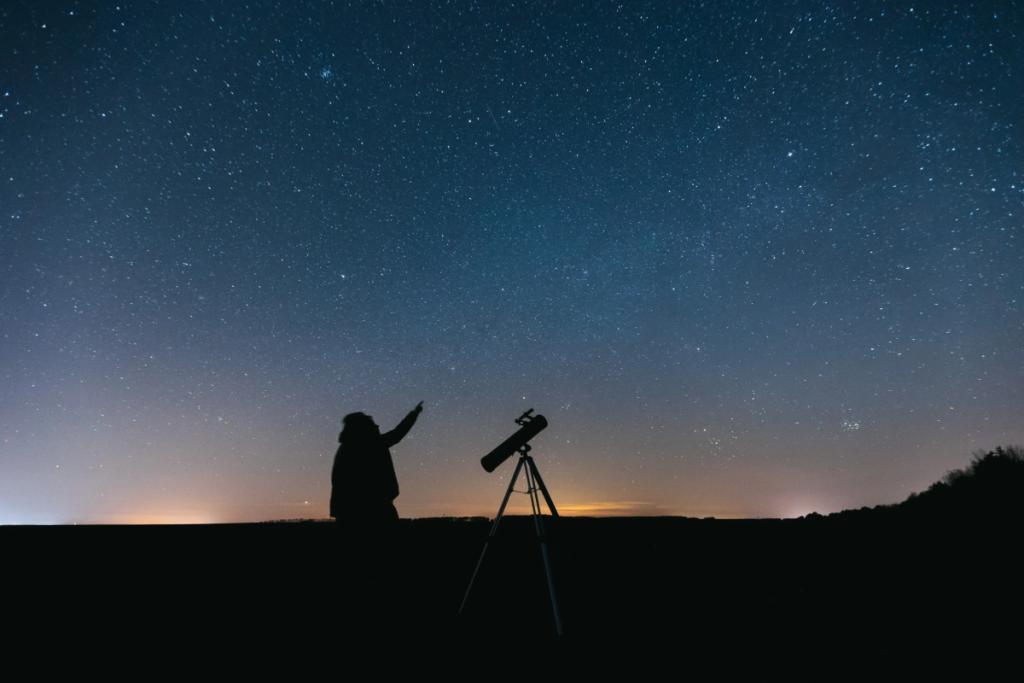

Get your wish list ready and bundle up! Fall is once again treating us to beautiful nights under the open sky in Munich. That’s because October is all about fascinating celestial events. Leading the way, the Orionid meteor shower promises an astronomical highlight. Its active period runs from October 2 to November 7, before the Leonids follow in the second half of November. In addition to the shooting stars, it’s doubly worth looking up, because from early to mid-October, you can also spot the planets Saturn and Jupiter in the night sky.
Watch the natural spectacle of the Orionids

The absolute highlight awaits you on the night of October 21–22, when the Orionids reach their peak. These tiny particles are considered particularly fast and create an intensely luminous trail as they enter Earth’s atmosphere. This cosmic dust was left behind by Halley’s Comet on its millennia-long journey through space. The Orionids are named after the constellation Orion, from which they appear to radiate to observers.
If you miss the Orionids, you can immediately set your sights on the next astronomical highlight. That’s because October also brings the Draconid meteor shower (peaking around October 8 and 9) and the Southern Taurids (first peak around October 14). On October 26, the magnificent full moon—traditionally known as the “Hunter’s Moon”—will grace the sky.
The best time and the most beautiful viewing spots in Munich
The Orionids will peak on the night of October 21–22, starting around 11:00 p.m. However, the best time to observe them is between midnight and 5:00 a.m. Once the moon has set and if the weather cooperates, with a little luck you might be able to count up to 20 shooting stars per hour!
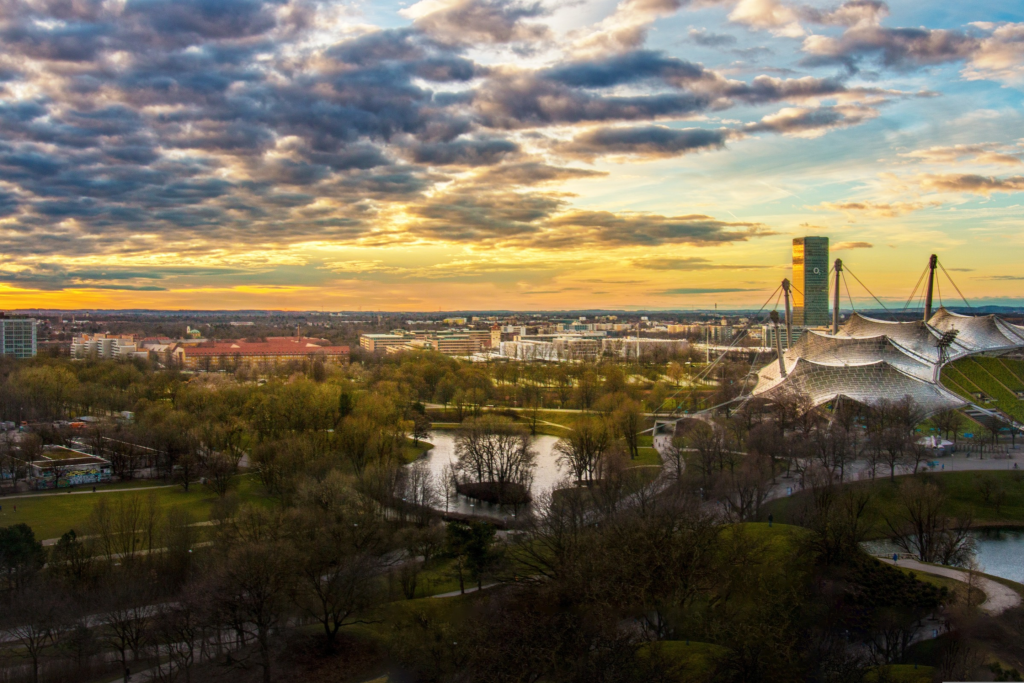
To enjoy this natural spectacle undisturbed, you should get away from artificial city lights for a bit. You don’t necessarily have to drive far out into the countryside—there are beautiful vantage points for stargazers right in Munich, such as the Olympiaberg in the Olympiapark or the Fröttmaninger Berg. You won’t need a telescope or binoculars; the shooting stars are visible to the naked eye. For photos, a camera mounted on a tripod with a manual shutter speed setting works best.