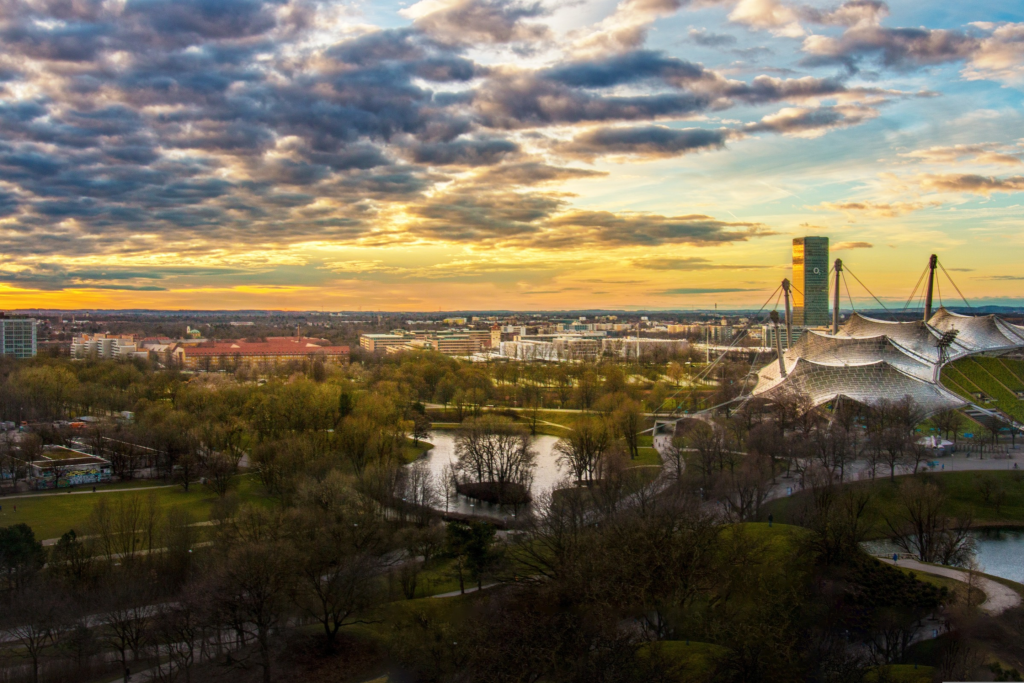

Have you ever wondered, while taking a leisurely stroll through the Olympic Park, what’s actually hidden beneath the meadows of the Olympiaberg? If you climb the 60 meters to the summit, you can enjoy a breathtaking view of the park, all of Munich, and—on a clear day—even as far as the Alps. But this green hill in Munich’s otherwise flat landscape is by no means a natural formation. Behind this popular lookout point lies a moving story deeply rooted in our city’s past.
A Mountain of Rubble: How the Olympiaberg Came to Be
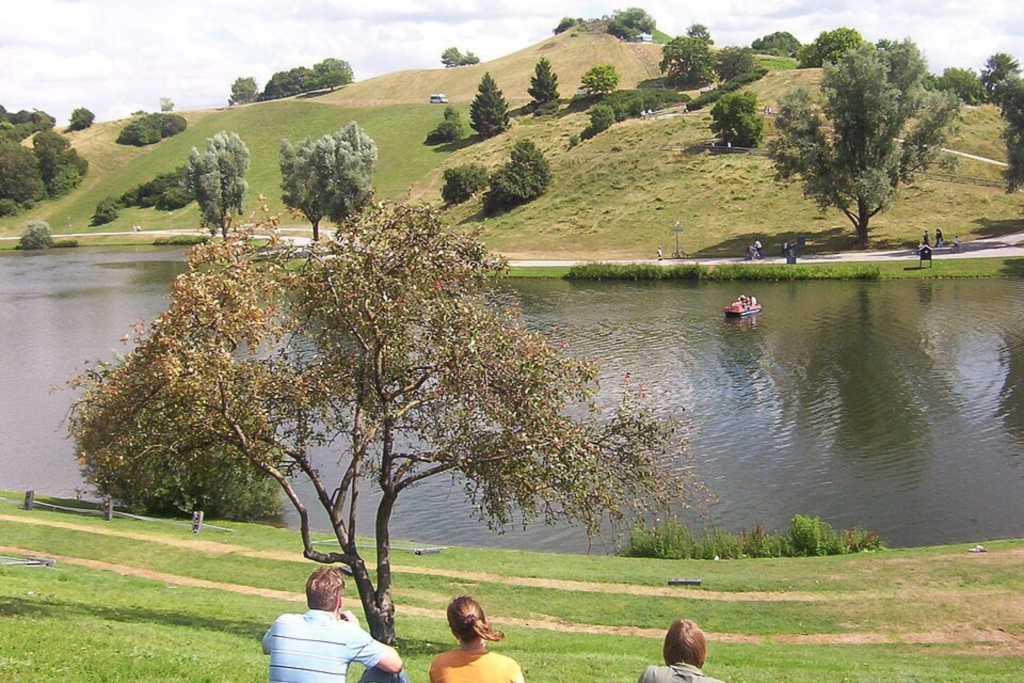
After World War II, Munich lay in ruins. To clear the debris from the destroyed city center, rubble from the bombings was hauled to the Oberwiesenfeld for years. Before that, so-called “rubble women” had cleared away the rubble brick by brick. Between 1947 and 1958, some 10 million cubic meters of Munich’s bomb rubble piled up to form a 56-meter-high mound. This so-called “Große Schuttberg”essentially containedthe remains of Munich’s old city center.
Later, another impressive transformation took place: the hill grew to its current height of 60 meters (565.1 m above mean sea level) thanks to the excavated material from the U3 subway line. Landscape architect Günther Grzimek reshaped the hill in time for the 1972 Olympic Games. His goal was to create a vibrant green space for all Munich residents. Two memorials there still commemorate the civilian victims of the air war to this day.
A Sporting Highlight and Free Concert Experience

Today, a trip up the Olympiaberg—especially at sunrise and sunset —is a must-do for many. The hill also has a long sporting tradition: as early as the 1950s and 1960s, Munich residents used it for skiing. Later came high-profile sporting events, ranging from World Cup ski and snowboard races to cross-country runs and international mountain bike races.
In addition to sports, the hill is a particular favorite among culture lovers, as the Olympiaberg has been the perfect spot for free open-air concerts for decades. When world-famous rock and pop stars perform next door at the Olympic Stadium, you can simply make yourself comfortable on a picnic blanket in the meadows and listen to the music. Something similar happened back then during the Summer Olympics, when the Olympiaberg turned into a free viewing area overlooking the Olympic Stadium.