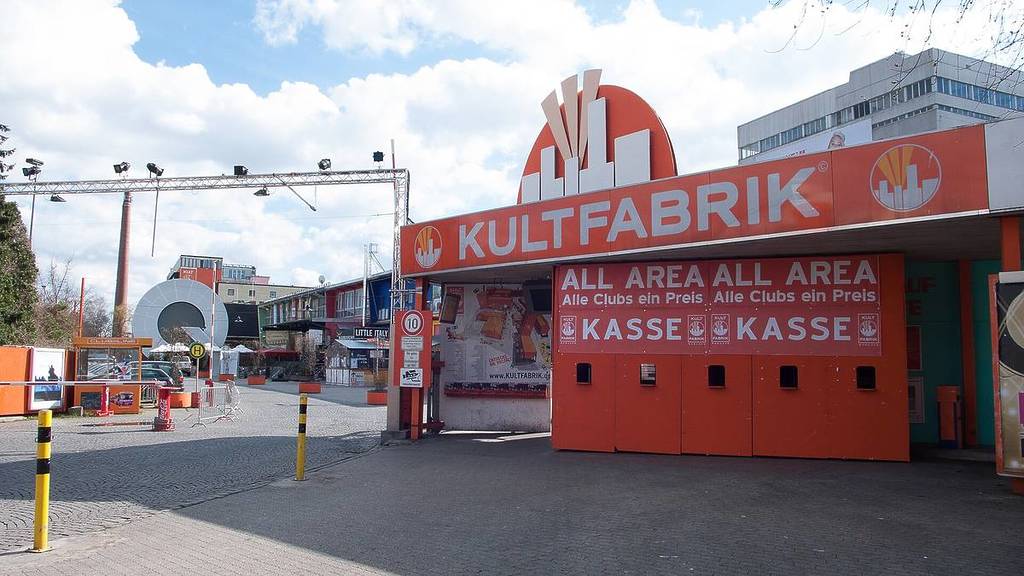

Unlike Berlin, Munich isn’t exactly known for its club culture, and with the Blitz closing this year, another iconic venue is gone. But that wasn’t always the case: In the past, there were many legendary clubs in Munich where big stars like Freddy Mercury, Mick Jagger, and Jimmy Hendrix used to hang out. In Schwabing, there was even once a disco with real sharks! And until the 2010s, the Kultfabrik— Europe’s largest club complex—was located at Ostbahnhof. This was the heart of Munich’s nightlife, offering not only parties but also dining and culture.
The entertainment district on the industrial site
Until the mid-1990s, the area around Ostbahnhof was an industrial zone where, among others, the dumpling manufacturer Pfanni operated. However, the company relocated its plant to Mecklenburg-Western Pomerania in 1996, making room for the cultural offerings of Kunstpark Ost. Previously, there had already been a cluster of clubs at Riem Airport, but they had to make way for the Messestadt. Some of them found a new home in the Kunstpark.
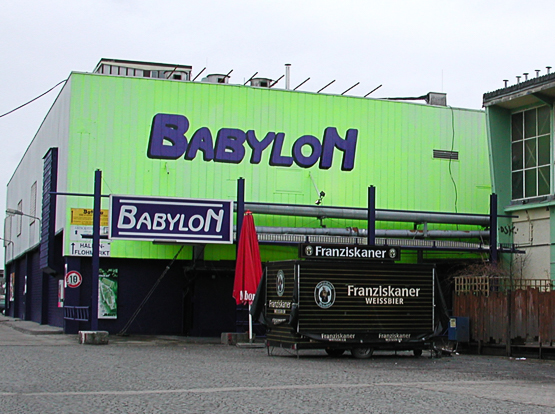
Around this time, the Milchbar opened—a venue that has survived to this day and owes its name to the milkshakes you could drink there back then. Other well-known clubs at the time included the Babylon, the Ultraschall, and the Heizkraftwerk. In addition, several artists had their studios here, and there were numerous bars, restaurants, and arcades. Concerts and flea markets were held regularly, and the Kunstpark Ost attracted up to 250,000 visitors per month . Nevertheless, it did not last long and was finally shut down in 2003.
Successor to Kunstpark Ost: The Kultfabrik
However, the end of Kunstpark Ost was by no means the end of cultural and nightlife on the Pfannig site: The Kultfabrik emerged from the Kunstpark, and some of the clubs from that era remained loyal to it. A total of 25 venues were located on the 90,000 m² site, along with a wide range of dining options and venues for concerts and plays, such as the Tonhalle and Halle 7. The heart of the Kultfabrik was the canteen, where you could dine until 5 a.m.—an absolute rarity in Munich. In the western part, the whiteBOX served as an art space for exhibitions and events.
The Kultfabrik catered not only to night owls but also to families with children. Where the Club Heizkraftwerk had once been during the Kunstpark era, there was now Kulti-Kids, an indoor playground spread over three levels. It offered plenty of space to run around and a variety of hands-on activities. Right next to the Kultfabrik were the Optimolwerke, another club complex on the grounds of the former Optimol oil refinery. This is where the legendary Harry Klein got its start, later moving to Sonnenstraße just like the Milchbar. A total of 30 clubs were based here, turning the entire area around Ostbahnhof into an absolute party zone.
The end of the Kultfabrik
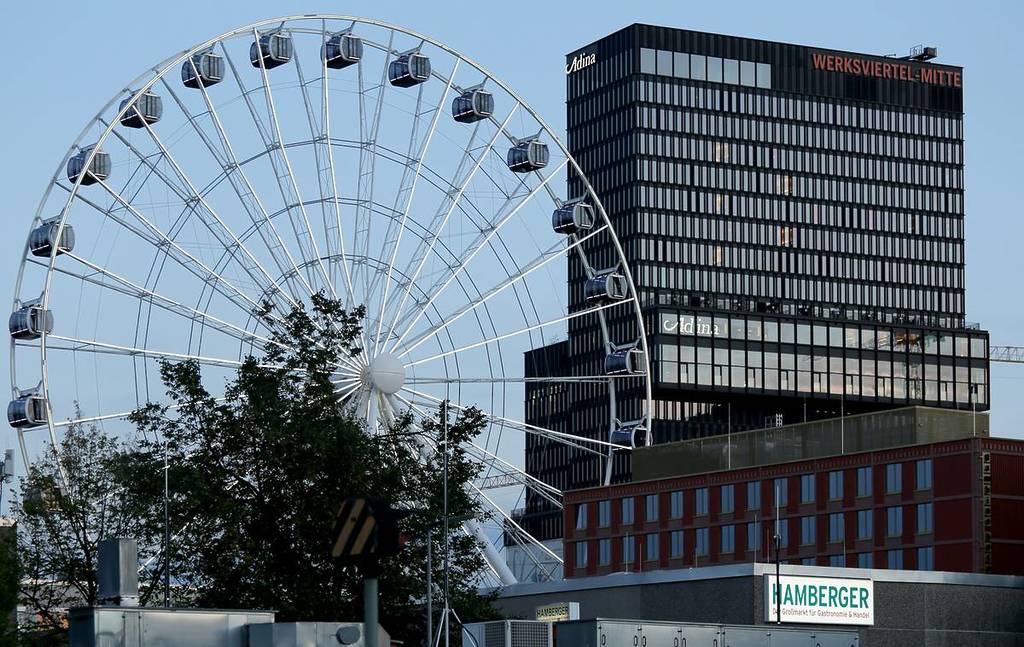
The Kultfabrik managed to hold its own in Munich for over a decade, but ultimately had to make way for today’s Werksviertel. The last party was celebrated here on New Year’s Eve 2015–2016, literally sealing the end with a bang. The Optimolwerke, on the other hand, were able to remain until 2018 before they, too, had to close for good.
Some venues, such as the Tonhalle, still exist today, and Hall 7 has become Werk 7. The whiteBOX, on the other hand, was located in the former Werk 3 of the Pfanni factory and now bears that name again. On the roof of Werk 3, there is now a cool rooftop bar with a pool as well as a small alpine hut with a flock of sheep.