
It’s no coincidence that Munich is considered one of Germany’s cultural capitals. Like almost no other city, it offers countless recreational activities, including the city’s many museums. Here, you can not only experience significant art from all over the world, but science museums and history centers also contribute to Munich’s impressive cultural scene. You can visit some of these museums on Sundays for just 1€, which makes them especially attractive for budget-conscious travelers. But it gets even better: In Munich, you can even visit museums for free. We’ll show you some of the places where that’s possible.
City Hall Gallery

Have you always wanted to take a look inside City Hall? The Rathausgalerie makes it possible. At Munich City Hall, you can experience one of the most popular exhibitions of contemporary art while admiring the historic building from the inside. From March through November, local artists showcase their high-quality and diverse works of art at the gallery.
Paleontological Museum
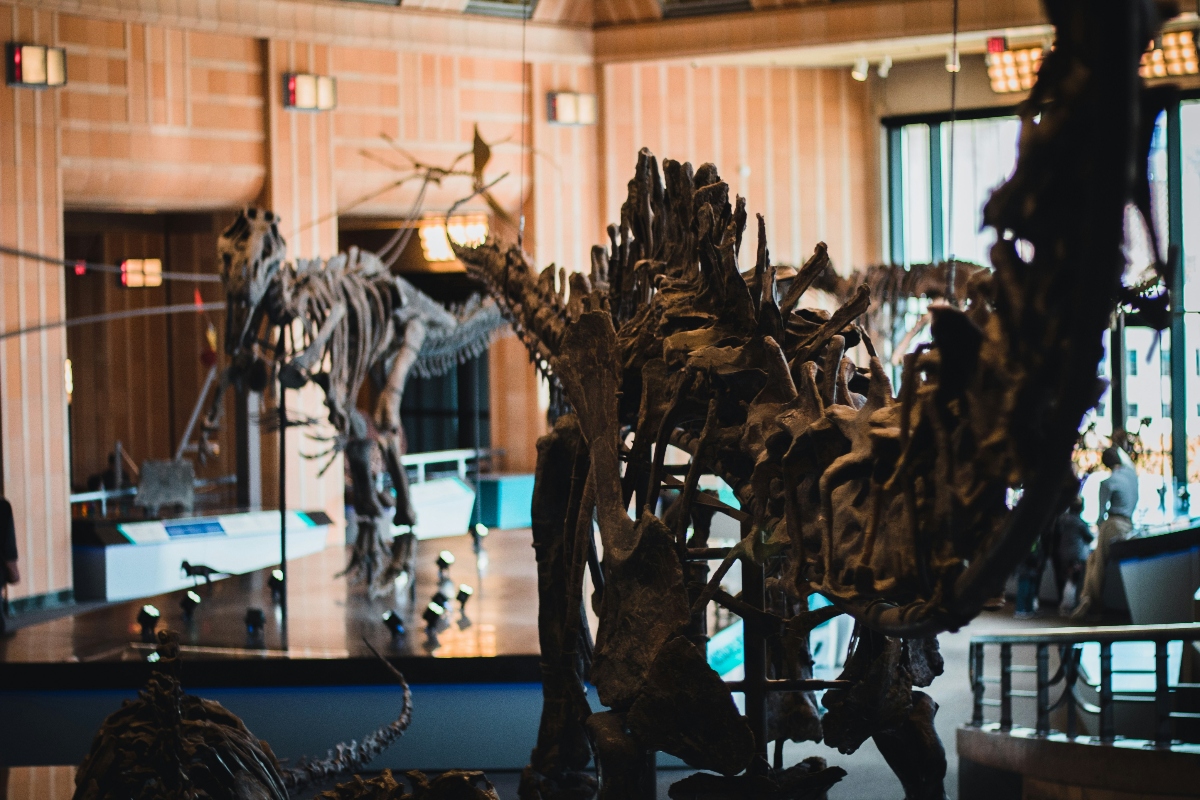
Here you can admire a dinosaur up close: In the publicly accessible section of the Bavarian State Collection of Paleontology and Geology, fossils of animals and plants from all eras of Earth’s history are on display. These include, for example, centuries-old sequoias and the skeleton of Bavaria’s largest dinosaur , Plateosaurus. There are few better places to experience the evolutionary history of the Earth and life than in this free museum.
Art Arcades

You can hardly experience art in a more experimental way—at Munich’s Kunstarkaden, the young, local art scene shows what it’s capable of. The paintings, sculptures, comics, and films span all genres of the visual arts. The arcades themselves describe themselves asa“laboratory of contemporary art,” as they aim to specifically support young artists and provide them with a platform. Here, you might even get to meet the art stars of tomorrow in person!
Biotopia Lab

At the Biotopia Lab, science, art, and design come together for free at the Munich Botanical Garden. Here, you can not only see various exhibitions but also get hands- : There are hands-on workshops, you can try out a VR flight simulator, and go on a treasure hunt with the “Mysterious Objects” series. Science couldn’t be more alive. At the same time, the Biotopia Lab offers a glimpse into the development process of the future Bavarian Museum of Natural History. In winter, you’ll also save on admission to the Botanical Garden itself, so you can visit the museum completely free of charge.
Gallery: Upper Bavaria District

The motto here is“Art for All.” Since 1998, the Galerie Bezirk Oberbayern has been showcasing contemporary art of all kinds. What makes it special is that artists with and without disabilities participate together in the exhibitions. The dual exhibitions, which change three times a year, are designed so that people with disabilities can experience them just as fully as those without. You can interact directly with the artists and enter the museum for free to take part in tactile tours and workshops.
Maximiliansforum

Maybe you’ve already stumbled upon this art space by chance: The Maximiliansforum is a public project located right in the pedestrian underpass beneath the intersection of Maximiliansstraße and Altstadtring. Here you can experience impressive installations, take part in workshops, or enjoy performances by various artists. Since this unique museum is open to the public 24/7 and free of charge, the Forum has become one of the most important venues for Munich’s art scene.
Lothringer 13 Hall

The Lothringer 13 Halle is located in the middle of an old factory hall in Haidhausen. Today, the more than 700-square-meter space is used for something more beautiful than industrial work: it hosts rotating exhibitions of contemporary art. Internationally acclaimed artists have already impressed visitors here with their works. But local projects also consistently receive recognition. Anyone who wants to visit this museum can enjoy the entire exhibition for free.
Munich Imperial Castle

It is the oldest seat of power of the ducal familyin Munich: the Kaiserburg at the Alter Hof. It was the first castle of the Wittelsbachs in Munich, a family that shaped the city like almost no other ruling dynasty. Today, you can visit the museum here for free and admire the castle. Standing beneath the late-Gothic vaulted hall, you can experience firsthand how Emperor Ludwig the Bavarian lived here. A permanent exhibition showcases Munich’s city history, and there are also interactive hands-on stations and various films.
Monacensia at the Hildebrandhaus

The Monacensia is considered the “literary memory” of the city of Munich. In this famous library and artists’ villa, you can explore the history of the city’s literature through over 150,000 volumes. Among the treasures of the archive are, for example, the complete estates of Klaus and Erika Mann and over 800 letters and manuscripts by Thomas Mann. There’s also a permanent exhibition on the history of the Hildebrandhaus, as well as various special exhibitions. Another highlight: the freely accessible reading garden offers the perfect spot to retreat for some reading or to meet other authors in person as they work.

The Lenbachhaus Art Museum houses the world’s largest collection of Blue Rider art. This includes, for example, masterpieces by famous artists such as Paul Klee and Wassily Kandinsky. The museum also showcases other well-known works of art from the 19th century, Classical Modernism, Post-War Modernism, and the contemporary era. Another highlight is the Lenbachhaus’s beautiful garden. You can visit it for free during opening hours. But the museum itself also invites you to join in: Every first Thursday of the month from 6 to 10 p.m. , it opens its doors to you with “extra+.” With free admission, you can stroll through the exhibitions and enjoy DJ beats with drinks.
Amerikahaus

The wide world doesn’t have to be so far away: Everything related to the U.S., Canada, and Latin America is on offer at Munich’s Amerikahaus. The museum aims to convey the diversity of transatlantic ties. In addition to regular exhibitions, visitors can use the library, attend concerts, readings, or panel discussions, or even plan a stay abroad. The program of events is as colorful as the diversity of the American nations: It has included lectures on the Obamas’ path to the White House and the development of trans culture in America—all with free admission.
Nazi Documentation Center

The Nazi Documentation Center in Munich is a place for remembrance and learning. The museum aims to convey the history of National Socialism with an eye toward the present and the future. The historical exhibition “Munich and National Socialism” spans three entire floors. In addition, there are various guided tours, workshops, and seminars that actively educate visitors about racism, anti-Semitism, and discrimination. National and international guests and partners from the fields of academia, art, and culture are regularly invited to participate. Here, this difficult past is brought to life as vividly as possible.
Bavarian State Library

The Bavarian State Library is Germany’s largest universal academic library. And even from the outside, it’s an impressive sight: The entire building is historically unique—the grand staircase alone is worth the visit. But visitors don’t have to stay to study or conduct research. On the upper floor, annually changing exhibitions showcase the full scope of the library’s holdings, including, for example, a significant collection of manuscripts designated as a UNESCO World Heritage Site and numerous photo archives of important figures.
Museum of Casts of Classical Sculptures

Fancy a trip back to ancient Greece and Rome? The Museum of Casts of Classical Sculptures features a vast collection of ancient sculptures dating from the 8th century BCE to the 5th century CE. Here you can see around 2,000 full-size replicas of Greek and Roman sculptures and reliefs, ranging from Aphrodite to Julius Caesar. If you’ve always wanted to study proportions more closely, this is the place for you. In addition to the impressive permanent exhibition, there are also regular special exhibitions on archaeological, art-historical, and cultural-historical topics—reason enough to visit the museum for free.

Villa Stuck is a total work of art designed by Franz von Stuck, and it’s worth seeing both inside and out. So if you want to do more than just view art—if you want to immerse yourself in an artfully designed setting—you should stop by here. The residence, studio, and museum—designed by Franz von Stuck himself—features a permanent exhibition of his work as well as rotating special exhibitions. You’ll also discover magnificently decorated Art Nouveau rooms, the restored sculpture garden, and the new café. Every first Friday of the month, you can visit the museum for free during “Friday Late” and marvel at this magnificent building starting at 5 p.m.
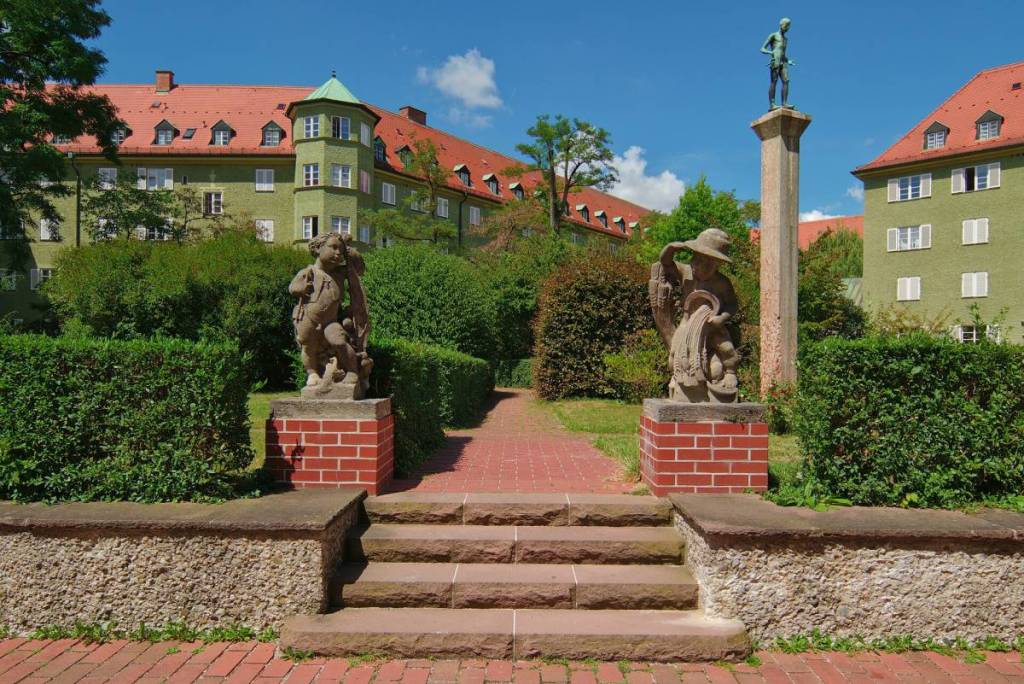
The Borstei is a work of art in its own right and transports you to its own little world. Here, you can stroll through the magnificent gardens and past the idyllic houses in what is arguably Munich’s most extraordinary neighborhood. In addition to various shops, service providers, and doctors’ offices, it also has its own museum. It’s considered the city’s smallest museum and gives you an insight into the history and development of the Borstei. Admission is free, but you must register in advance.