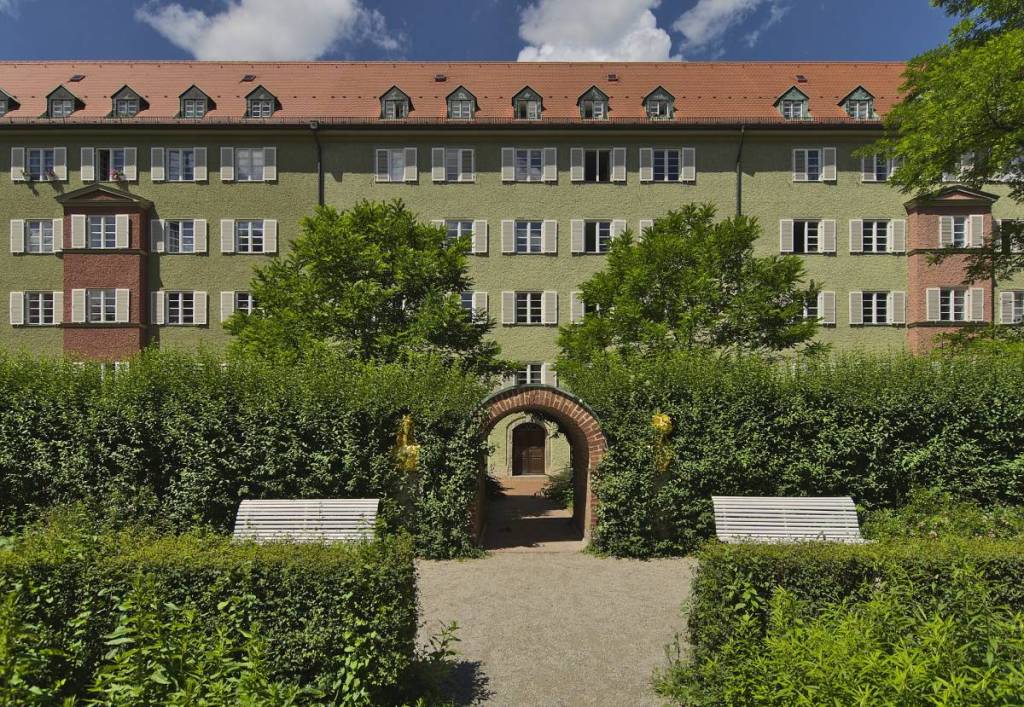

Munich is brimming with beautiful architecture and magnificent buildings. The older neighborhoods, in particular, are characterized by romantic Art Nouveau. And yet, even in our city, there is a neighborhood that looks especially magical and seems almost out of time. The Borstei in Moosach is like its own little dream world in the urban jungle, with a fascinating history behind it.
A little paradise in the city
In the 1920s, Bernhard Borst acquired a plot of land on the outskirts of Munich for his construction company, on which he also planned to build apartments. After a failed competition, he ultimately designed the complex himself, though there was no longer room for his company within it. Instead, from 1924 to 1928, he had a comfortable housing development built that significantly improved the residents’ quality of life.
The Borstei is home to Germany’s first central heating system, which is still in use today . At the time, this was not standard. Other amenities in the Borstei included running hot water, telephones, stoves, private bathrooms, and heated garages. Within the development , there were several stores as well as tradespeople available to assist residents with various tasks. The complex features several artistically designed courtyards where residents can gather and spend time together.
Living Meets Art at the Borstei
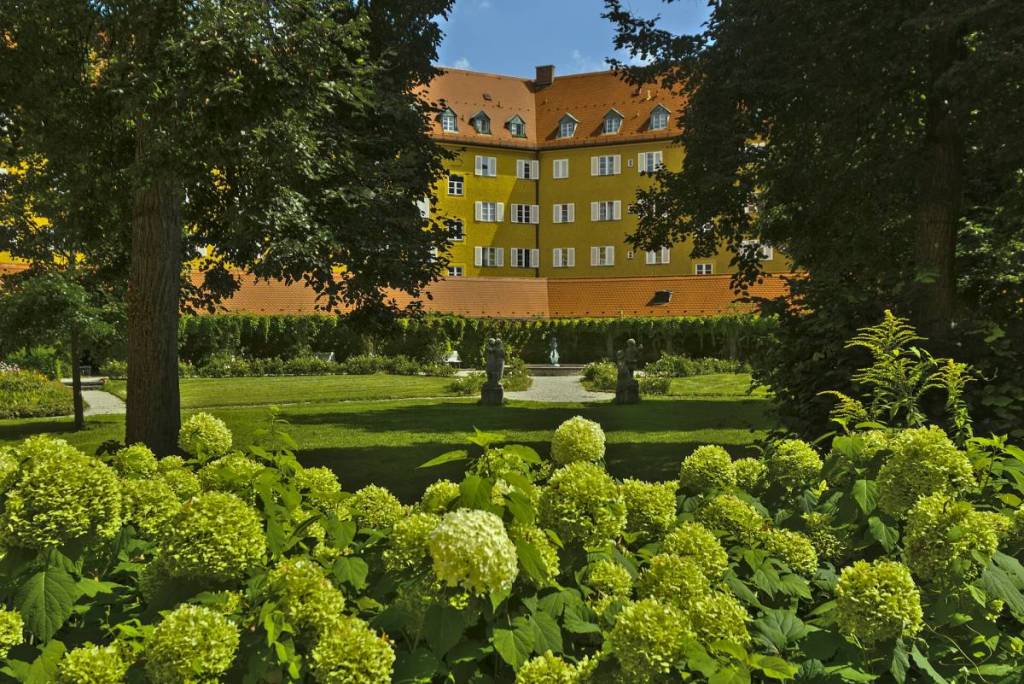
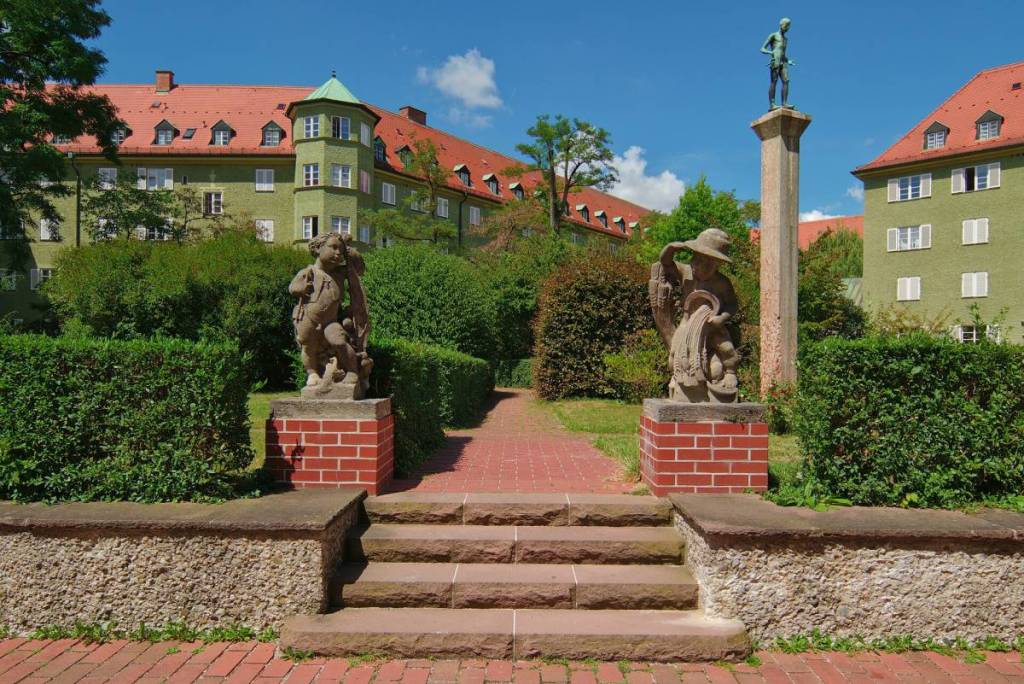
The Borstei consists of a total of 77 buildings with 2- to 5-room apartments, spread across a plot of approximately 70,000 square meters. They form seven courtyards, most of which you can enter. Among them is a rose garden where the flowers bloom beautifully in June and fill the air with their fragrance. In the courtyards, you’ll also find nine fountains and 51 sculptures, turning the gardens into their own little open-air museums. The buildings themselves feature ornate stucco decorations and reliefs. A visit to the Borstei is well worth it just for the sight alone.
In addition to the enchanting architecture, you can also go shopping in the Borstei. Here you’ll find several shops that sell items such as stationery and baked goods. There are also numerous services available, including a hair salon, beauty salon, doctors’ offices, a tailor shop, and a photo studio. You’ll even find a small café where you can relax. Last but not least, be sure to visit the Borstei Museum, where you can learn more about the history and development of this unique neighborhood. Admission is free, but you must register in advance.