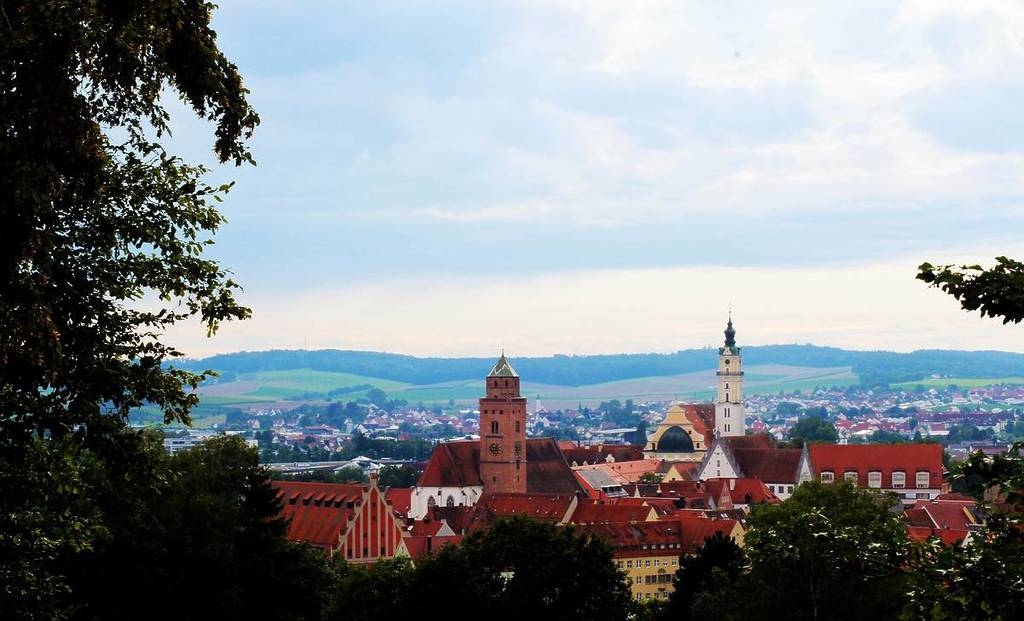
When you hear about a Bavarian old town on an island, you probably think of Lindau on Lake Constance. But there is another town in our state that is much closer to Munich and whose center is partly located on an island – even though there is no lake in sight. Nestled between the Franconian and Swabian Alb and two nature parks lies the small district town of Donauwörth. If you are still looking for places to visit this year, be sure to add it to your list.
The ostracized town with the island
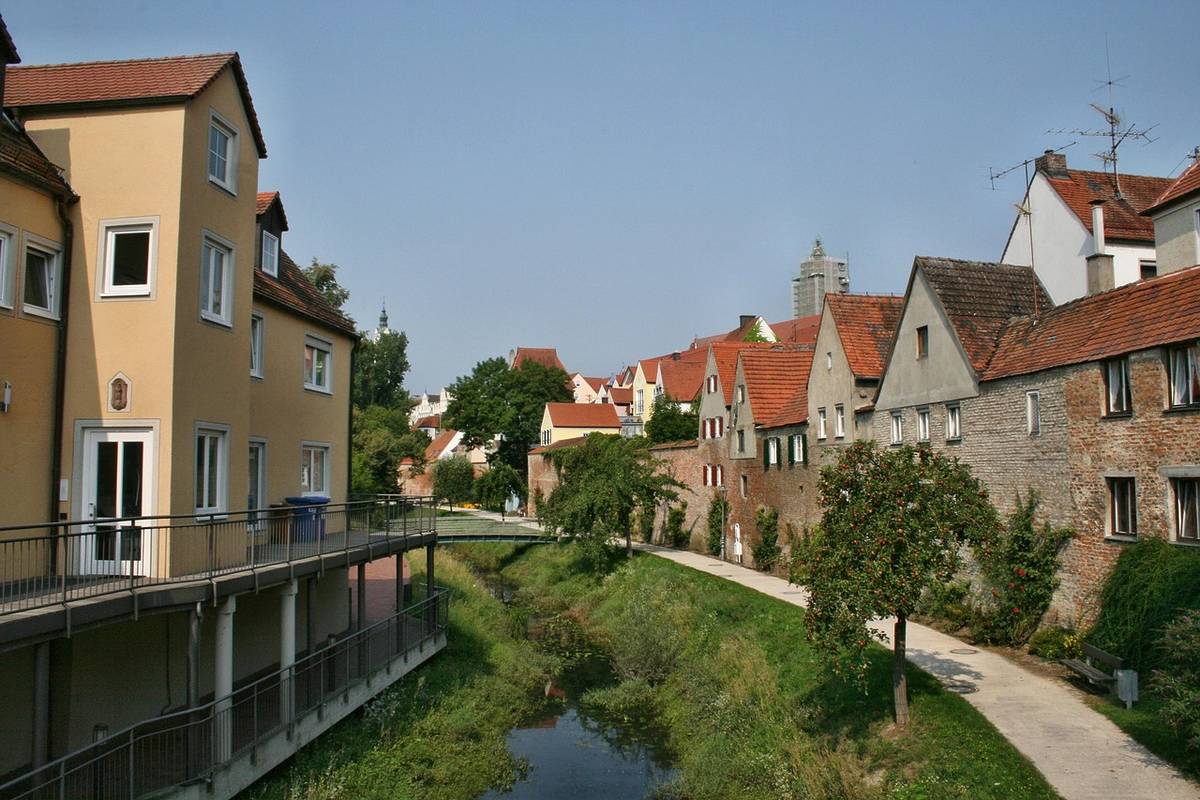 Photo: Else Siegel/Pixabay
Donauwörth has had various names throughout its long history. Initially, the town was simply called Werd. It was granted town rights in 1193 and was henceforth known as Schwäbischwerd. In 1606 and 1607, the imperial city was the scene of the Cross and Flag Battles, in which Protestants and Catholics engaged in violent conflict with each other. As a result, the emperor imposed imperial ban on the town and it lost its name. Duke Maximilian of Bavaria took it as a pledge. It was not until almost 100 years later, after the Battle of Schellenberg, that it was given the name Donauwörth. The town lost its independence and finally became part of Bavaria in 1714.
Today, Donauwörth is a large district town in the Donau-Ries district. Apart from the Danube, the Wörnitz also flows through the settlement area, dividing into the small and large Wörnitz. Between these two arms lies the island of Ried, on which part of the old town is located. The best way to reach the island is via Hindenburgstraße, so that you can pass through the Rieder Tor gate. It is the last of the original four city gates and welcomes you from afar with its bright pink color. On your way across the Wörnitz, you can also stop at the Nepomuk and Nikolaus statues. On the island itself, you will find nice little cafés and restaurants as well as the local history museum, which tells you more about the history of Donauwörth.
Discover Donauwörth
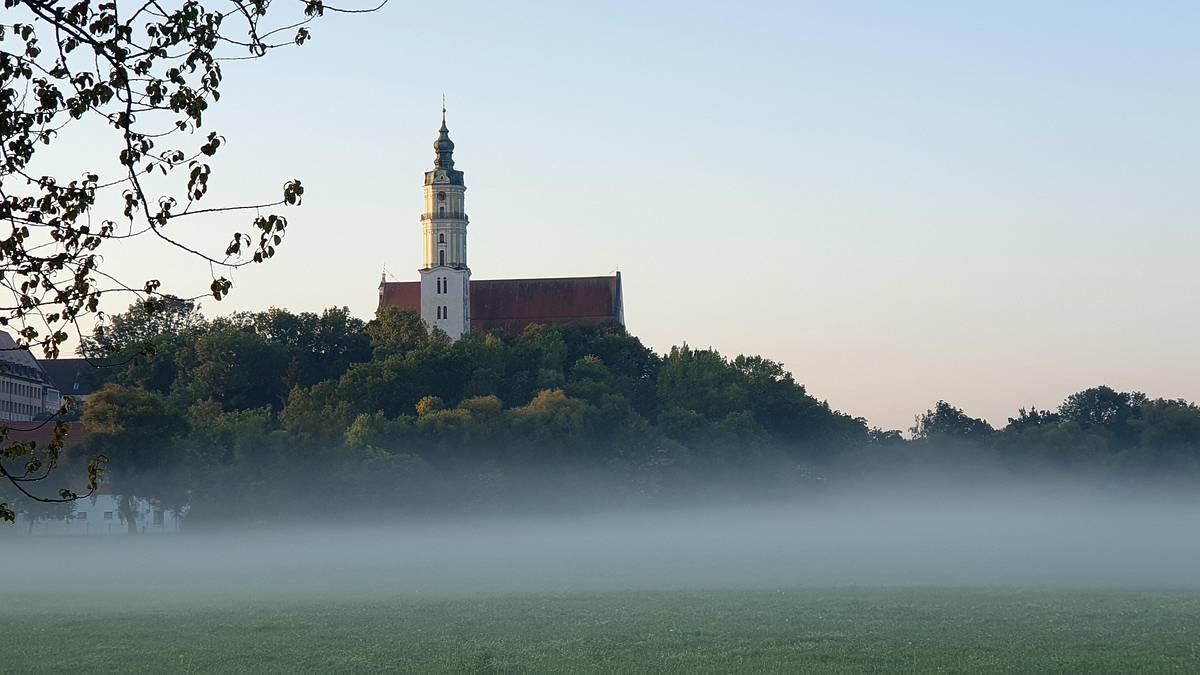 Photo: Werner Reischer/Pixabay
However, the island is just one of many highlights in Donauwörth. On the other side of the small Wörnitz river, on the mainland so to speak, the old town continues. It is crossed by the Reichsstraße, which is part of the Romantic Road. It is considered one of the most beautiful streets in southern Germany and is crowned at its highest point by the Gothic Liebfrauenmüsnter. Its tower houses the Pummerin, the largest church bell in Swabia. The Reichsstraße once connected the imperial cities of Augsburg, Donauwörth, and Nuremberg, which is why it bears this name. Colorful bourgeois gabled houses line the street on both sides, and at the end is the town hall. Its carillon plays folk songs every day, as well as a song from the opera “Zaubergeige” by Donauwörth composer Werner Egk.
Not far from Reichsstraße, you will find the ruins of Mangoldstein Castle, which is perched on the Mangoldfelsen rock. At the foot of the rock , there is now an open-air stage where you can watch plays during the summer months. Also in the center of the city is the Heilig Kreuz monastery, which was once part of the castle and whose Rococo-style monastery church is particularly worth seeing. If you’re longing for a bit of nature, take a stroll along the promenade. With its old trees, lawns, and many beautiful flowers, it forms the green lung of the city. Or visit the Donauspitz, where the Wörnitz flows into the Danube.