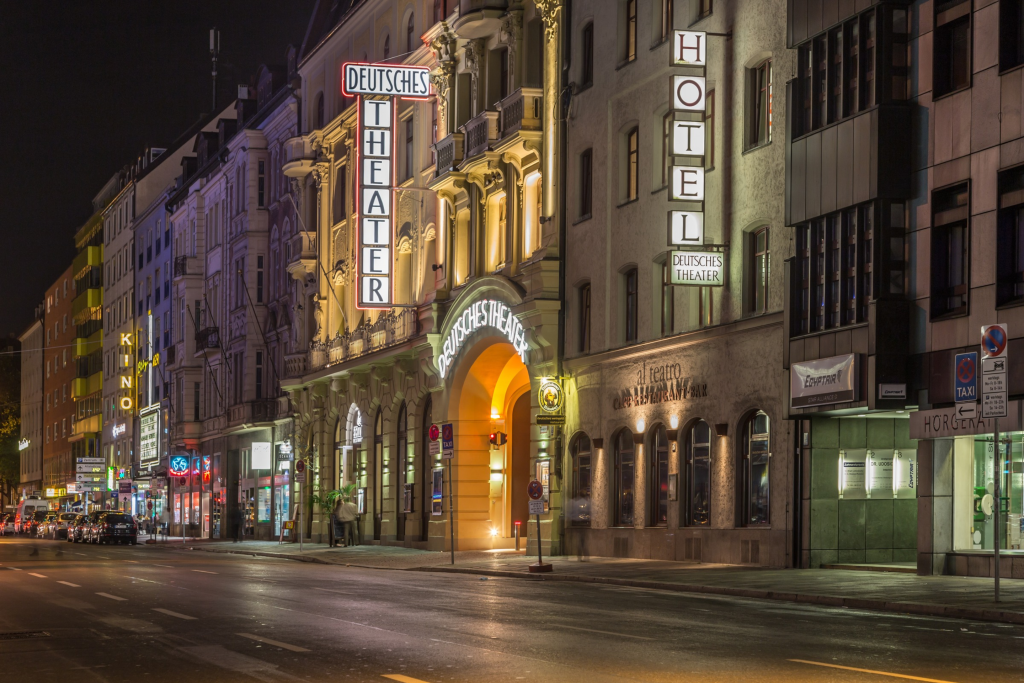

There are many theaters in Munich, representing the full spectrum from small stages to large venues. Thebest known among them is the Deutsches Theater, which enjoys great popularity. But that wasn’t always the case: When it opened at the end of the 19th century, the people of Munich were disappointed. Nevertheless, it managed to establish itself over the long term and is celebrating a major anniversary this year. We look back on 130 years of the Deutsches Theater.
The Controversial Reopening
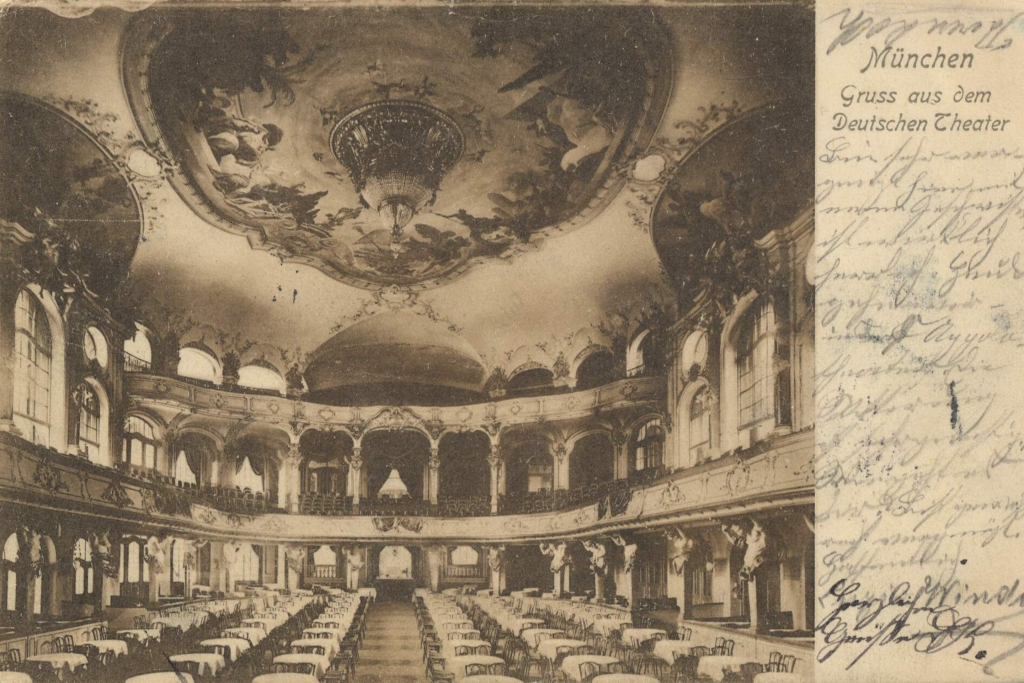
Starting in 1894, industrialist Friedrich Haenle, together with architect Alexander Bluhm, planned the construction of a theater in Munich. Under the direction of Emil Meßthaler , they wanted to create a space for modern theater . They designed the building in the Neo-Baroque style and nicknamed it the “Fairy Palace.” It comprised a large theater auditorium with 1,679 seats, the smaller Silbersaal for events, restaurants, a café, and several apartments. Even before its opening, the palace was the subject of controversy in the press due to concerns about morality, and the director of the Royal Court Theaters also had reservations.
Nevertheless, the Deutsches Theater opened its doors on September 26, 1896, but met with little enthusiasm from the audience. Spectators were disappointed with boththe artistic execution and the building’s acoustics. As a result, the new venue quickly ran into financial difficulties and was sold after only one year. From then on, it served primarily as a variety theater, though folk plays were also performed there and carnival balls were held. This tradition continues to this day, and you can still go dancing at the Deutsches Theater every year on Ash Wednesday. Furthermore, it was from the very beginning a venue exclusively for guest performances, without its own resident company, and over time it became the most famous of its kind in Germany.
The Dawn of the Musical Era
In the 1920s, the Deutsches Theater experienced a significant upswing. Local personalities such as Karl Valentin and Liesl Kalrstadt, as well as international groups like the Tiller Girls, performed here alike. During World War II , the Deutsches Theater was then almost completely destroyed by bombing raids; only the Silbersaal survived and has been preserved to this day. After its reconstruction, the program was expanded to include ballet, operettas, and musicals.
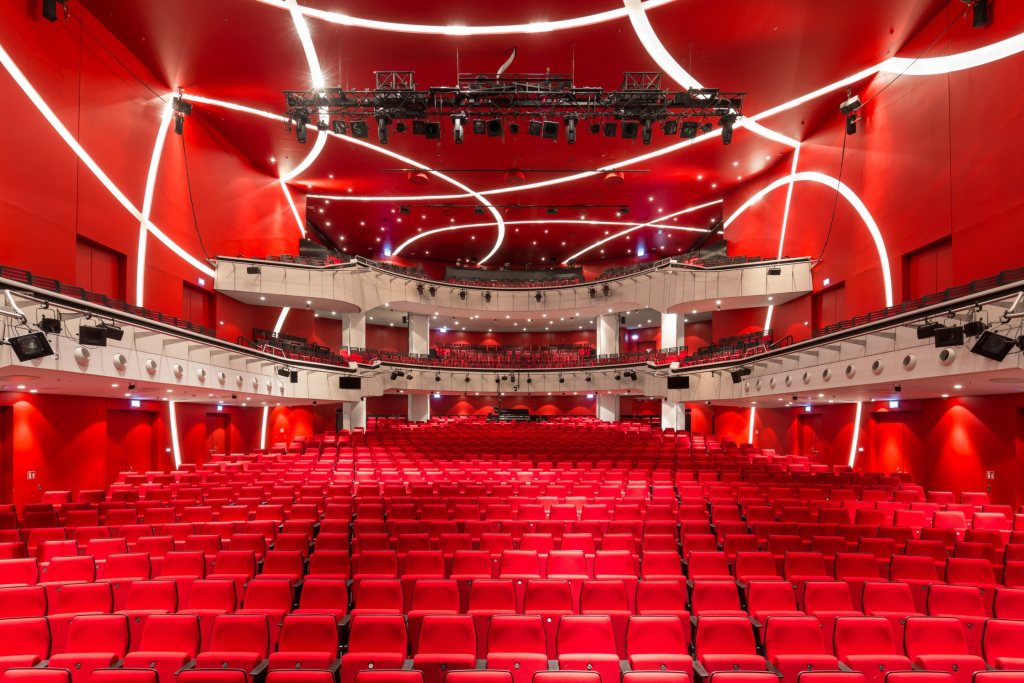
In 1961 , *West Side Story* celebrated its European premiere at the Deutsches Theater, making it Munich’s number-one musical venue. Since then, numerous Broadway and West End productions have been staged there, continuing to delight Munich audiences to this day. Starting in 2008, the Deutsches Theater underwent extensive renovations and celebrated its grand reopening in 2014. To mark the occasion, *West Side Story* was brought back to the stage and once again enjoyed great success.
130 Years of the Deutsches Theater
With 300 performances a year, the Deutsches Theater is Munich’s second-largest venue after the State Opera and the city’s largest venue for touring productions . Despite its rocky start in 1896, it has enjoyed a long history of success. On September 26 of this year, we celebrated the 130th anniversary of the Deutsches Theater . To mark the occasion, the theater is hosting a contest where you can win merchandise as well as tickets. All you have to do is complete the memory game on the theater’s website by Halloween at the latest.
However, the major anniversary is also overshadowed by financial concerns. Although the theater’s success remains unbroken, the city—which has owned the venue since 1982—lacks the funds. Cuts to the cultural budget had already been announced at the end of last year, and these cuts do not spare Munich’s largest guest theater. City Hall had even discussed selling the theater. What the future holds remains to be seen. Let’s hope you can look forward to another 130 years of the Deutsches Theater.