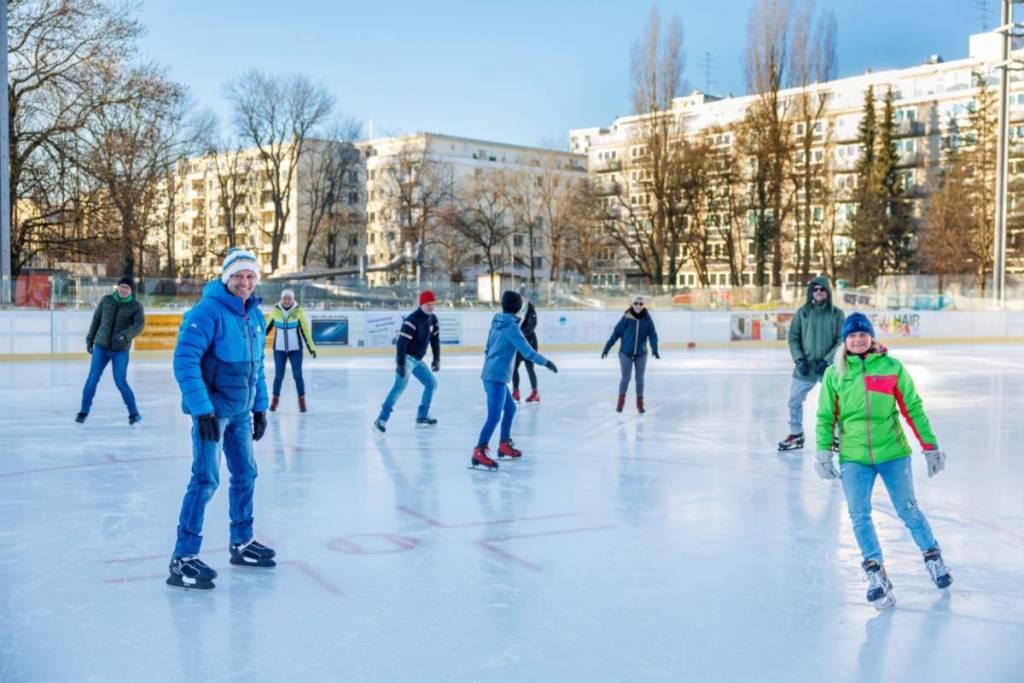

In addition to curling, ice skating is also one of Munich residents’ favorite winter activities. When the weather is nice, outdoor rinks are particularly popular, such as at the Eiszauber at Stachus or at the Prinzregentenstadion. The latter is the oldest of its kind in Munich, but a major change is planned for the coming years. Starting with the 2028–2029 season, the city plans to switch to a synthetic surface at the Prinzregentenstadion—much to the dismay of figure skaters.
Ice Sports History at the Prinzregentenstadion
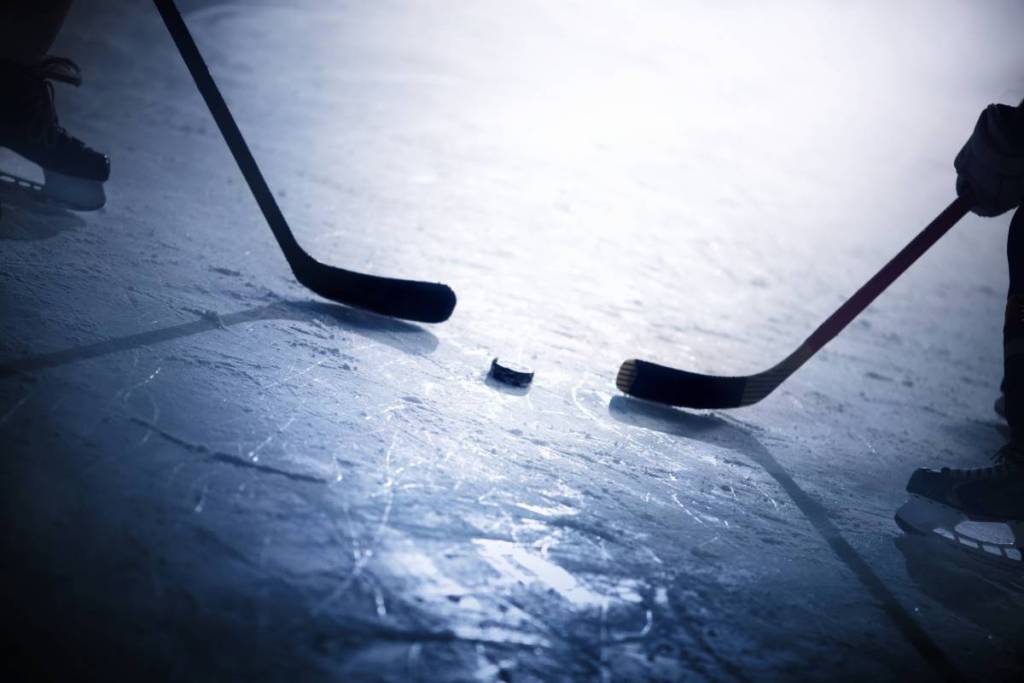
On December 16, 1933, the Prinzregentenstadion opened as the first artificial ice rink in southern Germany on Prinzregentenstraße, the street from which it takes its name. That very same day, the Berliner SC and SC Riessersee played a rematch of the German Ice Hockey Championship final here (the Berliners won). The rink was also popular with figure skaters for training right from the start. During the warm summer months, however, the arena was used to host boxing matches, while the outdoor pool next door was bustling with activity.
In the 1990s, the Prinzregentenstadion was actually supposed to be demolished, but the public protested. As a result, it was renovated instead, and the “Prinze” has remained with us to this day. Just last year, the winter sports offerings were expanded to include two curling rinks, which proved so popular that this year, rinks are also being offered at the Dantebad. In addition, the Prinzregentenstadion boasts Munich’s largest sauna area—perfect for warming up after a workout.
Synthetic Surface Instead of Real Ice
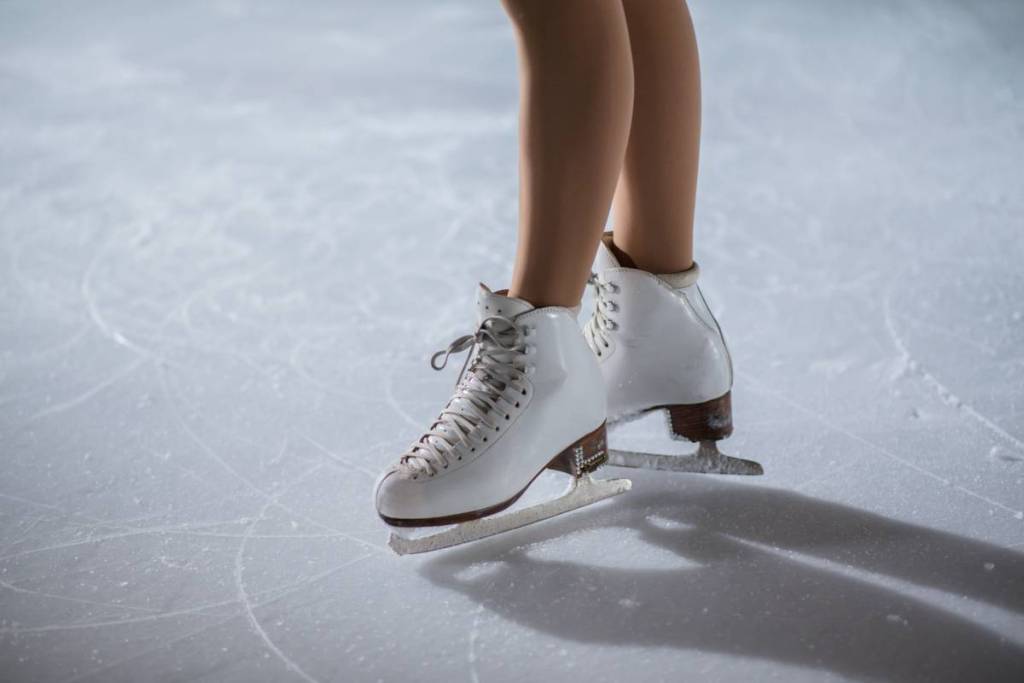
With its 1,800 m² ice surface, the Prinze is a popular destination for young and old alike every winter. Amateurs and professionals alike gather here to skate laps under the open sky. In the future, however, there will be a significant change at the stadium—one that not everyone is happy about. Instead of real ice, the Prinzregentenstadion will switch to a synthetic surface. The city cites lower costs as one reason for this decision and environmental concerns as another.
A new refrigeration system would be needed in the near future, as the old one has already been in operation for 25 years. The new system would require approximately 1 million kilowatt-hours of electricity per season. Added to that are the 500,000 liters of water needed to make the ice. Just this past summer, Munich had called for water-saving measures due to high consumption and the heat. A synthetic ice surface is said to be more economical and environmentally friendly. Furthermore, the season could be extended since it is not exposed to the weather.
Initial tests with the synthetic surface had already taken place this fall at the Dantebad. It became clear that different groups have different needs. While both recreational skaters and hockey players get used to the synthetic surface after a while, it’s out of the question for figure skaters. They can barely jump or spin on it. Nevertheless, the city has decided to go with the synthetic surface at the Prinzregentenstadion. It is scheduled to be put into use starting with the 2028–2029 season. From then on, figure skaters will have to use other venues, such as the Ostparkstadion. It is also unclear whether Sunday ice dancing at the Prinzregentenstadion will still be possible in the future.