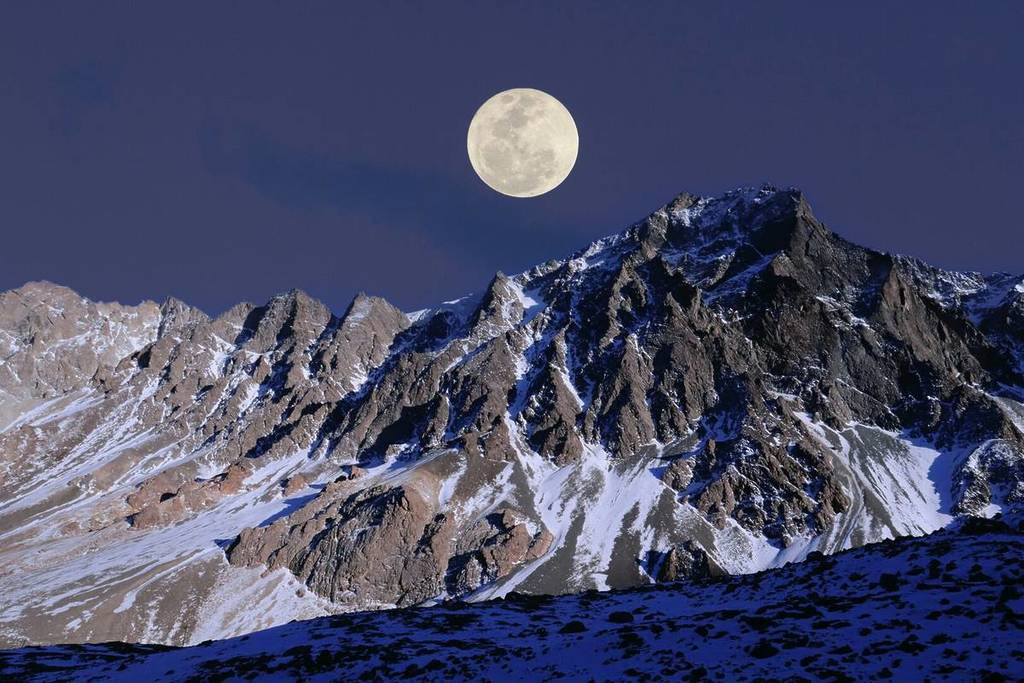
Sometimes it feels like there’s a supermoon in the sky above Munich every month. And indeed, this coming weekend will see the second full moon of 2026. Traditionally, each of these moons has a special name that goes back to ancient customs.In February, it’s the so-called Snow Moon. The name says it all: statistically speaking, February is often considered the month with the most intense snowfall. Here’s what you should know about the upcoming Snow Moon over Munich.
The symbolism behind the full moon
 Photo: Shutterstock
The roots of this name lie with the Algonquin, the indigenous people of North America. They observed the heavy winter precipitation and named the moon after it. However, from an astronomical or scientific point of view , there is no direct connection between the position of the moon and the weather. The names are purely cultural. In Europe, it used to be known as the Hunger Moon, as supplies ran low in winter.
A full moon occurs when our moon is exactly opposite the sun as viewed from Earth and is therefore fully illuminated. Apart from physics, it has always been a powerful symbol. In spirituality, it embodies energy, completion, and clarity. Many believe that it influences earthly forces. In Buddhism, the night of the full moon is even considered sacred.
How to see the Snow Moon 2026 over Munich
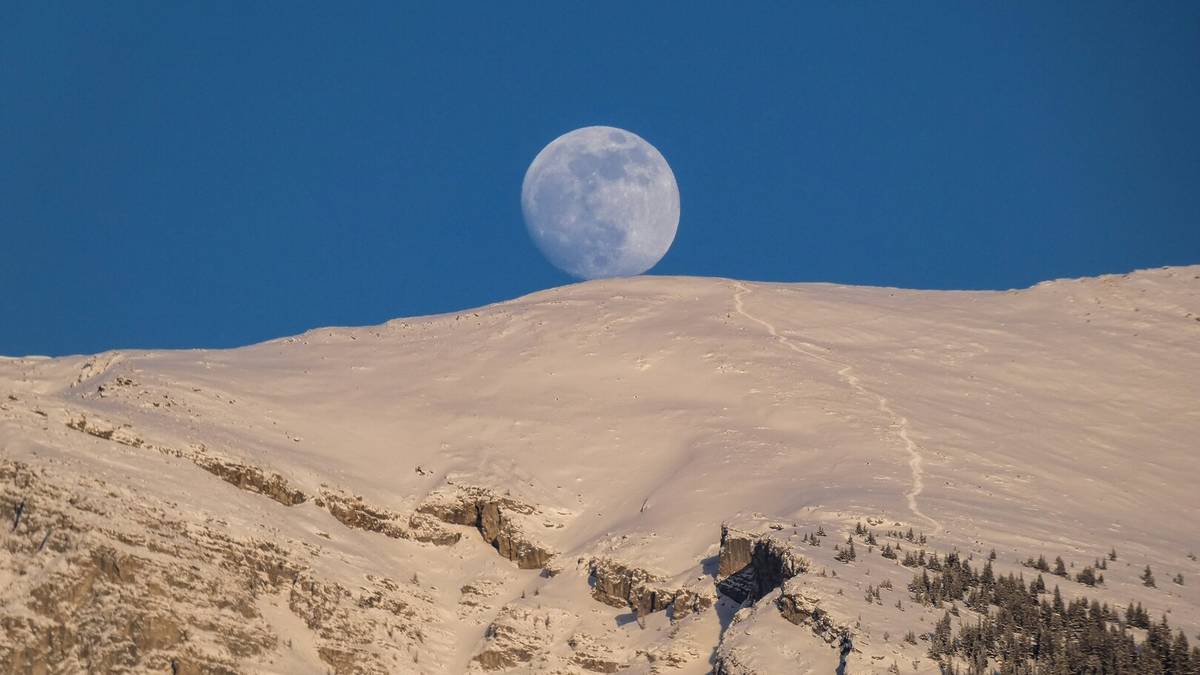 Photo: Unsplash
If you want to observe this special celestial spectacle over Munich, you should mark February 1 in your calendar. From around 11:00 p.m., the Snow Moon will be visible in its full roundness. At this time, the moon will be in the constellation Cancer, near the famous Beehive Cluster.
Even though the exact full phase is late at night, it’s worth taking a look from around 5:30 p.m. onwards. That’s when the moon rises in the east. With frosty temperatures and occasional snowfall forecast for early February, there’s a good chance that the name will live up to its promise this year and Munich’s parks will be bathed in white light.
Similar to last month, it will appear a little smaller than usual in the sky . This is because it is currently in a distant area on its elliptical orbit. Thus, the Snow Moon will be a visually subtle but nevertheless beautiful sight.