


The circle surrounding the almanac “Der Blaue Reiter” was pioneering for Expressionism and modern art in Germany. Several museums in Munich and the surrounding area are dedicated to the works of this group, including the Lenbachhaus, the Schlossmuseum in Murnau, and the Museum Penzberg. The latter focuses on Heinrich Campendonk, a lesser-known member of the group whose work is nonetheless no less fascinating. Discover Campendonk’s paintings and learn more about the history of Penzberg.
The Painter and the Mining Town
Heinrich Campendonk was a German-Dutch painter born in Krefeld in 1889. Among others, he maintained contacts with Paul Klee and Franz Marc, and through the latter he eventually became acquainted with the Blue Rider group. In 1912, he joined the group as its youngest member and participated in its exhibitions. He was the only artist in the group to dedicate his paintings to the town of Penzberg, where he also worked. For example, he designed stained-glass windows for Christ the King Church.
This is how Campendonk is connected to Penzberg, which is why the City Museum decided to dedicate itself to him in return. Previously, the focus had been on the town’s own history and its existence as a mining town. In 2010, a collector donated 87 paintings to the Penzberg Museum, which were given their own permanent exhibition. In 2016, the museum was expanded with an addition, and the Campendonk Collection was expanded by 200 more works, making it the largest of its kind in the world today.
Exhibitions at the Penzberg Museum
The permanent exhibition dedicated to Heinrich Campendonk features works from all phases of his career and in various techniques. Here you’ll find oil paintings, watercolors, prints, and reverse-glass paintings. In addition, the Penzberg Museum also showcases other artists, most notably the Expressionist Gerhard Fietz of the ZEN 49 group, another Munich-based association. Here, you’ll not only find art but also learn more about the city’s history . Originally, the Penzberg Museum was actually the city museum before it began specializing in Campendonk in 2002.
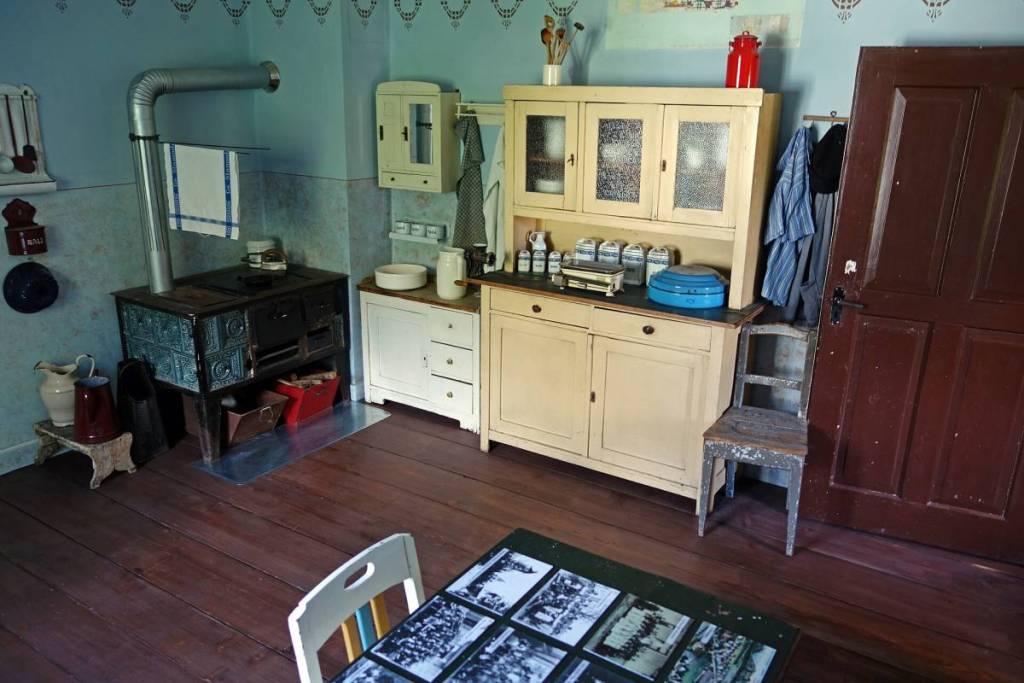
This is already evident in the architecture. Originally, it was just a single building—a former workers’ dormitory for mining employees. In Penzberg, you’ll find several such buildings, all of which are now listed as historic landmarks. The extension was built in the same style, with a facade made of dark clinker brick. On the one hand, this once again draws a connection to the town’s mining history; on the other, the building appears as a dark twin of the original. In the older part of the building, you’ll gain further insight into the history of mining in Penzberg and can admire a miner’s apartment faithfully furnished as it would have been in those days. So whether you’re more interested in art or history, the Penzberg Museum offers both.
📍 Location: Am Museum 1, Penzberg
🕐 Hours: Wednesday through Sunday, 10 a.m. to 5 p.m.
💶 Price information: Adults €8, Children €3.50
