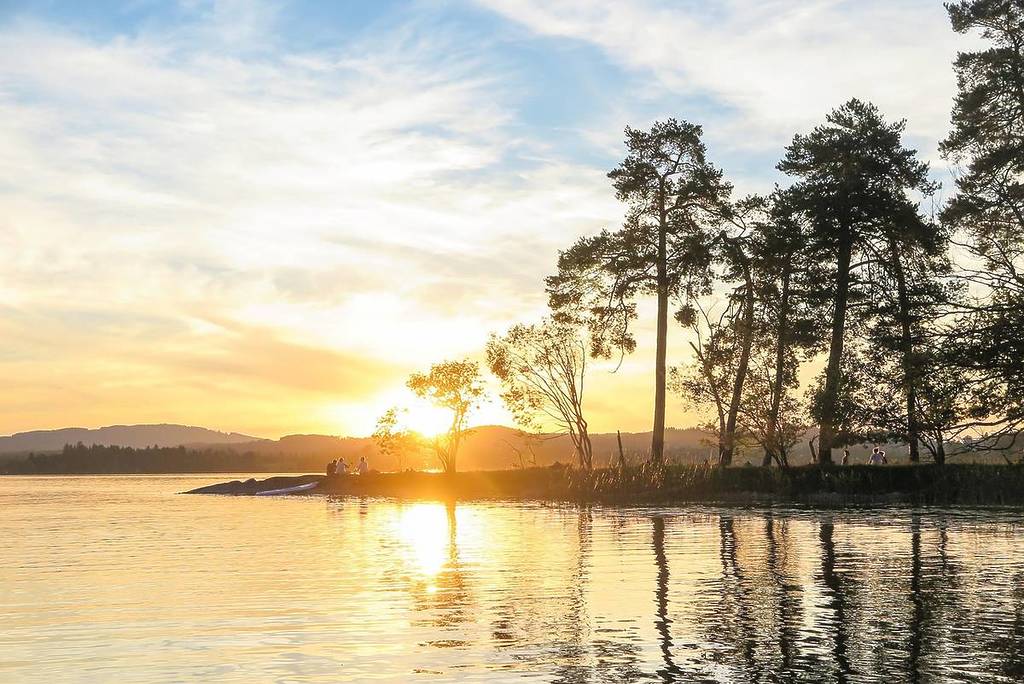
A tranquil little town on a lake with a mountain panorama: sounds like just about every third place in Bavaria. But Murnau am Staffelsee is considered particularly beautiful. So beautiful that famous artists such as Wassily Kandinsky settled here to immortalize the landscape and the community on canvas. Today, you can find the paintings all over the world and, of course, in Murnau itself. In addition to its great significance in the art scene, the town is also notable for its location on the largest contiguous moorland area in Europe and for a special legend that is said to have given Murnau its name.
A lindworm as the town’s coat of arms
There are several stories about how Murnau got its current name. It is said that a dragon once wreaked havoc in the area around Lake Staffelsee. The town was therefore called Wurmesaus, a combination of “Lindwurm” (dragon) and “Au” (meadow). One day, Emperor Ludwig the Bavarian finally slew the dragon and freed the town. In another legend, a little boy is credited with slaying the dragon. He laid out a calf’s skin as bait on the island of Wörth in the Staffelsee. The skin had been treated with lime. When the dragon drank from the Staffelsee after its meal, the lime reacted with the water and killed the beast.
Even today, the town’s coat of arms bears witness to the old legends, as it depicts a fire-breathing lindworm. Outside the town , there is also the Drachenstich, a field that you can walk along. However, there is a less spectacular explanation for the place name Murnau. It could be derived from the Middle High German words “muorin” for moor and “ouwe” for meadow. South of the town lies the Murnauer Moos, a 32-square-kilometer moorland area, to which the name could refer. However, the origin of the name has not been clearly established.
The Blue Rider in Murnau
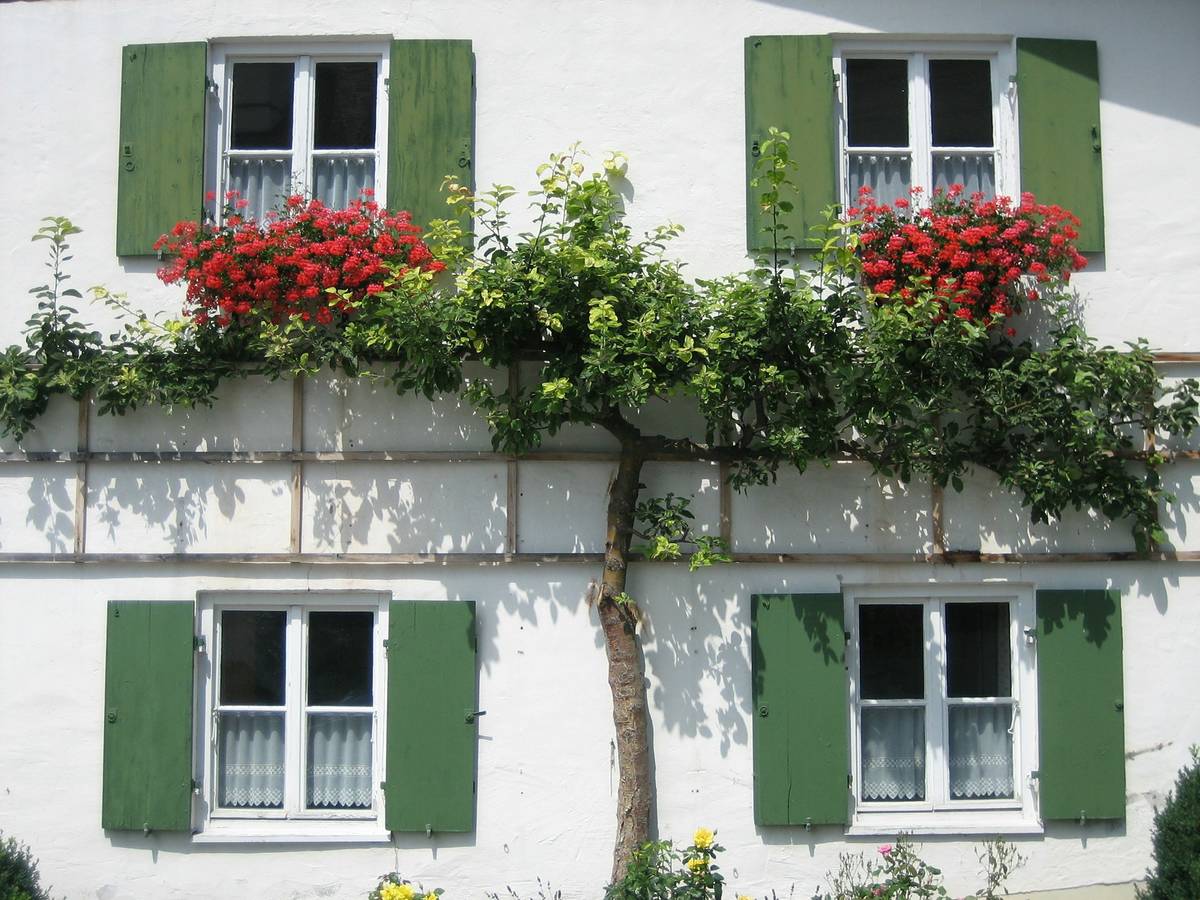 Photo: Stefano Vigorelli/Unsplash
But Murnau is not only interesting because of its exciting legends. In 1908, the Russian-born artist Wassily Kandinsky and his wife Gabriele Münter, together with Marianne von Werefkin and Alexej Jawlensky, spent time painting in the community. Until the beginning of World War I , they created many paintings of the town and its surrounding landscape, which you can now view in New York, Munich, and Murnau itself, among other places.
Together with other artists, they founded the expressionist group “Der Blaue Reiter”(The Blue Rider), which published an almanac of the same name. Murnau and the surrounding area also owe their nickname “Blaues Land” (Blue Land) to the Blue Riders. The editorial meetings for the almanac often took place in what is now the Münter House, where Münter lived with Kandinsky for a time. Today, you can visit the house and view its paintings. More pictures by the Blue Rider can be found in the castle museum in the former castle of Murnau. Here you will also find some examples of reverse glass painting, for which the town is also famous.
Diverse landscapes
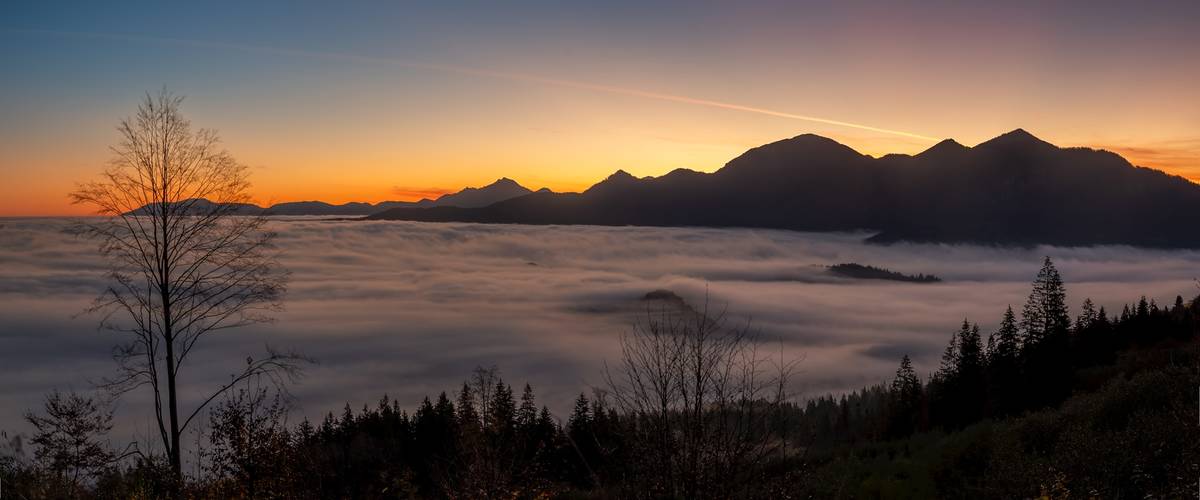 Photo: Andreas Kretschmer/Unsplash
Even if you are not an art enthusiast, Murnau and its surroundings are well worth a visit. Both mountain and lake lovers will find something to suit their tastes here. On the horizon, you can see the Zugspitze, the Alpspitze, and the Herzogstand, among others. The Staffelsee, on the other hand, is just one of three lakes in the “Blue Land.” It covers an area of 8 square kilometers and has seven islands, one of which, Wörth, is inhabited. The Riegsee and the Froschhauser See are also not far away.
A special feature of the landscape is, of course, the Murnauer Moos, which is a wonderful place for hiking. The area is crisscrossed by many small streams and is home to many small ecosystems. It was formed after the glaciers in the area receded over 10,000 years ago. Murnau itself is also worth a visit, and not just because of its museums. When the weather is nice, you can stroll through the spa gardens, admire the old houses around Münter Square, or settle down in one of the traditional coffee houses.
It takes about an hour to get from Munich to Murnau by car or train. You can simply take the RB60 towards Pfronten-Steinach from Pasing and get off after five stops.