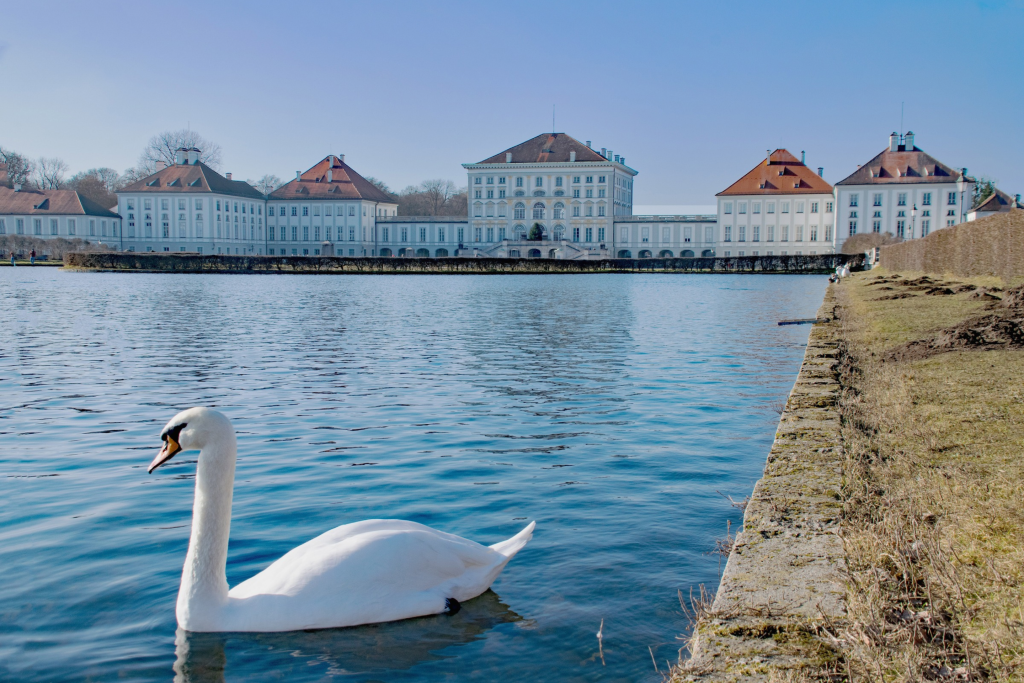

Imagine walking across an open field in the 17th century, about a two-hour walk from the Munich Residenz. It was precisely there in 1664 that one of the most impressive architectural masterpieces in Germany and Europe was born! To celebrate the birth of the heir to the throne, Max Emanuel, Elector Ferdinand Maria had an elegant summer house built for his wife, Henriette Adelaide of Savoy. At the time, no one could have imagined what this comparatively simple country house would become. Over the course of more than two centuries, renowned architects transformed the building into a majestic palace complex. With its staggered pavilions, the palace’s facade now spans a width of approximately 632 meters, surpassing even the famous facade of the Palace of Versailles.
How a Country House Became a Majestic Residence
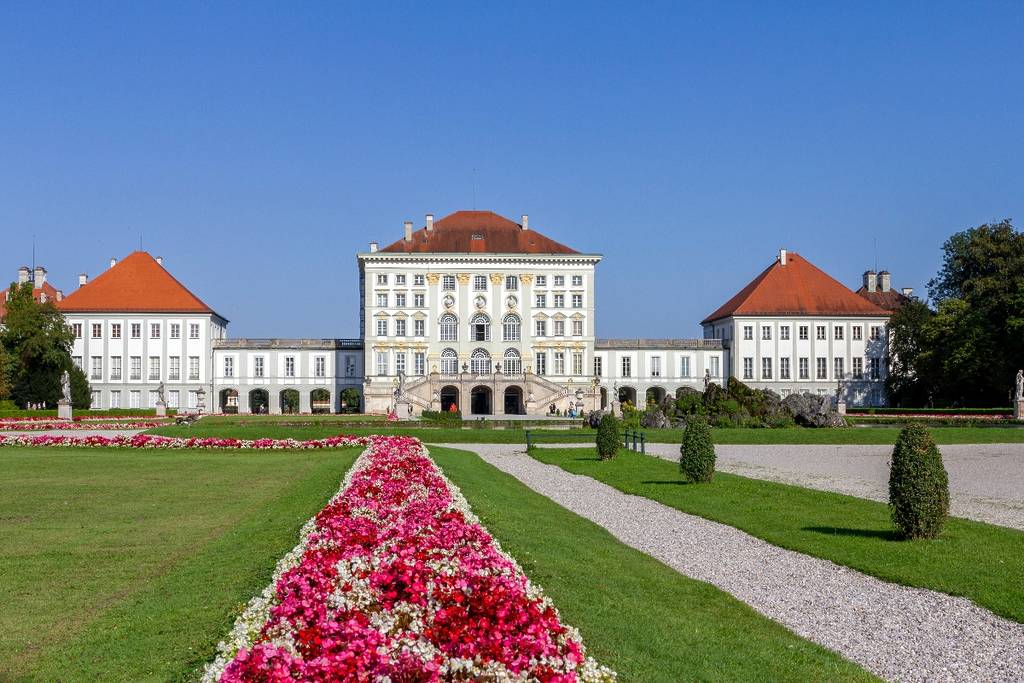
The history of Nymphenburg’s origins and its historical evolution represent a fascinating interplay of art and princely prestige. Based on initial designs by architects Agostino Barelli and Enrico Zuccalli, Elector Max Emanuel expanded the main building under Joseph Effner to include various elements, such as pavilions, galleries, and the semicircular rondel. Later rulers also left their own splendid mark: Elector Karl Albrecht enriched the park with the world-famous Amalienburg, a masterpiece of European Rococo. Magnificent frescoes were created in the central Stone Hall, while King Ludwig I commissioned the famous Gallery of Beauties. Furthermore, King Ludwig II was born in 1845 in the palace’s chambers.
Nymphenburg Palace: A Green Oasis in the Heart of the City

Today, Nymphenburg Palace is a vibrant natural paradise in the heart of Munich. The 180-hectare palace park is Munich’s second-largest green space after the English Garden. Hidden within the park are historic park castles such as the Badenburg —home to the first heated indoor swimming pool of the modern era—the Pagodenburg, and the mystical Magdalenenklause. The complex also houses the Marstall Museum with its magnificent carriages, the Nymphenburg Porcelain Museum, and the Museum of Human and Natural History. Since 1760, it has also been home to the renowned Nymphenburg Porcelain Manufactory, whose traditional craftsmanship is part of the intangible cultural heritage and makes for the perfect souvenir.