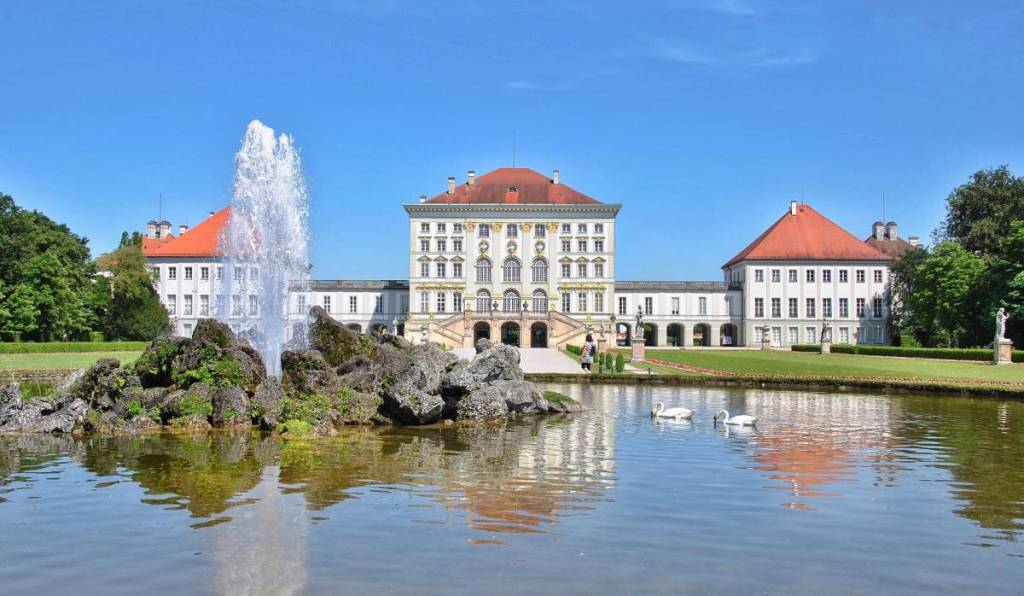

Nymphenburg Palace, with its opulent architecture, presents a magnificent sight that catches your eye even from a distance. Even from the other end of the palace canal, at the Hubertus Fountain, you can still clearly make out the imposing structure. But on the palace grounds , there are also structures that represent the opposite of this. Hidden in the woods of the sprawling park lies the Magdalenenklause, designed to look like a ruin and serving as a reminder of the transience of pomp and ostentation. It’s as if you’re stepping into another world when the trees part and the beautiful, yet visibly decaying building appears before you. Inside, you’ll find yourself in a fantastic chapel that makes you feel as though you’re in a sea grotto.
A hermitage as a sobering retreat
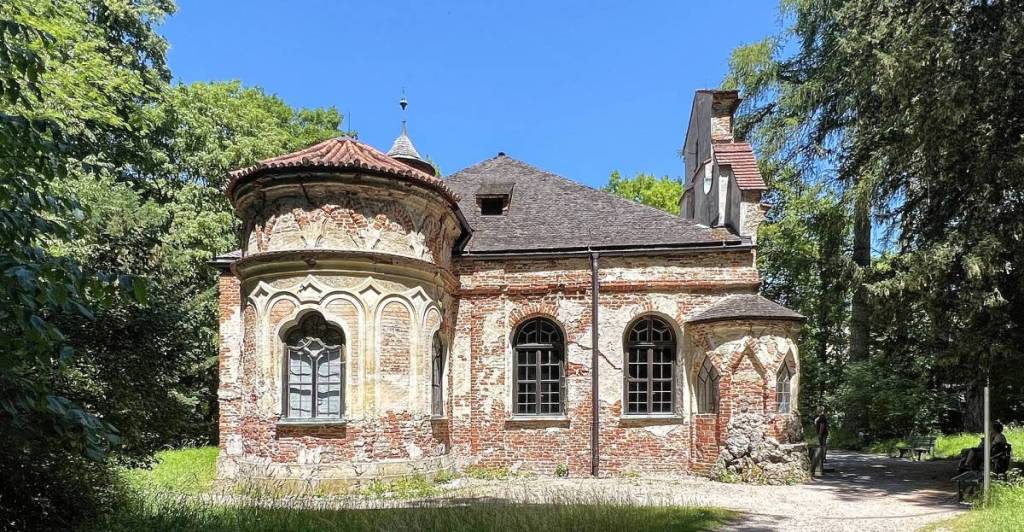
Elector Max Emanuel commissioned the Magdalenenklause from Joseph Effner, who built it as the third park building between 1725 and 1728. He designed its exterior to resemble a ruin, featuring long, deep cracks and exposed brickwork. Thus, the hermitage is intended to serve as a reminder of the transience of all worldly things, true to the vanitas motto “memento mori.” It is considered one of the earliest examples of ruin architecture on the continent. Despite its seemingly crumbling facade, the building is impressive even from the outside, featuring small turrets and round extensions.
The Magdalenenklause was intended as a retreat for the Elector when he wanted to escape all worldly matters. In the forest of the palace park, he hoped to refocus on what truly matters. That is why , in addition to a chapel, the hermitage also contains several living quarters, allowing one to spend several days there. However, Max Emanuel died before the building was completed, so it passed to his son, Clemens August.
The Magdalenenklause as a Place of Pilgrimage
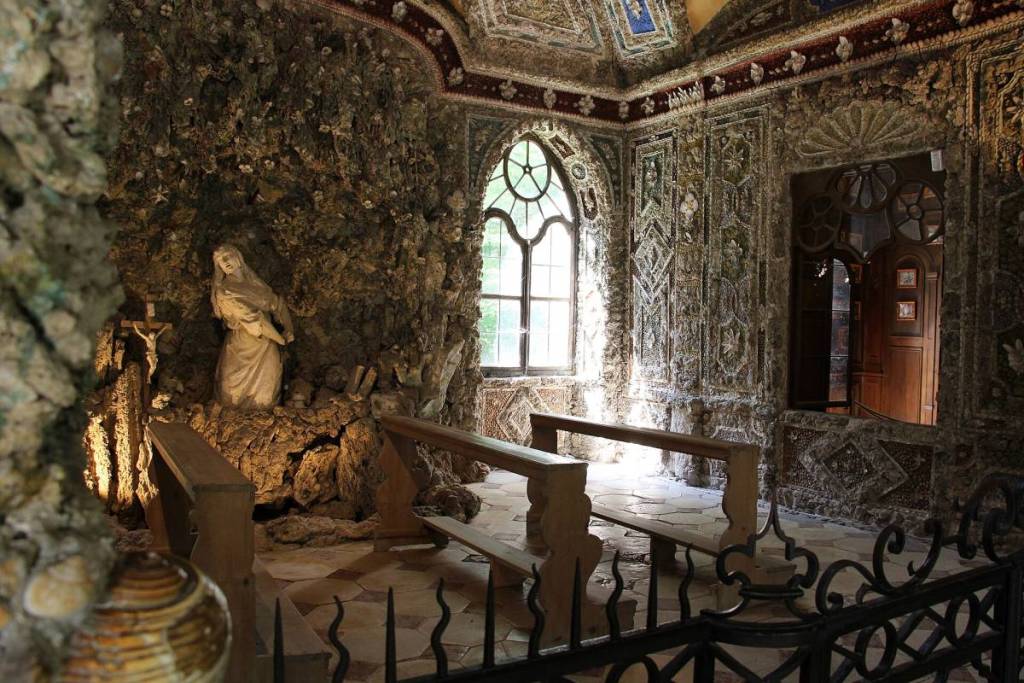
The Magdalenenklause owes its name to Saint Magdalene, to whom the chapel is dedicated. Among other things, she is the patron saint of those suffering from eye diseases, and so the spring water in the hermitage was said to have healing properties. On July 22, Saint Magdalene’s name day, the park opened its gates to the public, and people made a pilgrimage to the chapel. This gave rise to the Magdalenafest, which eventually became a folk festival that you can visit today in the Hirschgarten. On Saint Magdalene’s name day, the hermitage remains a place of pilgrimage, and a church service is held in its chapel on July 22.
But even if you’re not on a pilgrimage, a detour to the Magdalenenklause is well worth it. Although it is meant to remind us of the transience of earthly things, its interior is truly magnificent to behold. The chapel, in particular, is a magnificent sight. It looks like a grotto, its walls completely covered with tuff and seashells. Hermits often lived in grottoes, and the design is inspired by this. On one side stands a statue of Mary Magdalene, created by the Italian sculptor Giuseppe Volpini. Beneath it is a fountain basin in which the sky is reflected, visible through a hole in the ceiling.
Apart from the chapel, the elegant living quarters are also fascinating to explore, where you can discover numerous paintings and engravings. Their oak paneling gives them a cozy atmosphere, and compared to the palace, they appear rather simple. If you’d like to visit the Magdalenenklause, you’ll need either a single-entry ticket for the park castles or a combined ticket that also includes admission to Nymphenburg Palace. A single-entry ticket costs €6, and the combined ticket costs €14.