King Ludwig II left his mark on Bavaria like no other. It is not without reason that many of his palaces and castles are still so popular today: the “Bavarian King” loved gold and splendor and hardly spared on magnificent buildings. At least that gives us the advantage of finding a lot of beautiful architecture around Munich today. The Herrenchiemsee Palace is undoubtedly one of the most magnificent sights in Bavaria. It invites you to be whisked away into the world of King Ludwig II.
A royal vision
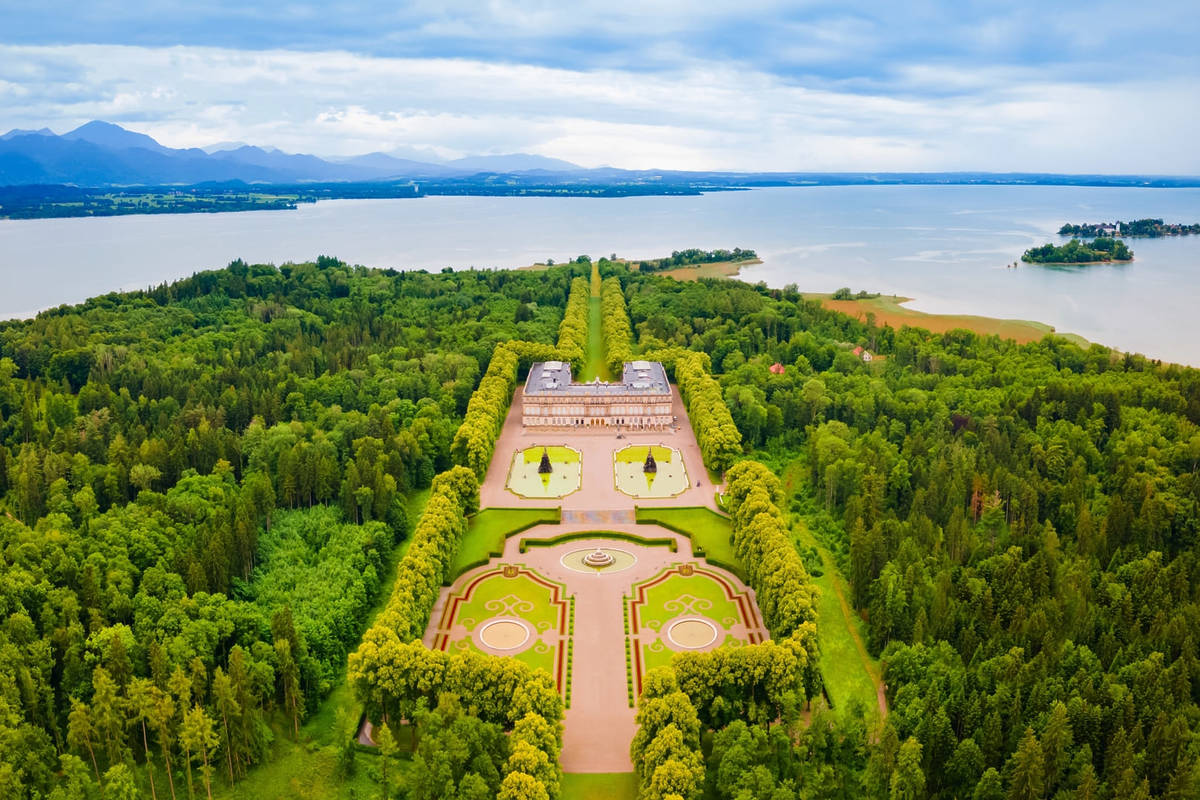
The Herrenchiemsee Palace was built in 1878 by King Ludwig II on the island of Herreninsel in Lake Chiemsee as a personal retreat. He had very specific ideas: The palace was to serve as a “temple of glory” for the much-admired Sun King Louis XIV of France. He wanted his own Versailles in the middle of Bavaria – it couldn’t get any smaller for him.
Nevertheless, what remains today is a truly impressive sight that serves as a symbol of absolutism and royal power. The palace is also known as the “Bavarian Versailles”. Even the journey there had to stand out for the king. Similar to the Rose Island, the fairytale building is located in the middle of a lake. Its location on the Herreninsel in Lake Chiemsee, accessible only by boat, gives the Herrenchiemsee Palace a special atmosphere and exclusivity.
However, the royal vision was never completed. With Ludwig’s death in 1886, the palace remained incomplete. Of the 70 rooms originally planned, only around 20 were fully decorated.
Splendor and ostentation like in Versailles
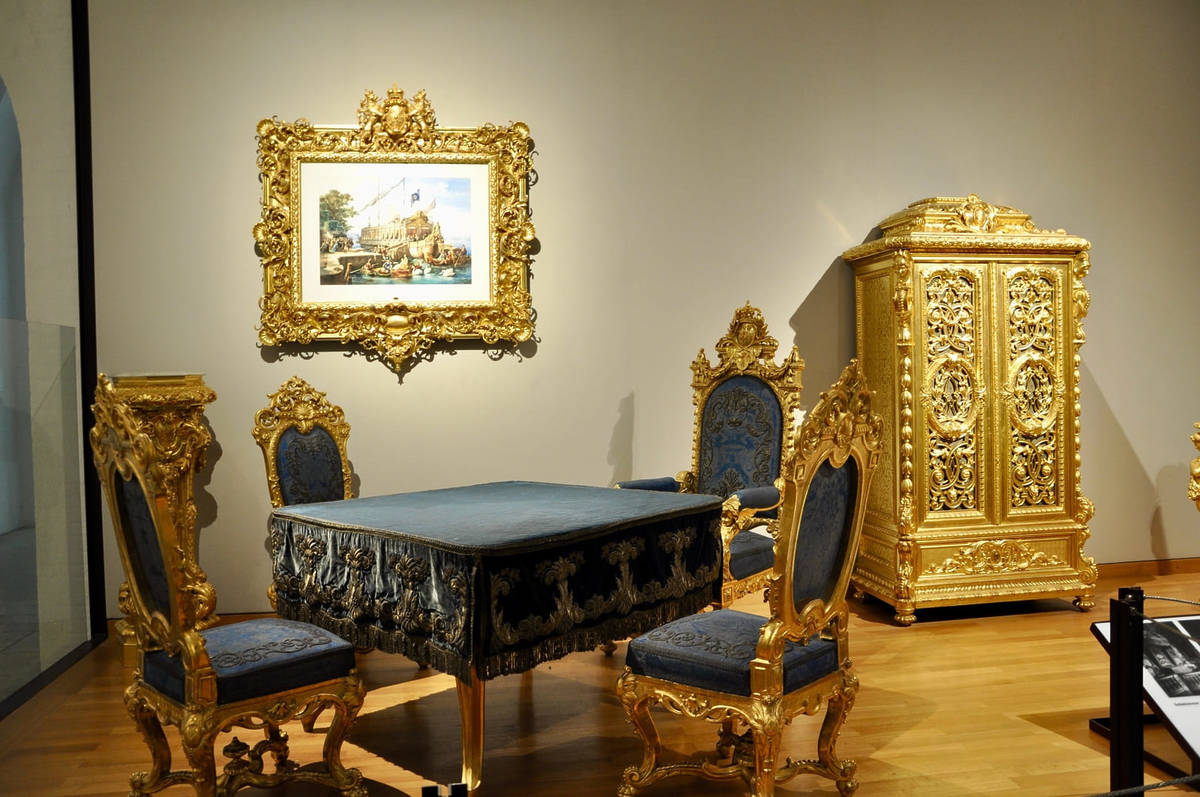
Visitors to Herrenchiemsee are rewarded with unique architecture. The large state rooms – above all the monumental staircase, the royal bedroom and the magnificent Hall of Mirrors – bear witness to Ludwig II’s love of opulent décor and French rococo . In contrast to the French model, however, the palace has central heating and running water.
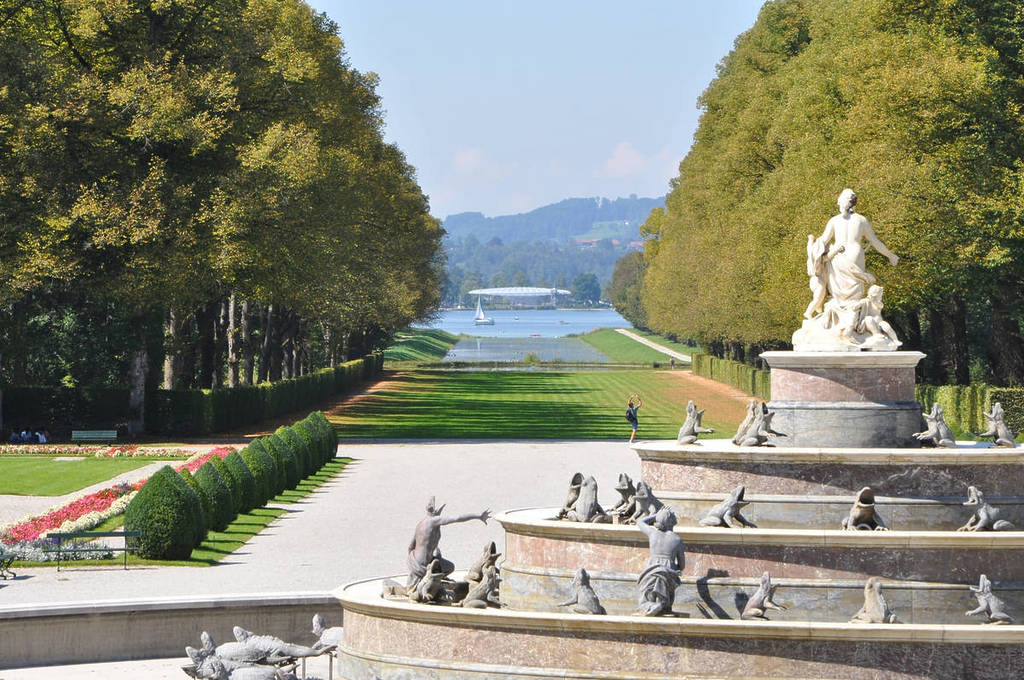
There are also small technical wonders, such as a dining table that can be lowered – according to the motto “little table, set the table”. Heated water systems provided royal comfort. The gardens, only partially completed, also impress with their imposing waterworks and fountains, which were modeled on those at Versailles.
Today: a cultural and natural paradise
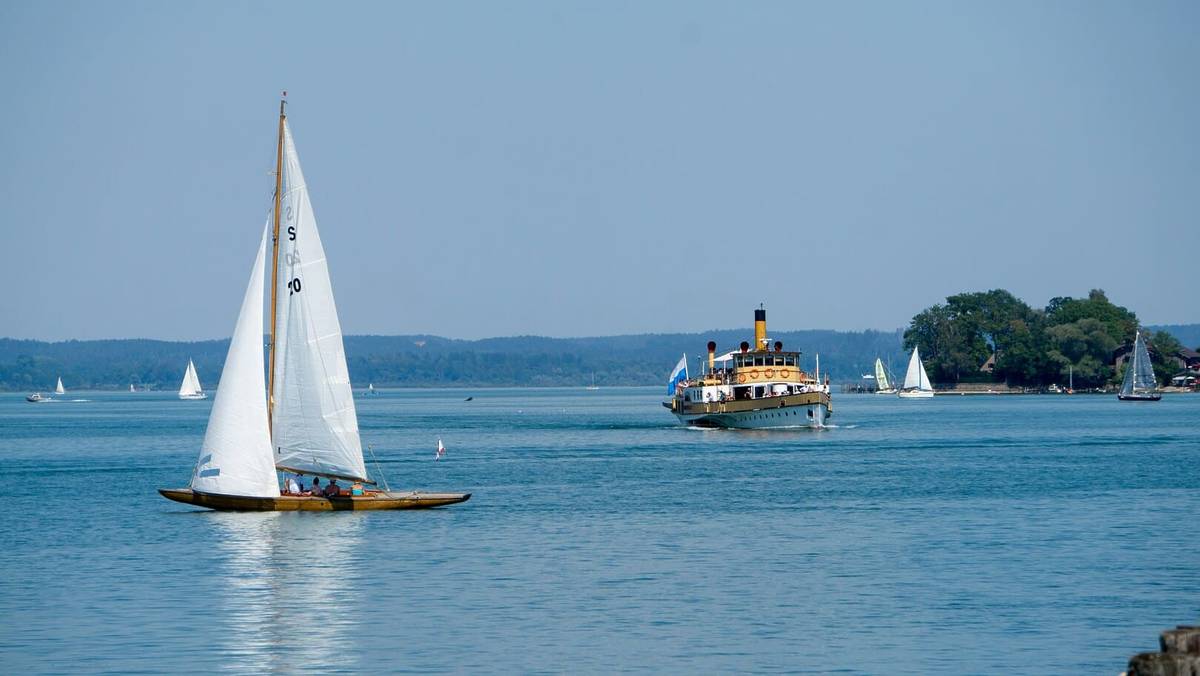
The palace and its island are an experience for culture fans and nature lovers alike. The 20 or so magnificently finished rooms, including the famous Hall of Mirrors, royal bedroom and dining room, can only be visited on a guided tour. There is also a museum offering insights into the art, architecture and life of Ludwig II. Here you will also find furniture, paintings and documents from his other residences.
In addition to the New Palace, it is also worth visiting the Old Palace (former Augustinian canons’ monastery), which now houses exhibitions and art galleries. The beautiful natural surroundings of Herreninsel are also well worth a visit. The extensive parks and waterworks with impressive fountains, as well as walking paths through forests and meadows offer pure enjoyment of nature.