
Even in today’s digital age, when we all carry smartphones with us, analog watches still enjoy great popularity in some circles. They are regarded as collector’s items, status symbols, or serve as decorative accessories. Switzerland, in particular, is known today for its watches and is represented worldwide by brands such as Rolex and Breitling. But the watchmaking trade was once of great importance in Bavaria as well —and not too far from Munich. Hundreds of watchmakers once lived in Friedberg near Augsburg, and their timepieces were widely known and beloved. Traces of that former glory can still be found in the town today, along with several other sights that you can discover here.
The Watchmaking Town in Swabia
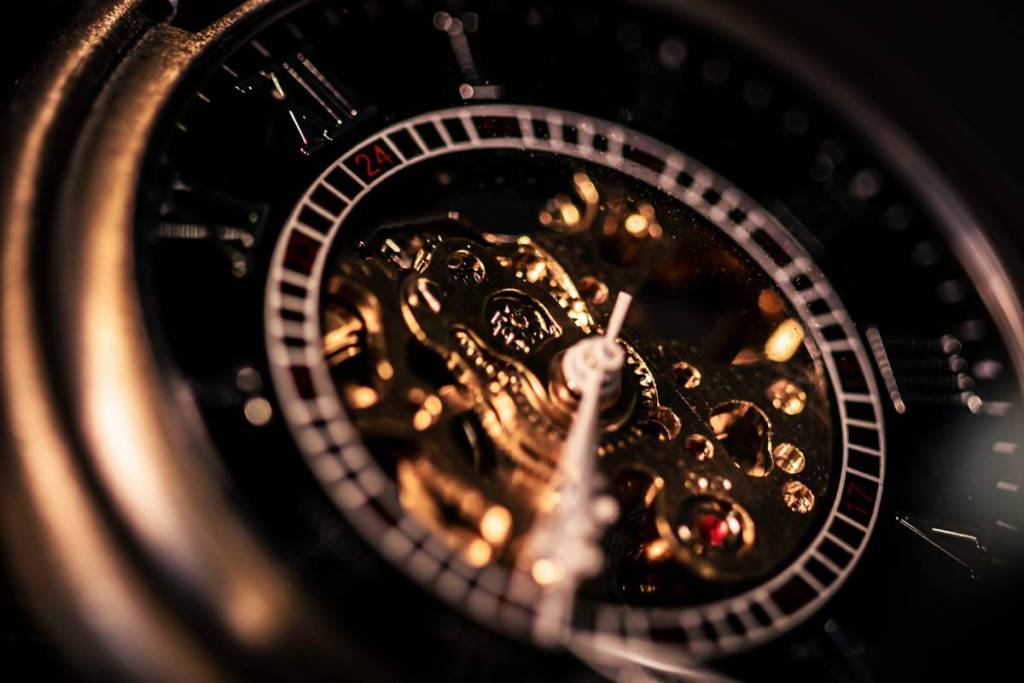
Friedberg was first mentioned in 1264 and developed around the Wittelsbach castle of the same name. Due to its location as a neighboring town to Augsburg, conflicts often arose in the town between the Bavarians and the Swabians. Watchmaking brought an economic boom, having already begun in the 16th century. However, a wave of the plague and the Thirty Years’ War brought this to an abrupt end. Thus, the heyday of Friedberg’s watchmakers did not arrive until the 18th century. From 1745 to 1800, the craft flourished in the town, and hundreds of watchmakers were active in Friedberg—375 of whom are known today.
From pocket watches to table clocks to carriage clocks, they crafted pieces for every conceivable purpose. Bavarian watches were well-known and popular among enthusiasts back then, and even today, collectors still delight in pieces from Friedberg. Starting in the 19th century, however, Switzerland, France, and Great Britain increasingly entered the scene. The Friedberg watchmakers tried to counter this by changing their names and engraving “Paris” or “London” on the cases, but it was to no avail. Eventually, many of the watchmakers left and moved abroad. Today, you can admire some of their works at the City Museum in Wittelsbach Castle and learn even more fascinating details about their history.
Baroque Friedberg
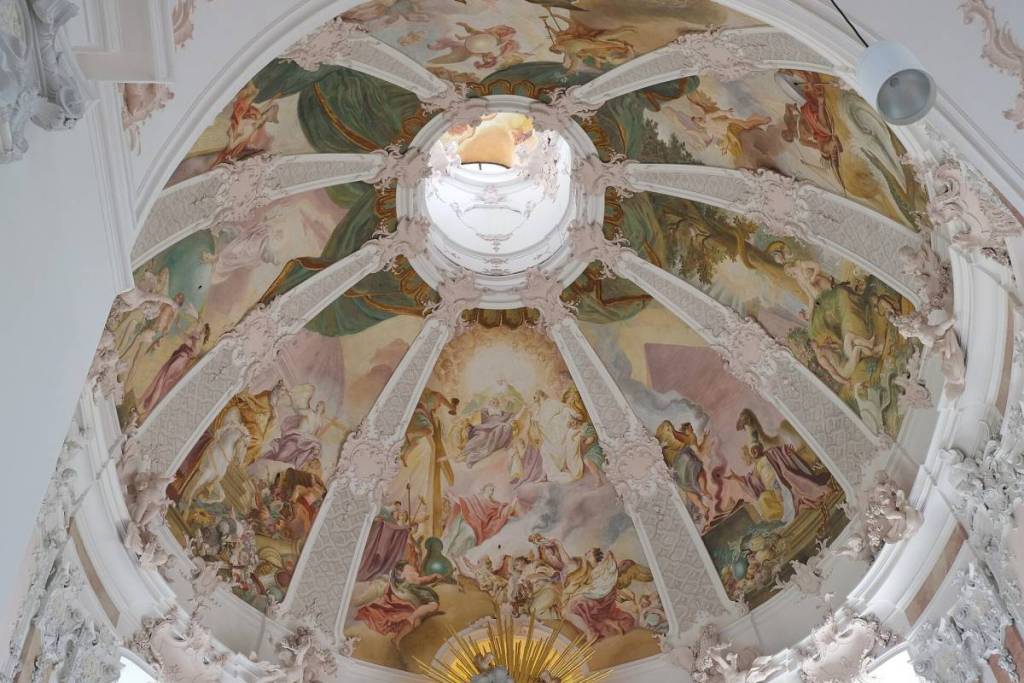
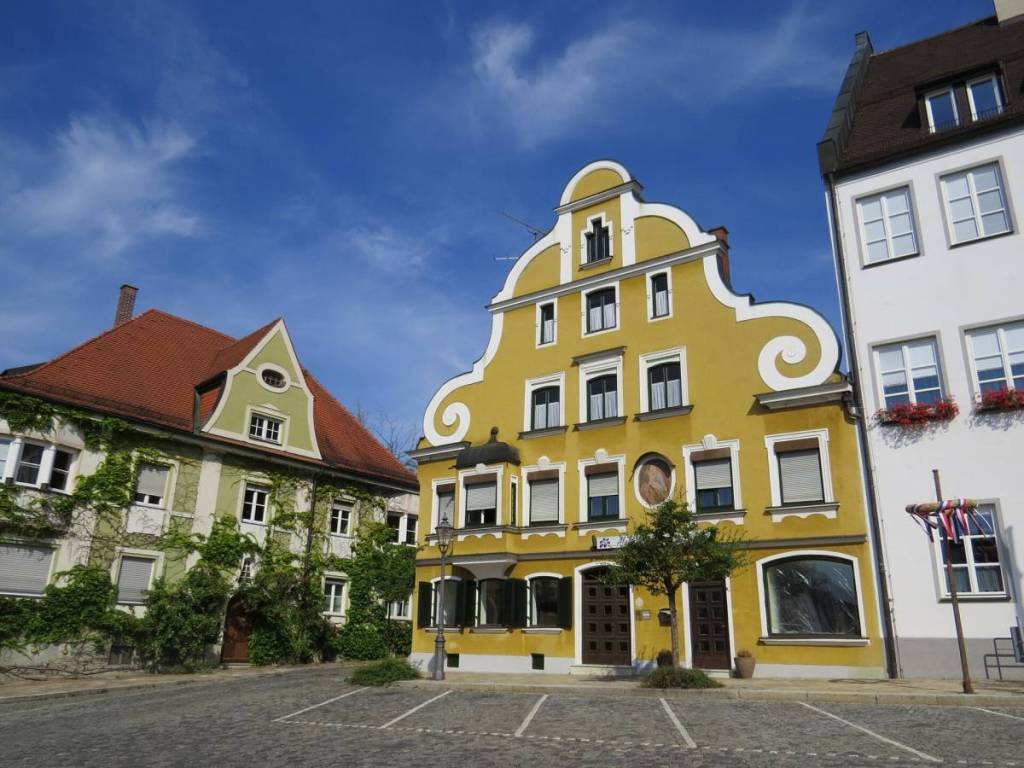
Even if you’re not particularly interested in watches, a trip to Friedberg is definitely worth it. The charming old town is lined with Baroque buildings, and at its center lies Marienplatz with its Marian Column and fountain. Here you’ll also find the Renaissance-style town hall, which still houses the city administration. You shouldn’t miss the Wittelsbach Palace either, whether or not you visit the museum. And of course, you absolutely mustn’t miss the Herrgottsruh Pilgrimage Church , considered one of the most beautiful Rococo churches in Bavaria. From the outside, the building already impresses with its round choir and tall tower. The interior, in turn, is adorned with frescoes, stucco work, and gold details.
Another pilgrimage site worth visiting is the Maria Alber Chapel, where you can also admire a ceiling fresco and the stucco-decorated lantern dome inside . If sacred sites aren’t really your thing, stop by the old city wall instead. Almost all of its towers are still standing, and you can take a stroll along a section of its battlement walkway. And there’s plenty to celebrate in Friedberg: Every August, jazz and classical music fill the air during the Friedberg Music Summer, and every three years, the big Old Town Festival takes place. The latter is one of the largest historical festivals in Swabia, and of course, the watchmakers play a role here as well.