
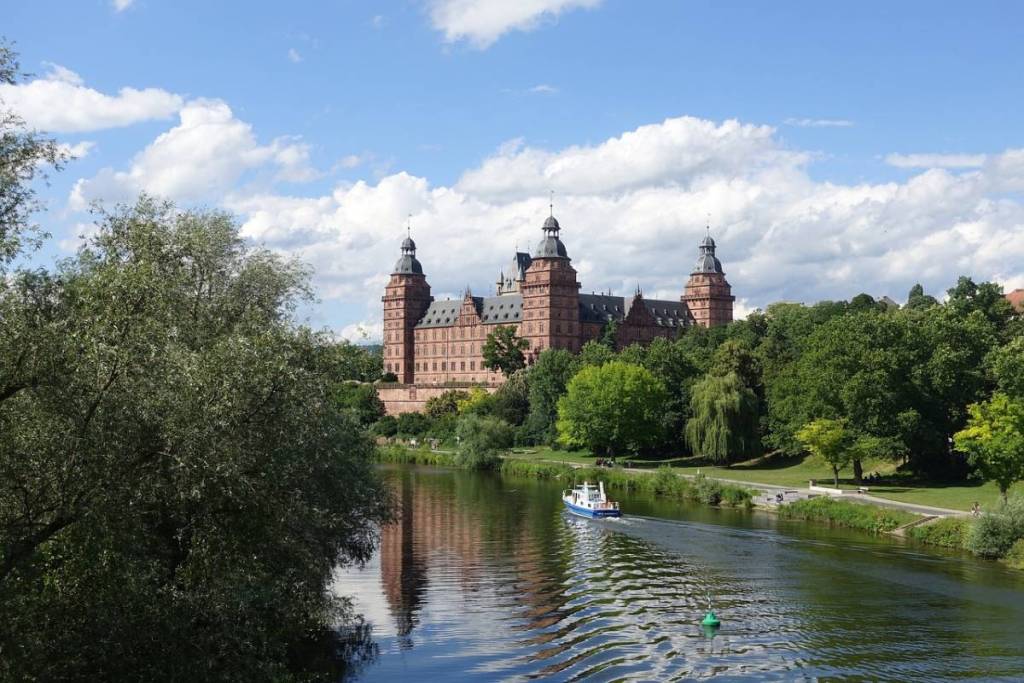

There are quite a few places in Bavaria that can be compared to destinations abroad. Munich likes to call itself the northernmost city in Italy; in Lindau, you can stroll along the Bavarian Riviera; and Lake Königsee is reminiscent of a Norwegian fjord. Francophiles among you won’t be left out either, as the “Bavarian Nice”—as Ludwig I once called it—is located in the northern part of the state. But Aschaffenburg captivates visitors not only with its Mediterranean atmosphere and magnificent architecture, but also with its fascinating blend of Franconian and Hessian culture.
A Mediterranean climate in Lower Franconia
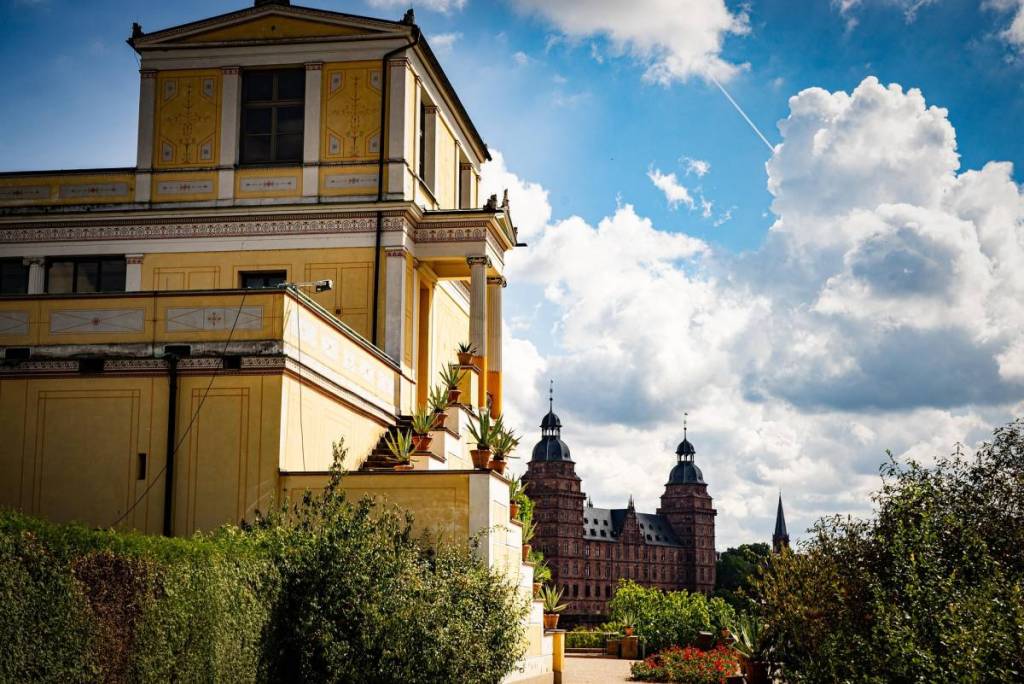
Aschaffenburg is undoubtedly a beautiful city, but at first glance it has little in common with the metropolis on the Côte d’Azur. Half-timbered houses, churches, and the Baroque Johannisburg Castle characterize the cityscape. When Ludwig first visited the town in 1826, he is said to have compared it to Italy because of its mild climate and dubbed it “Bavarian Nice”—even though Nice already belonged to France at the time. That did not, however, prevent him from commissioning the construction of the Roman villa Pompejanum, which was modeled after the Casa dei Dioscuri in Pompeii . It was not intended as a residence but served as a showcase and a site for the study of ancient architecture.
Even today, it stands as one of Aschaffenburg’s landmarks on the high banks of the Main and is arguably the part of the city that exudes the most Mediterranean flair. No wonder, since the garden is modeled after the Mediterranean just as much as the house itself. Here you’ll find fig and almond trees, araucarias, columnar poplars, and pines. Below you stretch the vines of the vineyard and the blue Main River. When visiting the Pompejanum, you actually forget for a moment that you’re in Bavaria and feel as if you’re on the Riviera.
Hybrid Culture in Aschaffenburg
If you continue strolling through the garden surrounding the Pompejanum, you’ll reach Johannisburg Castle, a 17th-century Renaissance structure that replaced its medieval predecessor. The imposing building forms a square around an inner courtyard and features a stair tower at each corner. There’s also a Gothic keep, which is a remnant of the old castle. Today, Johannisburg Castle houses the Aschaffenburg State Gallery, which is sure to be of particular interest to art lovers.
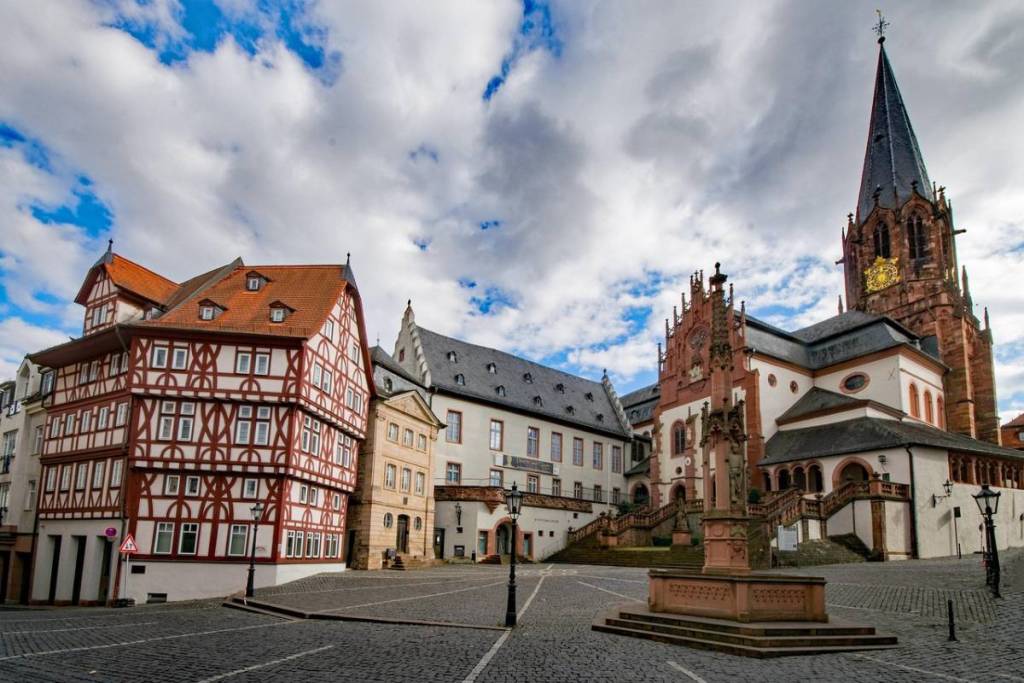
In Aschaffenburg’s Old Town, you’ll find not only pretty half-timbered houses and charming cobblestone alleyways but also plenty of pubs. This is where the blend of Hessian and Bavarian culture really shines through: you can enjoy not only wheat beer but also Äppelwoi. For a classic Franconian experience, try a “Schoppen”—which you’ll enjoy best right on the banks of the Main. Linguistically, too, Aschaffenburg may come as a surprise to some visitors, as the dialect is Hessian. Nevertheless, the city’s residents feel a strong connection to the Franconians—after all, they are Franconians themselves. Aschaffenburg is definitely worth a visit and offers not only a southern French way of life but also a cultural blend of Lower Franconia and Southern Hesse.
