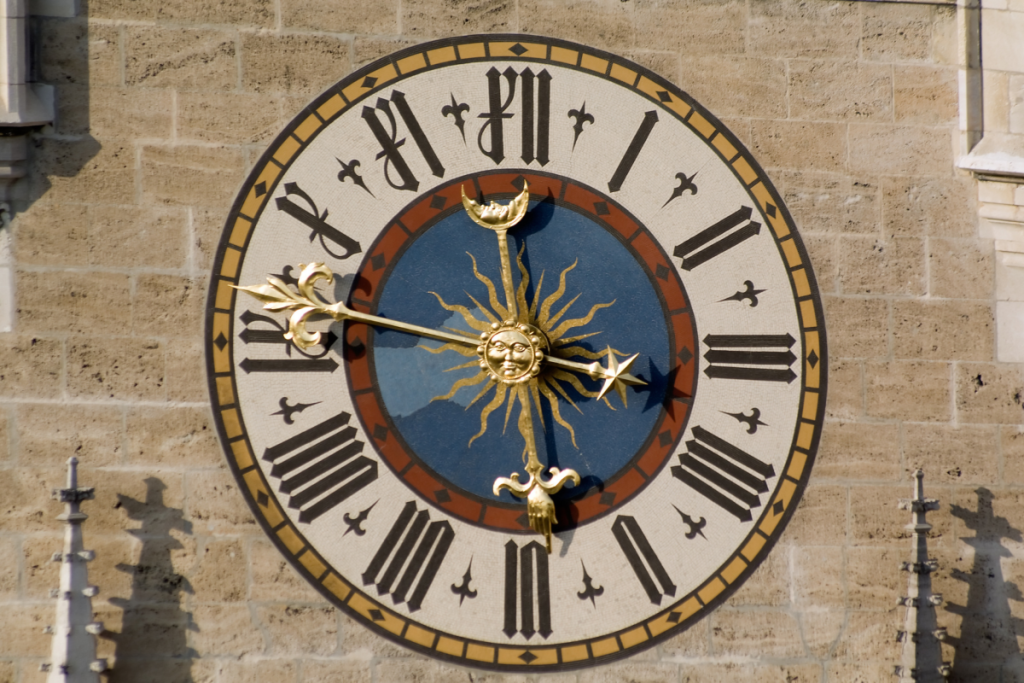

Get ready for an extra-long Sunday! On October 25, 2026, the time will come: Daylight Saving Time ends, and Munich will set the clocks back to Central European Time (CET), also known as standard time or winter time. At 3 a.m., the clock hands will jump back one hour to 2 a.m. So you’ll get an extra hour that night. The fact that the time change regulation remains in effect throughout the EU is due to a lack of agreement among member states. The following dates have already been set through 2031.
How church clocks, the MVG, and trains handle the time change
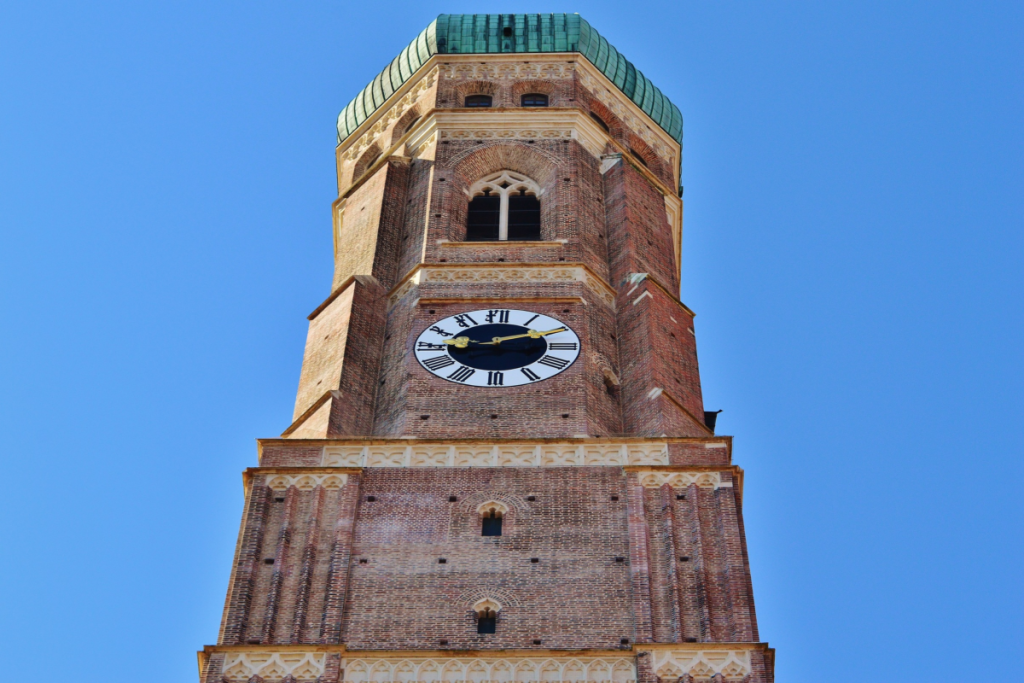
On the night of October 24–25, the hour between 2 a.m. and 3 a.m. will be repeated twice. The radio signal for the time change comes from a transmitter in Mainflingen near Frankfurt. A special method applies to the 180 public clocks—including 119 church clocks—maintained by the city’s Department of Public Works. At 3 a.m., the hands will stop for exactly one hour and then resume running normally. The approximately 1,500 clocks operated by the Munich Transport Authority (MVG) at transit stops will automatically adjust via radio signal. If you’re traveling by Deutsche Bahn that night, be sure to allow extra time. Trains will stop at stations and wait out the extra hour to arrive at their destination on time.
These are Munich’s most famous clocks and curiosities
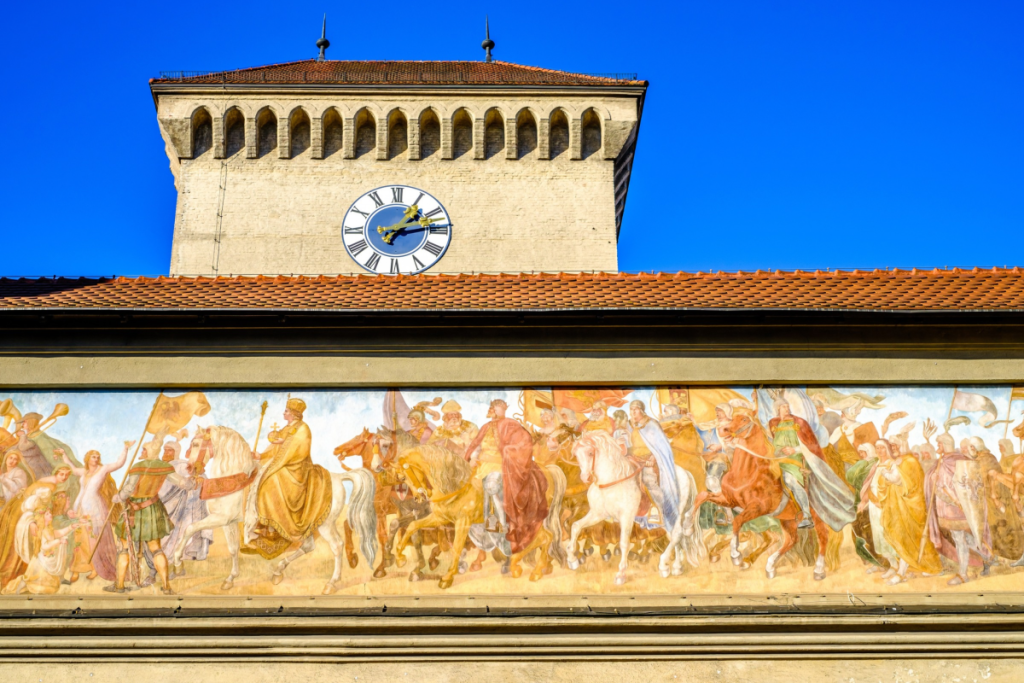
Munich offers fascinating facts and curiosities surrounding this time of year:
- Isartor: On the west side, facing the valley, the tower clock runs counterclockwise on a mirrored dial. The whole thing is a tribute to the humor of Karl Valentin, whose museum is housed in the gate.
- Alter Peter: St. Peter’s boasts the city’s first-ever historic tower clocks and features no fewer than eight clock faces.
- New City Hall: The clock tower at Marienplatz features a stunning, approximately four-meter-wide mosaic from Mettlach.
- Deutsches Museum: A rare astronomical clock in the courtyard even shows you the phases of the moon and the position of the sun.