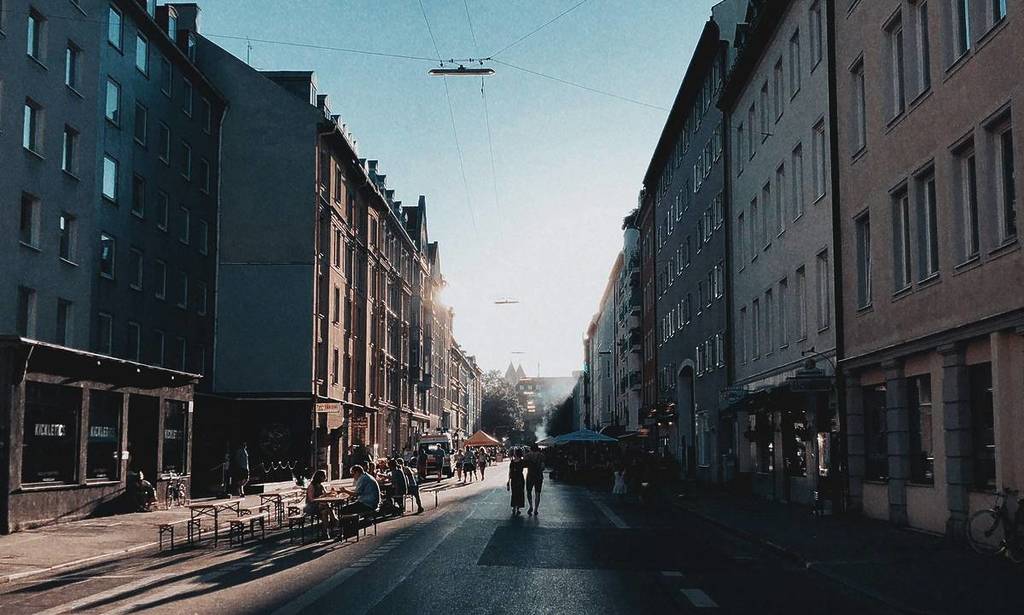
At first glance, the pub doesn’t look much different from any other. A bright façade, awning, pub garden outside, large tables, dark paneled walls and warm wall lights inside. But this is exactly where many stories have taken place over the decades that most visitors don’t know about. For years, this venue was one of the hot spots of Munich’s cultural and music scene and music still plays a major role in the restaurant’s event program today. A few relics still bear witness to the old days.
Founded on Walpurgis Night
In 1903, landlady Kathi Kobe moved from the “Dichtelei” in Adalbertstraße to the premises of the “Kronprinz Rudolph” coffee house in Türkenstraße. The move to the new location is said to have taken place on Walpurgis Night in 1903, and her customers lent a helping hand. What nobody suspected at the time was that the new restaurant would soon become an absolute Munich institution.
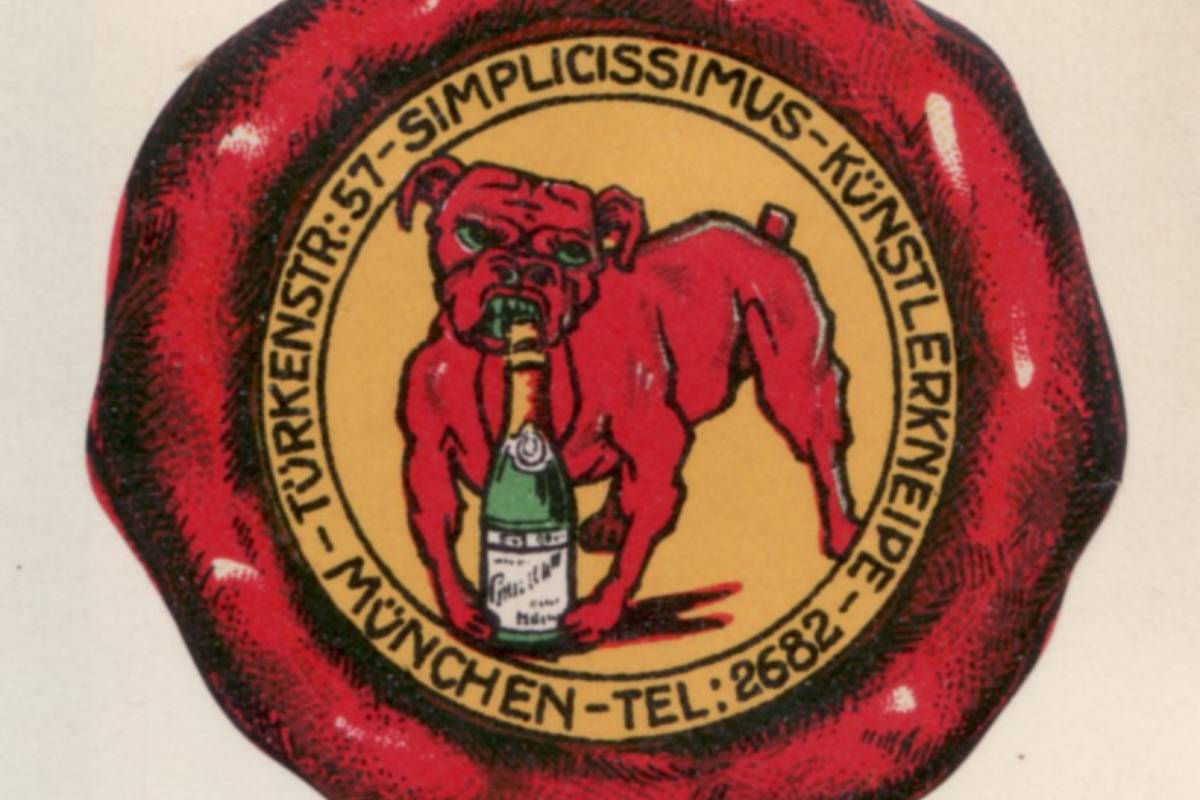
As she was denied permission to call her new restaurant “Neue Dichtelei”, Kathi based the name on her clientele. Many of her regular customers were authors and editors of the satirical magazine “Simplicissimus”. She adopted the name for her restaurant and was also given the magazine’s logo in a modified form. A red mastiff gnawing on a bottle of champagne instead of biting the chains of censorship.
But people didn’t just meet here to chat over a glass of wine. The poets and writers of the Schwabing bohemian scene regularly appeared on the stage to inspire and excite the audience. It was on this very stage that the term “Dada” is said to have been coined, which later gave the movement “Dadaism” its name.
Kathi retired in 1922 and the Simplicissimus got a new tenant. When a bomb destroyed the restaurant in 1944, it was given a new name, which it did not keep for long. The name and tenant changed frequently until 1960, when a new landlady was finally found to lead the restaurant into its renaissance.
From cabaret to music venue with star guests

In 1960, the young Toni Netzle took over the restaurant. She knew little about running a restaurant, but she did know a thing or two about entertainment, as her dream was to become an actress. In the end, it was the stage that lured her to the former Simplicissimus. And she brought her colleagues with her, other actors. Her husband was a musician, which in turn attracted other music artists to the restaurant, who jammed on stage until nine in the morning. This eventually attracted music publishers, such as Ralph Siegel’s father Ralph Maria Siegel. He gave Toni a grand piano for her venue. In 1961, the famous American jazz musician Duke Ellington played on that very grand piano.
This gave the Simpl its reputation and other celebrities came over the years and decades. Brigitte Bardot celebrated her film premiere in the restaurant in 1968, allegedly to impress her ex Gunter Sachs. In 1980, Toni almost threw Robert De Niro and Harvey Keitel out of her restaurant because she thought they were homeless. It was only when they sat down at the table with her film producer and began to speak English that the penny dropped. Toni Netzle was the landlady of the Alter Simpl until 1992 and, like Kathi Kobe herself, became an icon.
The Alte Simpl today
Even today, the photos on the walls bear witness to the old days and the celebrities who used to come and go here. Celebrities no longer stray here, but the Simpl remains an institution in Maxvorstadt. The old logo is a reminder of the restaurant’s origins, even though it has long since dropped the name Simplicissimus.
The Simpl now impresses above all with its Bavarian-international cuisine and its colorful program. Pub quizzes, bingo evenings, piano jams, open mics and the “Wirtshaussingen” (pub singing) take place regularly and keep the stage tradition alive. Fans of good entertainment and music are sure to get their money’s worth and should pay a visit to this Munich legend for its eventful history alone.