
Have you ever wondered, while strolling through the Viktualienmarkt amid the aroma of cheese, freshly baked bread, and a wide variety of fruits, how this unique place came to be? In the past, Munich residents would stock up on grain, fish, eggs, and vegetables at what is now Marienplatz—then known as Schrannenplatz. But by the beginning of the 19th century, the market square of the time was simply bursting at the seams. King Max I Joseph therefore made a historic decision on May 2, 1807, when he ordered by royal decree that the market be relocated. To this end, the city had the neighboring Heiliggeist almshouses demolished to create a new space. In place of the old location, the area between the Heilig-Geist Church and Frauenstraße gradually developed; for a long time, it was simply called “Marktplatz” (market square). It was only later that the term “Viktualienmarkt” became established, derived from the Late Latin word for food.
The Viktualienmarkt Through the Ages
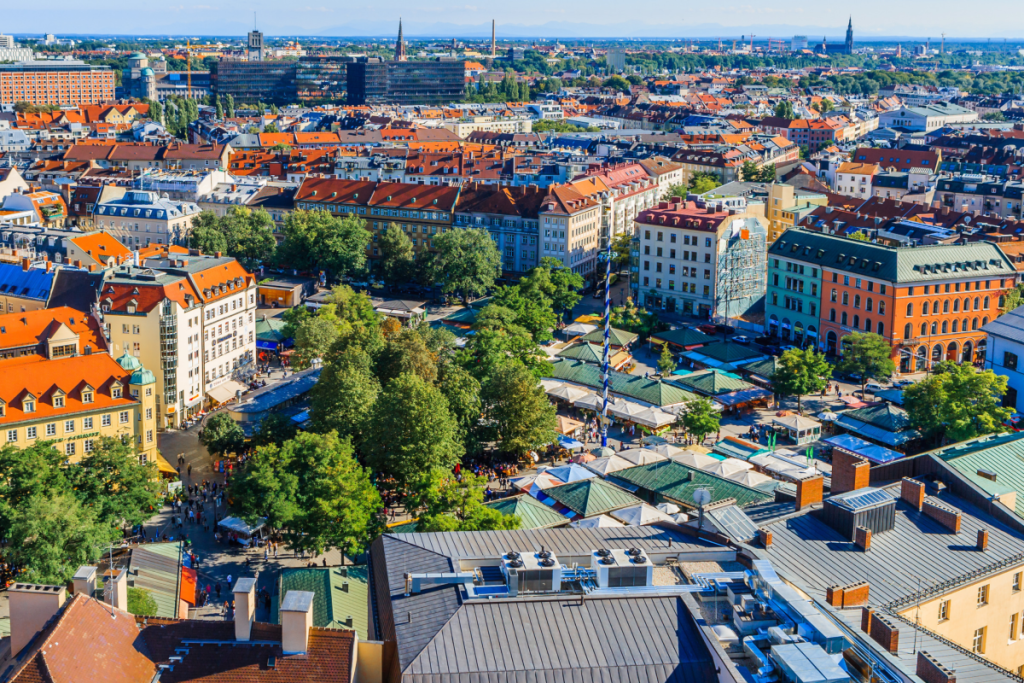
Over the decades, the site continued to grow and overcame many challenges. As early as between 1823 and 1829, the market had to be significantly expanded. Later, pavilions for fruit sales, a butchers’ hall, and halls for fish sales were added. After the severe destruction of World War II, there were even considerations to abandon the market entirely and develop the area with high-rise buildings. Fortunately, the city administration decided against this and invested considerable funds. Since November 6, 1975, the area has been a completely pedestrian-only zone.
When you stroll across the cobblestones today, you’ll encounter not only around 140 diverse stalls offering delicacies, flowers, and Bavarian treats, but also the famous commemorative fountains. The statues commemorate unforgettable folk singers and comedians such as Karl Valentin, Liesl Karlstadt, Weiß Ferdl, Ida Schumacher, Elise Aulinger, and Roider Jackl. In honor of these folk artists, the Munich markets host the traditional Brunnenfest. The festively decorated fountains take center stage, and an entertainment program is offered.
Discover unique traditions and culinary highlights
At its heart lies Munich’s most central beer garden, where beers from all six of Munich’s major breweries are served on a rotating monthly basis. A magnificent Maypole also towers above the bustling crowd. This tradition dates back to an initiative by former Mayor Albert Bayerle, who claimed that Munich, as a “million-person village,” absolutely needed a Maypole. Since May 1962, this landmark—donated by the breweries—has adorned the market square, featuring motifs such as the Schäfflertanz, the brewery team, and the two patron saints of brewers, St. Boniface and St. Florian.
Another beloved tradition awaits you during Carnival season. On Shrove Tuesday, the so-called “market women” dance on the stage at the beer garden and transform the square into a colorful celebration. If you’d like to experience the special atmosphere of the Viktualienmarkt, just stop by during opening hours from Monday through Saturday between 8 a.m. and 8 p.m.!