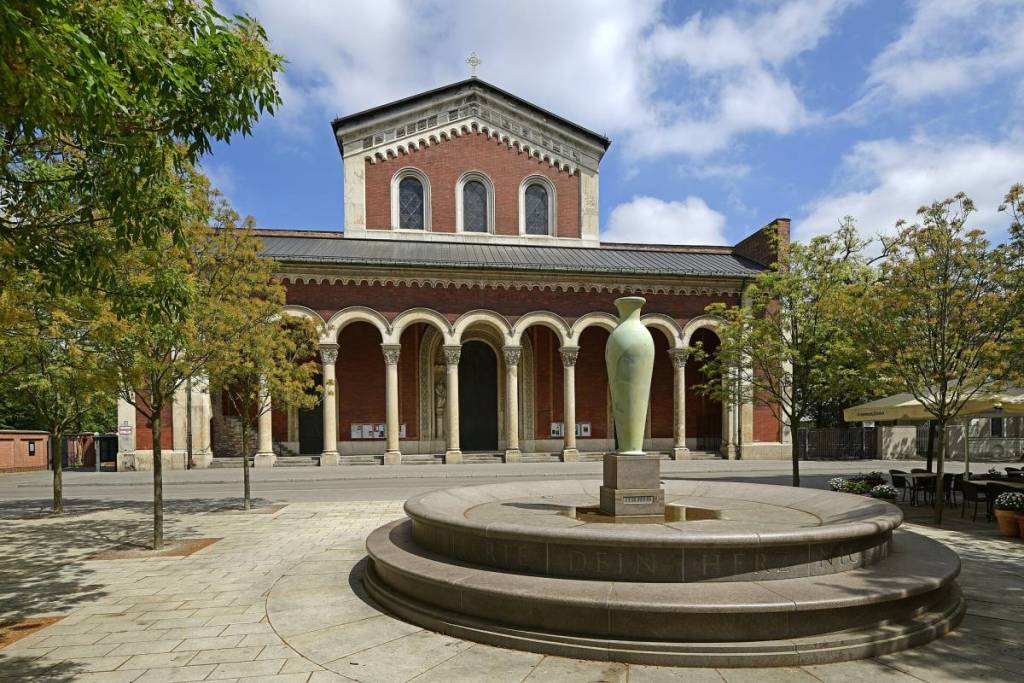

Munich is home to several famous churches, but monasteries are more commonly found in the surrounding countryside, such as Weltenburg Abbey or Benediktbeuern. This is due in no small part to the fact that most Benedictines prefer seclusion to the hustle and bustle of the big city. And yet, right in the heart of the Kunstareal, directly on Königsplatz, stands the Benedictine Abbey of St. Boniface, serving as a striking landmark on Karlstraße.
The King’s Monastery
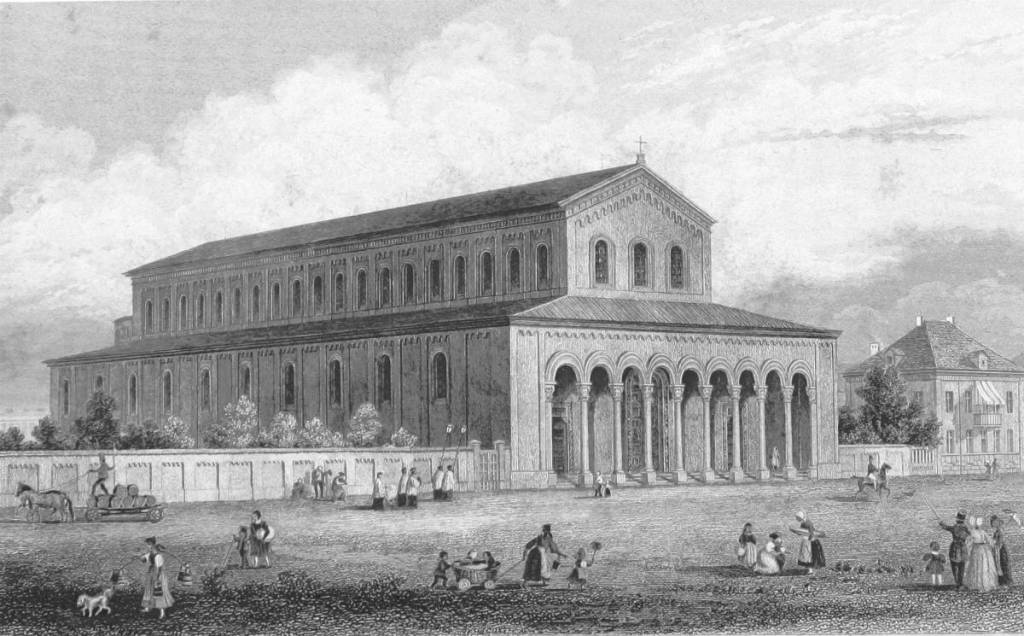
After the secularization of Bavaria, King Ludwig I made it his mission to revitalize spiritual life and therefore founded St. Boniface Monastery in Maxvorstadt in 1835, on the day of his silver wedding anniversary with Therese . The goal was to establish a spiritual center in the growing metropolis. Furthermore, its location on Königsplatz, right next to the Glyptothek and the Propylaea, underscores the king’s desire to unite religion, science, and art. To ensure the financial security of the abbey’s monks, he purchased the Andechs Monastery and donated it to the brothers at St. Boniface. To this day, the two monasteries therefore belong together.
Over the years, St. Boniface became the family monastery of the Wittelsbachs, whose family tomb is located in the garden near Andechs. Nevertheless, many of the Wittelsbach nobles are buried in the Munich crypts. Ludwig I himself, at his own request, lies in the Basilica of St. Boniface, where his sarcophagus still stands today. His heart, however, rests in an urn in the Chapel of Grace in Altötting. The heart of his wife, Therese, is in St. Boniface, as is her body, which has been interred directly beside her husband since 2002. Previously, her coffin had been in a separate crypt beneath Ludwig’s resting place.
St. Boniface Today
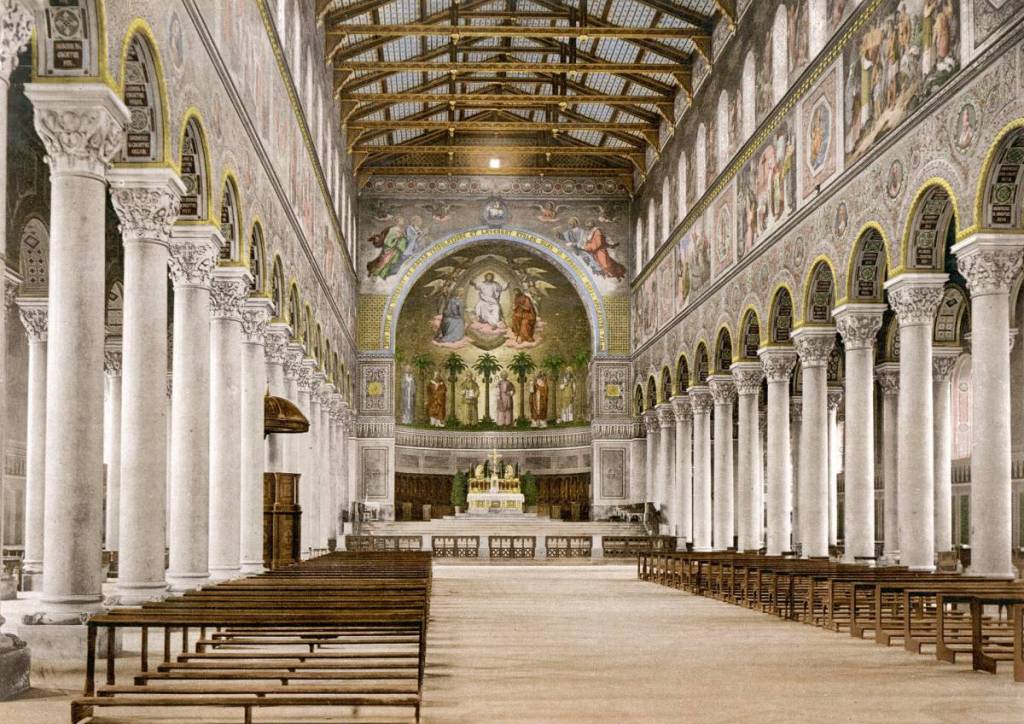
During World War II, St. Boniface Basilica sustained severe damage and was only partially rebuilt. Today, the nave measures just over a third of its original length and has shrunk from 82 to 32 meters. Its interior used to be richly decorated with detailed frescoes and mosaics . Today, the interior is more understated, and modern works of art adorn the ceilings and walls.
Externally, however, the Neo-Byzantine style has been preserved. You can attend the services held here or watch them via livestream. The monks of St. Boniface are fully dedicated to pastoral care and assisting the homeless. They provide free meals, collect clothing, and offer medical treatment. Furthermore, the monastery library, with its focus on theology, is one of the largest private scholarly collections in Bavaria.