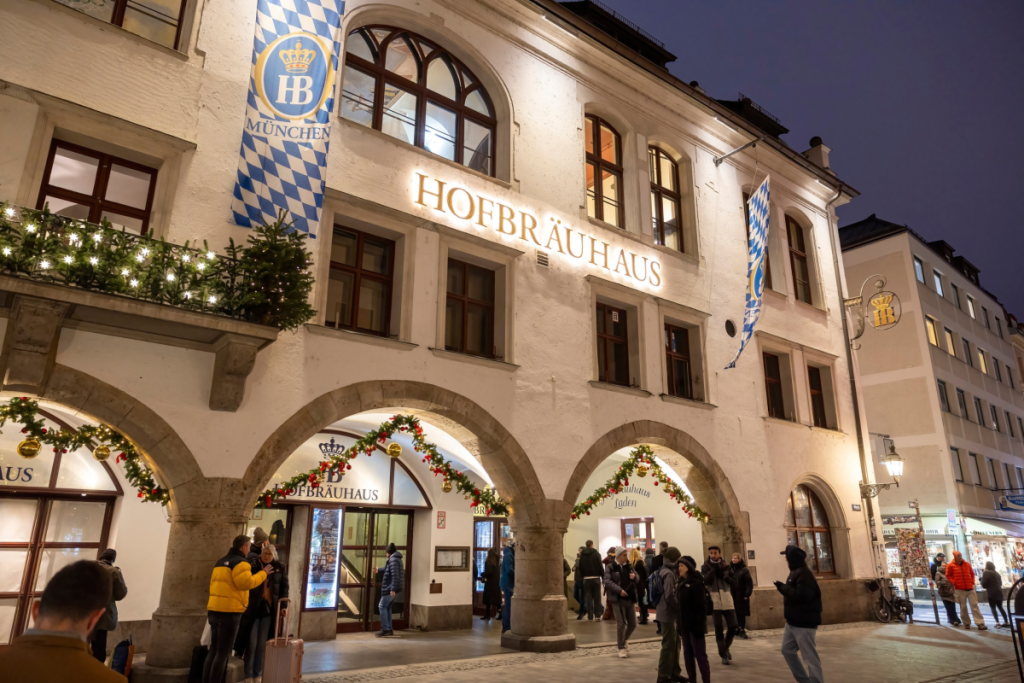

Hardly any other place embodies Bavarian tavern culture as vividly as the historic Hofbräuhaus am Platzl in the heart of Munich’s Old Town. What began in 1589 on the initiative of Duke Wilhelm V to put a stop to costly beer imports—sometimes from Einbeck in Lower Saxony—evolved over the centuries into a global cultural landmark. While the general public was not permitted to dine there until 1828 under King Ludwig I, and ownership of the establishment passed to the Bavarian state in 1852, today countless people flock to the address Platzl 9. The current Beer Palace, built in the Neo-Renaissance style at the end of the 19th century according to plans by architect Max Littmann and reconstructed by 1958 after suffering severe damage during World War II, welcomes you daily with free admission.
What awaits you today at this historic tavern
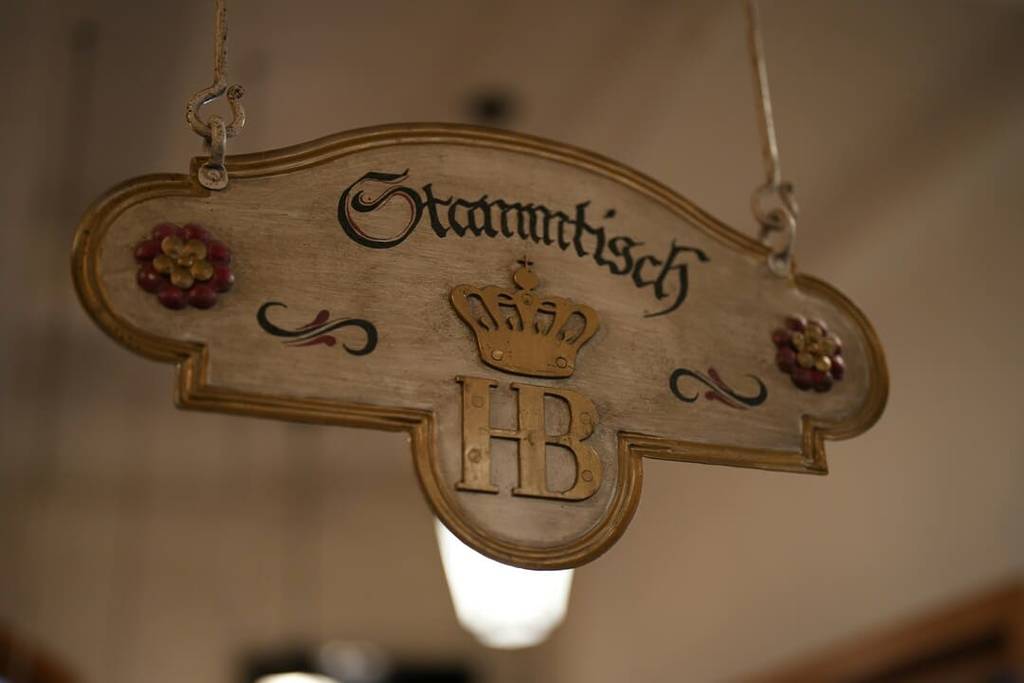
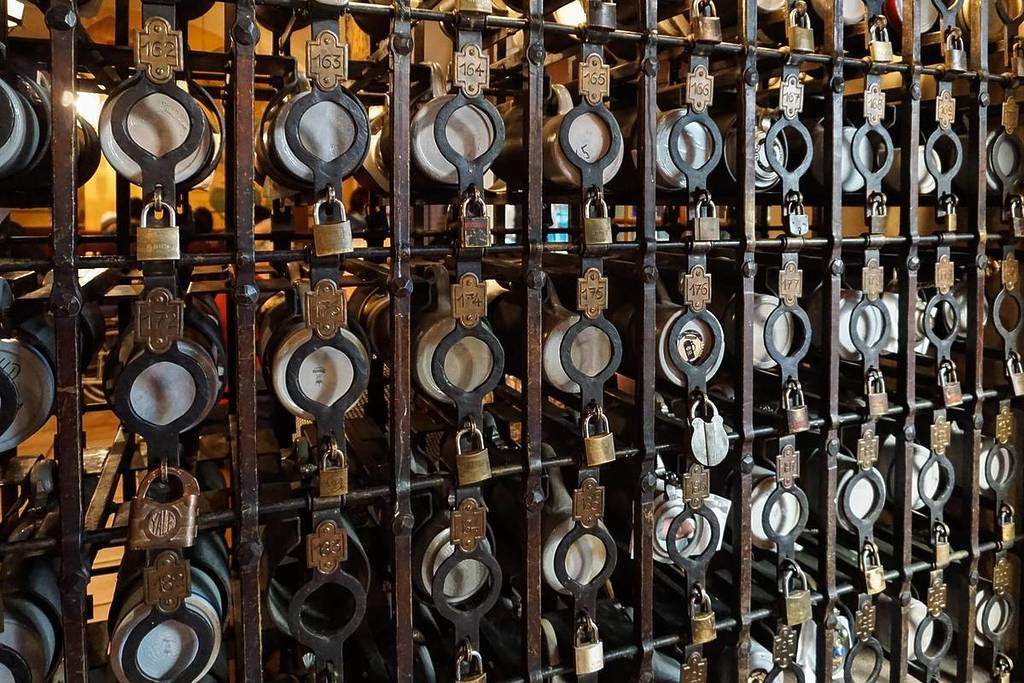
When you enter the historic “Schwemme”—the large beer hall on the ground floor—you immediately feel the pulse of Munich’s pub tradition. Around 1,000 seats at rustic wooden tables invite you to simply join other guests. Reservations are deliberately not accepted here, nor in the summer beer garden with its lion fountain. You can only reserve a seat in the “Bräustüberl” on the first floor. Over 125 regulars’ tables and around 3,500 regulars regularly bring the pub to life, and one very special detail catches the eye. The pub’s very own beer mug vault, whose 616 compartments are reserved exclusively for select regulars, is a true highlight of the establishment.
In addition to real guests, a literary figure is also closely intertwined with the establishment. Ludwig Thomas’s famous angel Aloisius originates from the short story “A Munich Man in Heaven” and, according to the tale, still prefers to enjoy his beer here rather than dwell in heaven. Even the world-famous Hofbräuhaus song has a surprising origin story. It was written in 1935—not in Munich, but by the Berlin composer Wiga Gabriel.
How the Bavarian Original Became a Global Phenomenon
Even though the beer has long since ceased to be brewed directly at the Platzl, its historical influence on the history of beer remains. For example, Munich’s bock beer can be traced back to the poaching of a master brewer from Einbeck in 1612. The famous logo with the crown dates back to royal times, and the abbreviation “HB” has been trademarked since 1879 because too many breweries were copying it at the time. Today, the concept is in demand worldwide. In addition to eleven Hofbräuhäuser in Europe, America, and Asia, a licensed replica modeled after the original was even built in Las Vegas in 2004. Those who wish to experience the authentic atmosphere of the original will find room for around 1,500 people in the ballroom beneath nine-meter-high vaulted ceilings.
This historic landmark is easily accessible via Marienplatz or the Isartor and lets you experience the traditional Bavarian way of life. Just like sunny beer gardens, the autumnal Oktoberfest, or unwinding at the pub after work, the Hofbräuhaus is simply a part of Munich.