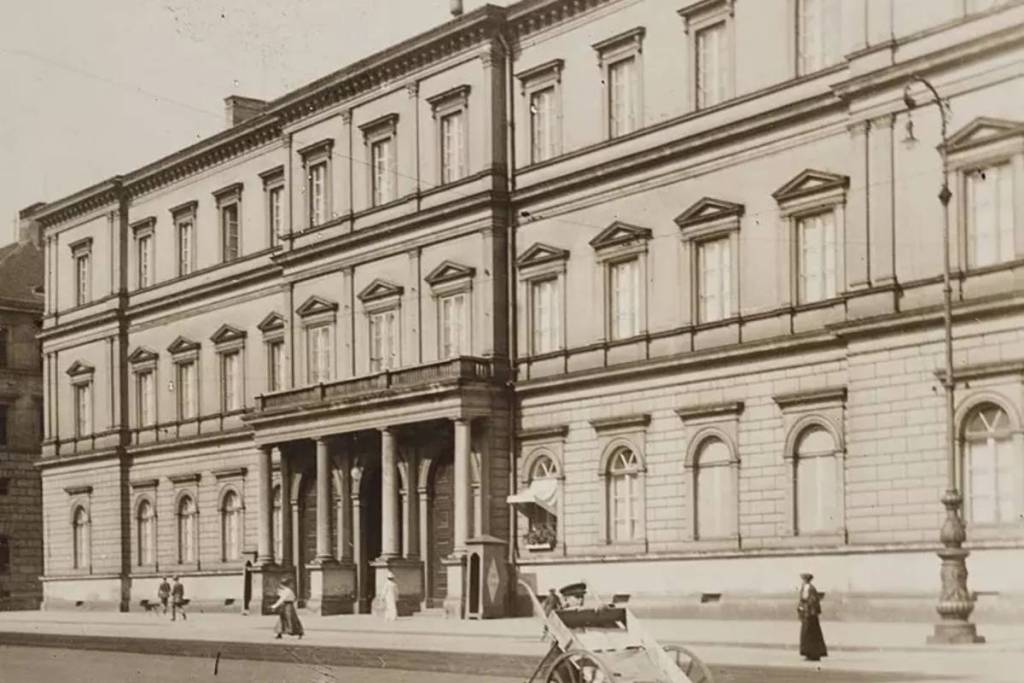

In the days of the Wittelsbachs, Munich must have been teeming with castles and palaces. Some of these buildings still stand today, while others have not survived the passage of time. Unfortunately, the Herzog-Max-Palais—the birthplace of Elisabeth of Bavaria, better known as Sisi—also falls into the latter category. Where Leo von Klenze’s masterpiece once stood, there is now a neoclassical building that houses a bank.
Sisi’s birthplace
Elisabeth Amalie Eugenie, known as Sisi, was best known as Empress of Austria and Queen of Hungary. Originally, however, she came from Munich, where she was born on December 24, 1837, as the daughter of Duke Max Joseph of Bavaria. She was born at Ludwigstraße 13, which at that time housed a magnificent palace. The future empress spent her childhood here and at Possenhofen Castle on Lake Starnberg.
Leo von Klenze was responsible for the magnificent palace, which architect and historic preservationist Erwin Schleich describes as arguably the “most beautiful aristocratic palace” Klenze ever built. The model for the neoclassical building was the Palazzo della Cancelleria in Rome, whose window design served as Klenze’s inspiration. The palace comprised three stories and wings, as well as two inner courtyards. The complex also included stables and a private chapel, where Sisi was baptized.
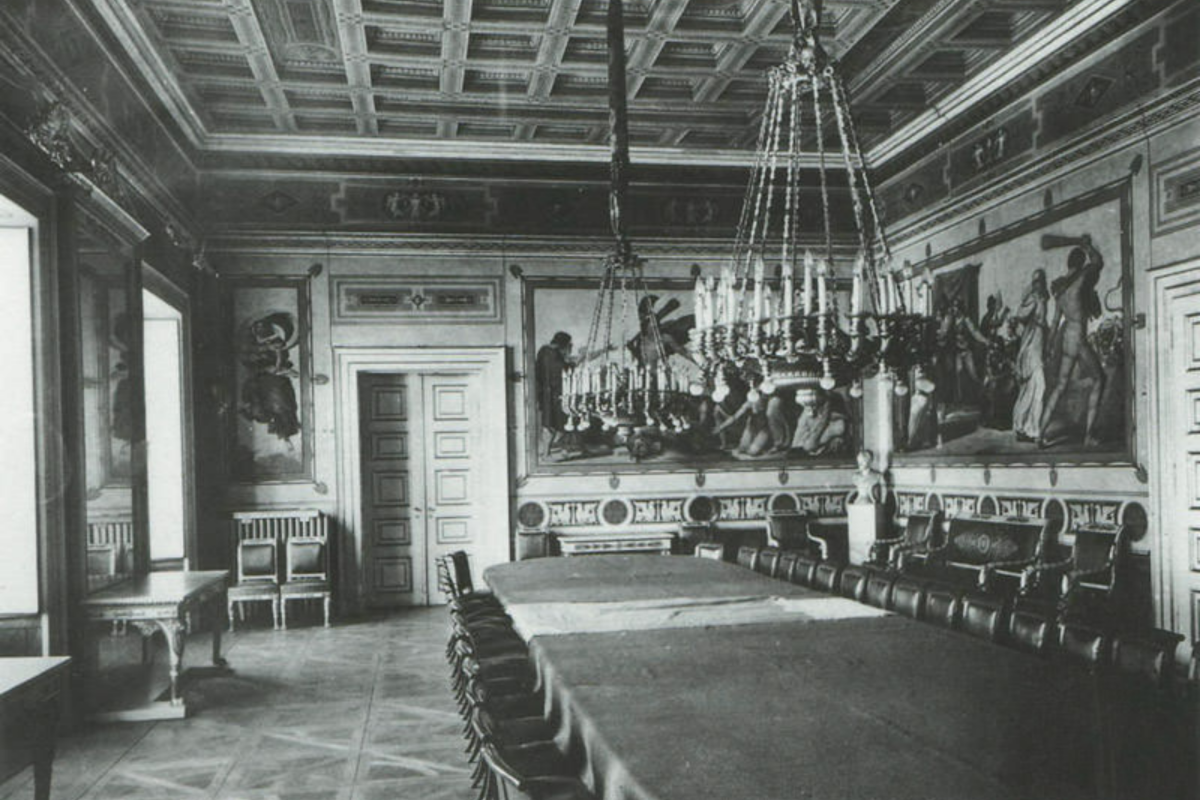
The interior of the Herzog-Max-Palais was characterized by opulence and splendor. It featured its own theater, as well as a banquet and ballroom that spanned two floors. The dining room was adorned with coffered ceilings and framed by a 44-meter-long frieze depicting the Procession of Bacchus. It had been created by Ludwig von Schwanthaler. In the entrance area, there were four monumental frescoes measuring 2.5 by 5 meters. Additional paintings, as well as stucco marble and ornate decorations, could be found throughout the palace.
The End of the Duke Max Palace and What Remains of It
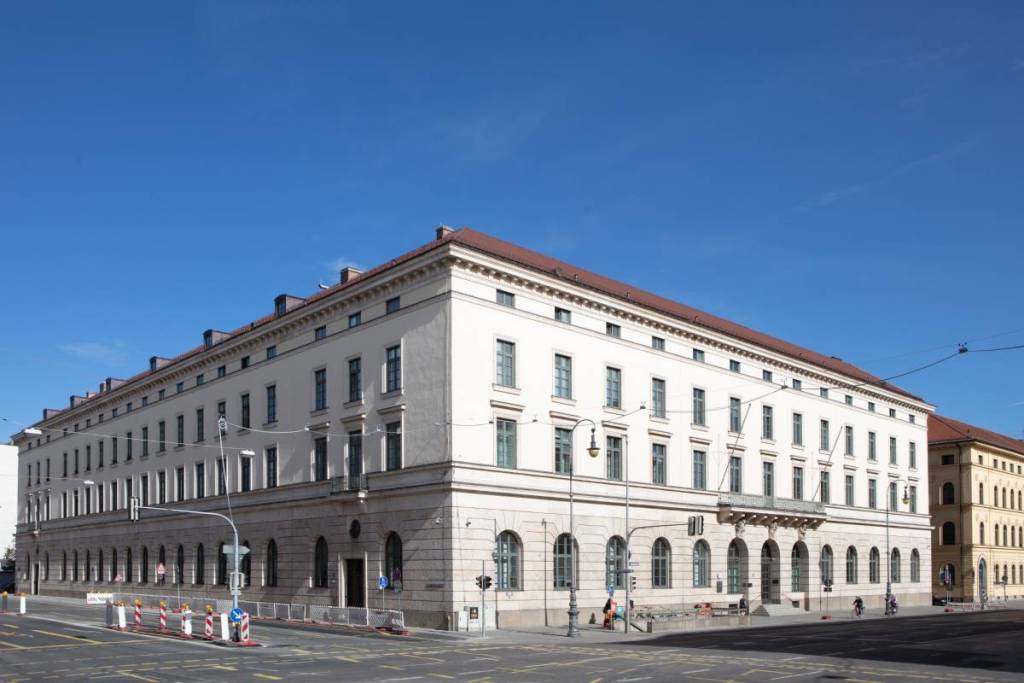
From 1828 to 1830, Klenze, in collaboration with Schwanthaler and Kaulbach, built the Stadtpalast; it was demolished in 1937. The Nazis redesigned Munich according to Hitler’s vision, as he considered Von-der-Tann-Straße too narrow. So the Herzog-Max-Palais was demolished, though a few pieces survived. Construction of the neoclassical Reichsbank began in 1938 but was not completed until after the war, in 1951. Today, the building houses the headquarters of the German Bundesbank, and Schwanthaler’s relief frieze can still be seen in its entrance hall.
Furthermore, the building that replaced the original still contains some of the original parquet floors that Sisi once walked upon. A plaque on the exterior wall of the building commemorates the fact that the empress was born here. Today, you can see the four monumental frescoes from the entrance hall of the Herzog-Max-Palais at the LMU’s Faculty of Economics at Ludwigstraße 28. At the State Library, on the other hand, you can view the Kaulbach Cycle from the old ballroom. Thus, in addition to drawings and photographs, at least a few tangible original pieces from the magnificent Herzog-Max-Palais have been preserved for us today.