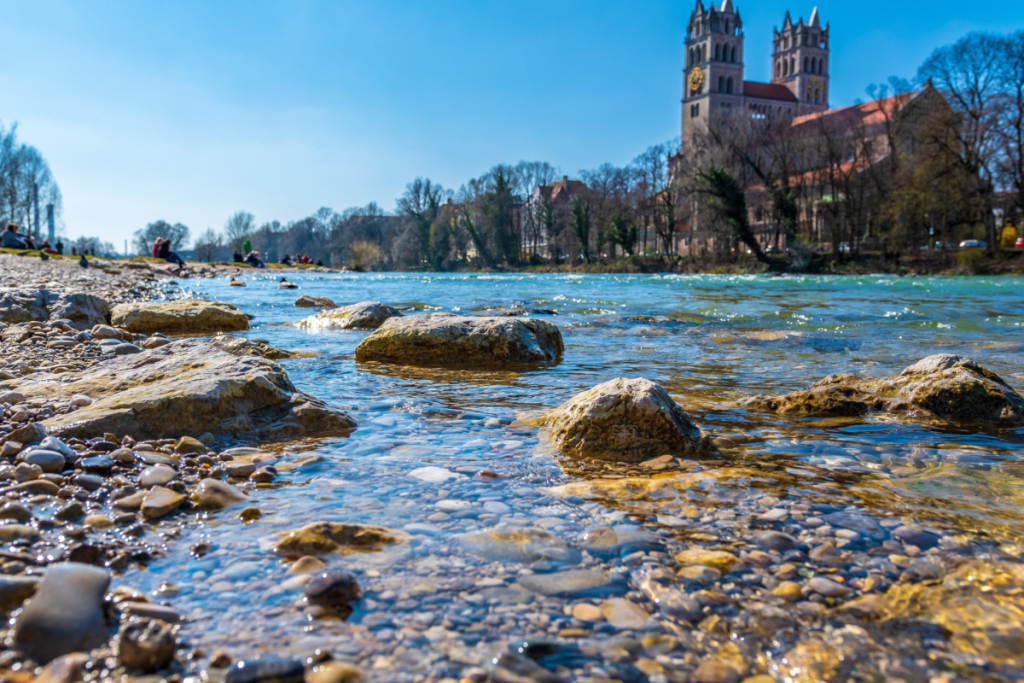

Wild, tamed, and finally free again: When you’re out and about along the Isar today, you can hardly imagine that the river was once forced into a narrow concrete channel. In 2000, the City of Munich and the Free State of Bavaria launched the river restoration project known as the “Isar-Plan.” By 2011, an eight-kilometer stretch between the Großhesseloher Bridge and the Deutsches Museum had been extensively redesigned at a cost of around 35 million euros. The goal was to provide reliable flood protection, restore the river’s ecology, and significantly enhance recreational opportunities for you. Even major cities like Los Angeles took Munich’s example as inspiration for their own plans.
How architectural eyesores were transformed into a vibrant natural paradise
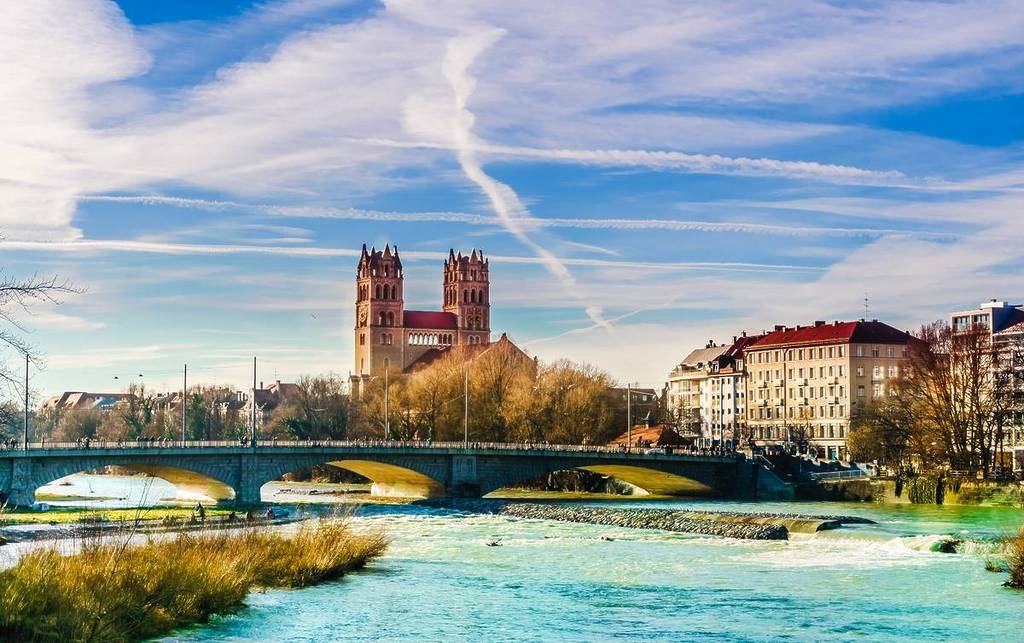
Following devastating floods in the 20th century, the decision was made to artificially straighten the river. However, this tightly constricting “corset” destroyed habitats for both people and animals. Starting in 2000, excavators arrived to deepen the riverbed and create flatter banks. In the process, they encountered wartime rubble and contaminated soil that had to be disposed of at great expense. To preserve the trees along the levee between the Marienklausensteg and the Thalkirchener Bridge, earth-concrete retaining walls were installed.
The great flood of 2005 also helped the Isar to naturally form new meanders and gravel bars on its own. Thanks to refuges like the Weideninsel near the Wittelsbacher Bridge and quiet fishing zones, species such as the sky-blue butterfly and many other beneficial insects returned to the area. As part of this ecological rethinking, historic waterways such as the Auer Mühlbach and the idyllic “Little Venice” were also gradually freed from their concrete coverings and revealed as near-natural urban oases.
Here’s how to explore the most beautiful spots along the Isar
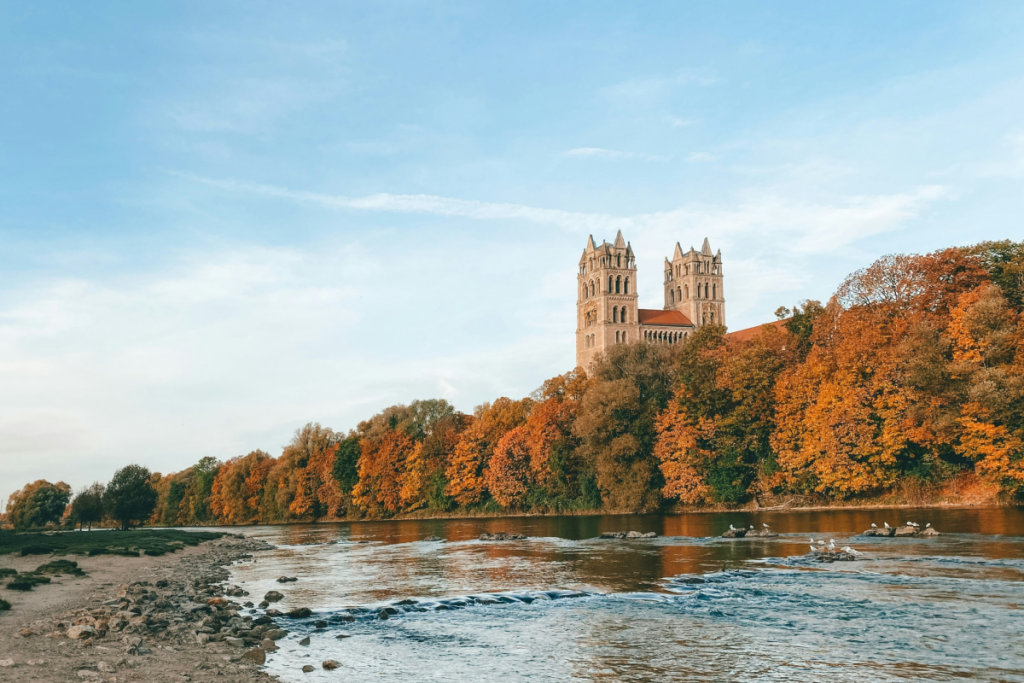
For those interested in sustainability, a short city excursion of just over two and a half kilometers is a great option. Start at the Wittelsbacher Bridge, whose seating steps are very popular in the summer. Continue past protected riverbank sections directly to the Flaucher, where you can enjoy the river’s clean, swimmable waters. Finally, at the Isarwerk, you’ll see how green energy production and nature conservation go hand in hand.
The Isar offers you the perfect blend of adventure and relaxation. Experience a refreshing raft ride down the Isar with music, a peaceful picnic on the gravel banks at Flaucher, or relaxed after-work drinks at the Kulturstrand on Museum Island. Discover idyllic spots like the Maria Einsiedel natural swimming area, enjoy the tranquility at the Marienklause, or gaze out over the water from the Rosengarten. On sunny days, you’re guaranteed to find your very own big-city vacation vibe here!