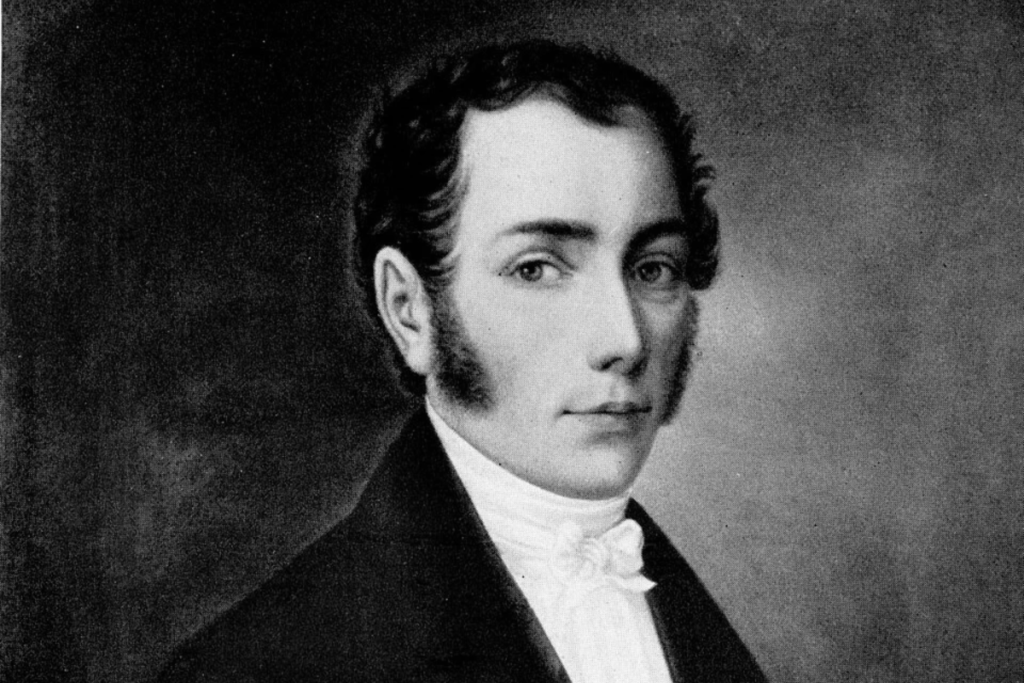

Munich is a city full of famous names, yet one of its most fascinating figures is scarcely known in detail even to many Munich residents: Joseph Fraunhofer (later Knight von Fraunhofer). Born in Straubing in 1787, he was orphaned at the age of twelve. His guardian sent him to Munich to begin an apprenticeship as a mirror grinder under his master, Philipp Anton Weichselberger. Reading books was strictly forbidden for the inquisitive apprentice.
But in July 1801 , a tragic event changed his life in an instant. His master’s dilapidated house in Munich’s Old Town collapsed. Fraunhofer lay trapped under the rubble for hours but was eventually rescued . Present during the rescue was none other than the Bavarian Elector Max IV Joseph, who gave the rescued Joseph 18 ducats. With this money, Fraunhofer bought his way out of his remaining months of apprenticeship, which marked the beginning of an unprecedented career.
A Milestone in Astrophysics: What Fraunhofer Discovered in Sunlight
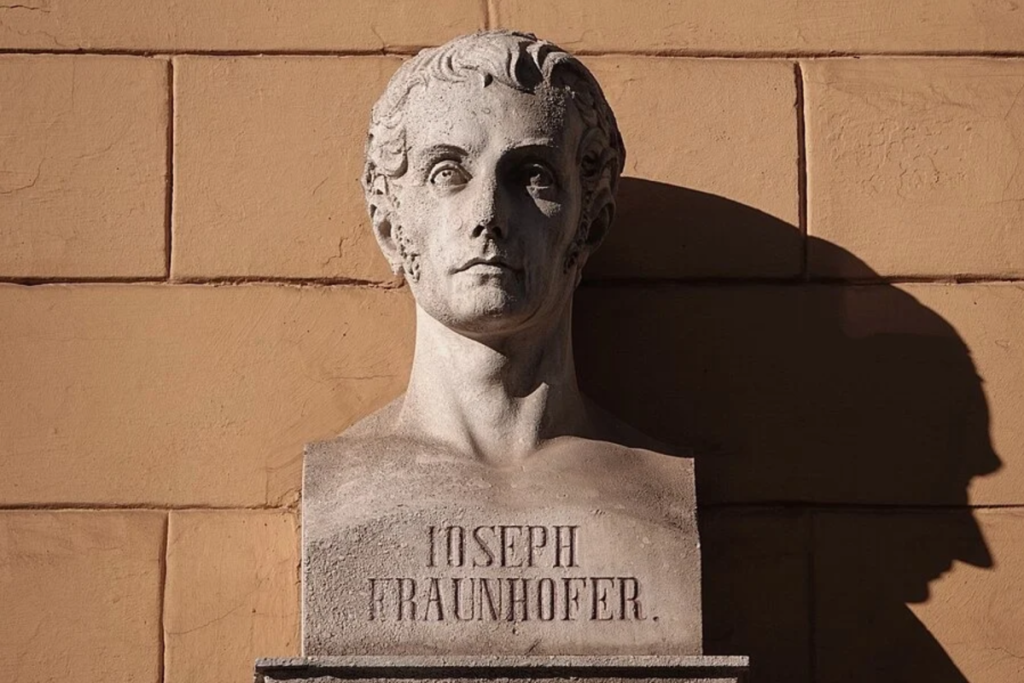
Supported by the entrepreneur Joseph von Utzschneider, the young self-taught man rose quickly through the ranks. At just 22 years old, he took over management of the glassworks at Benediktbeuern Abbey, where he made decisive improvements to grinding methods and glass types.
In 1814, Fraunhofer finally made his groundbreaking discovery using a spectrometer he had developed himself. While closely examining sunlight , he discovered hundreds of fine, dark lines. He systematically measured 574 of these solar spectral lines —a phenomenon still known today as Fraunhofer lines. In doing so, he laid the foundation for modern spectral analysis and astrophysics.
Fraunhofer’s precision instruments, such as telescopes and microscopes, gained worldwide renown. When the Optical Institute was relocated back to Munich in 1819, this exceptionally talented individual was appointed a full member of the Royal Academy of Sciences. The King of Bavaria finally ennobled him in 1824. That same year, he became an honorary citizen of the city of Munich.
Weakened by years of hard labor and toxic fumes, Fraunhofer died of tuberculosis in Munich in 1826 at the age of only 39. Today, a commemorative plaque at Weinstraße 3 in Munich marks the spot where his second life began amid the rubble. His lived principle of applied research continues to shape science to this day and makes him the proud namesake of the world-renowned Fraunhofer Society. On the occasion of the 200th anniversary of his death in 2026, the Fraunhofer Society will honor Joseph von Fraunhofer as a pioneer bridging science and practice under the patronage of UNESCO.