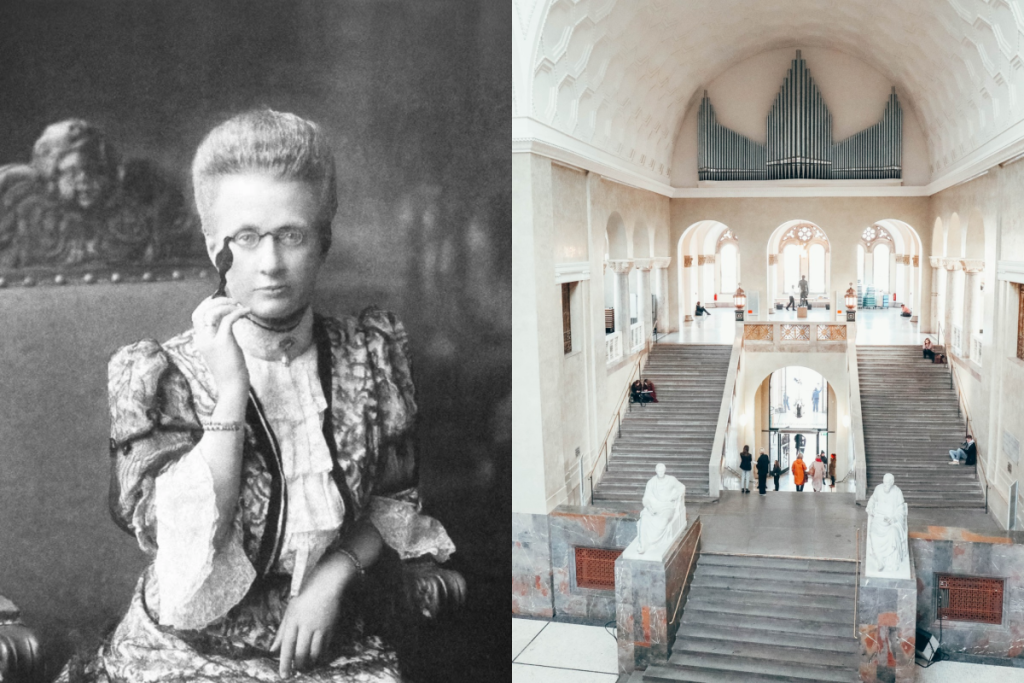

When people think of princesses, images of fairytale castles, magnificent gowns, and lavish balls likely spring to mind immediately. But not every princess lived like a character in a fairy tale, as Therese of Bavaria impressively demonstrates. She broke with many of the conventions that still applied to women and the nobility in the 19th century and stood her ground against her father. Despite her stubbornness, she managed to strike a balance between her royal duties and her own research work.
Therese, Thirsty for Knowledge

On November 12, 1850, Therese was born to Luitpold of Bavaria and Auguste Ferdinande of Austria. She was the only girl among four children and the sister of the future King Ludwig III. When she was just 13 years old, her mother passed away, so Therese, as the only daughter, tried to take on her mother’s role. This also included representing the family alongside her father, which was not easy for the young woman. When her cousin Ludwig II died under mysterious circumstances in 1886, Luitpold became Prince Regent, leaving him with less time to devote to his daughter.
Therese proved to be a bookworm from an early age and particularly enjoyed reading the reports of Alexander von Humboldt. She displayed a wide range of interests, for example in the fields of botany, zoology, and ethnology. Since women were still prohibited from attending high school or even university at that time, she taught herself everything. She undertook several research expeditions and, at the age of 27, persuaded her father to allow her to take math lessons. In 1903, he finally introduced women’s higher education in Bavaria, possibly inspired by his inquisitive daughter.
The Princess on a Research Expedition
Princess Therese was in love with Otto, the brother of Ludwig II. However, since he fell ill and lived in seclusion at Fürstenried Castle, the two never became a couple. Other marriage prospects were out of the question for Therese:
Thus, she remained alone and independent throughout her life, which enabled her to travel. At the age of 21, she set out on an expedition through Europe and North Africa, during which she learned 12 languages, which she mastered both spoken and written. She always presented herself as Countess Elpen and made do with simple means.
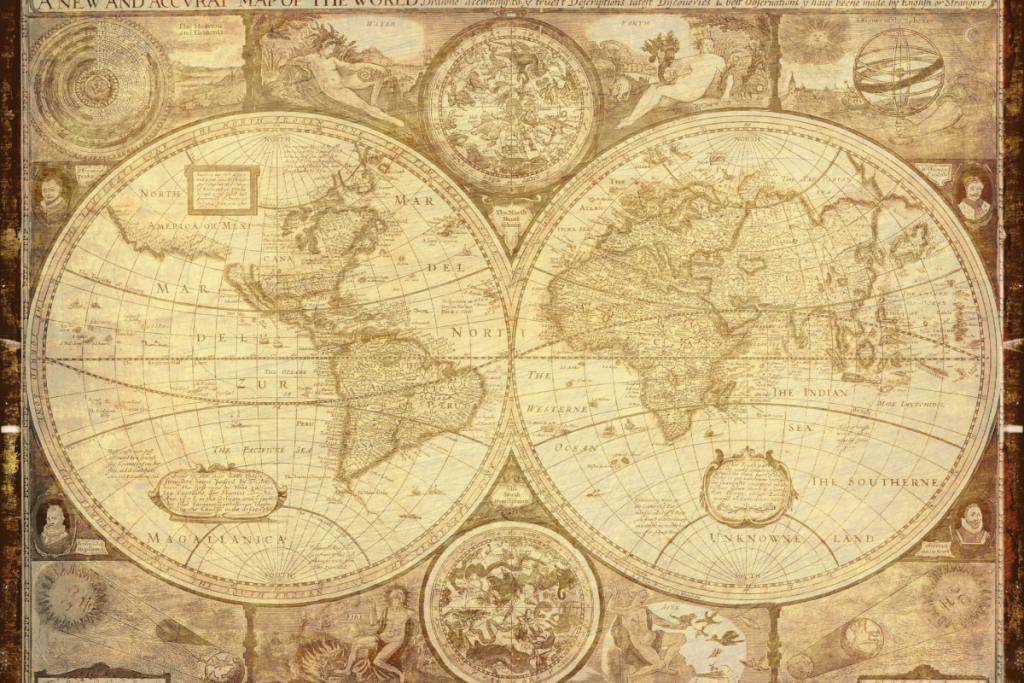
In the 1880s and 1890s, she traveled across the American continent, from the U.S. through the Caribbean to Argentina. She brought back a large number of artifacts from those trips, which you can see today in the ethnological collection of the Museum Fünf Kontinente in Munich, among other places. In 1897, she received an honorary doctorate from the Faculty of Philosophy at LMU for her self-directed studies and her pioneering work on behalf of women in science. One hundred years later, the university established the Princess Therese of Bavaria Prize, which honors the outstanding achievements of women scientists and researchers.
The Legacy of Therese of Bavaria

With the outbreak of World War I, which Therese opposed, the princess retired to Lindau, where she spent the rest of her life. After her death, she was buried in the Theatinerkirche, as were many other members of the House of Wittelsbach. The collection of her private library, which comprised some 11,000 works, was transferred to the Bavarian State Library. There, they are available to you for reading and research.
Since 2009, you can find Therese’s bust in the Ruhemshalle behind the Bavaria statue above the Theresienwiese. Streets in both Neuperlach and the Botanical Garden are named after her, and there are several schools that bear her name. In Lindau, you can also take a stroll through Therese-von-Bayern-Platz. The Therese Keilschwanz iguana, found in Peru, also owes its name to the fearless princess, who never let herself be intimidated by the conventions of her time.