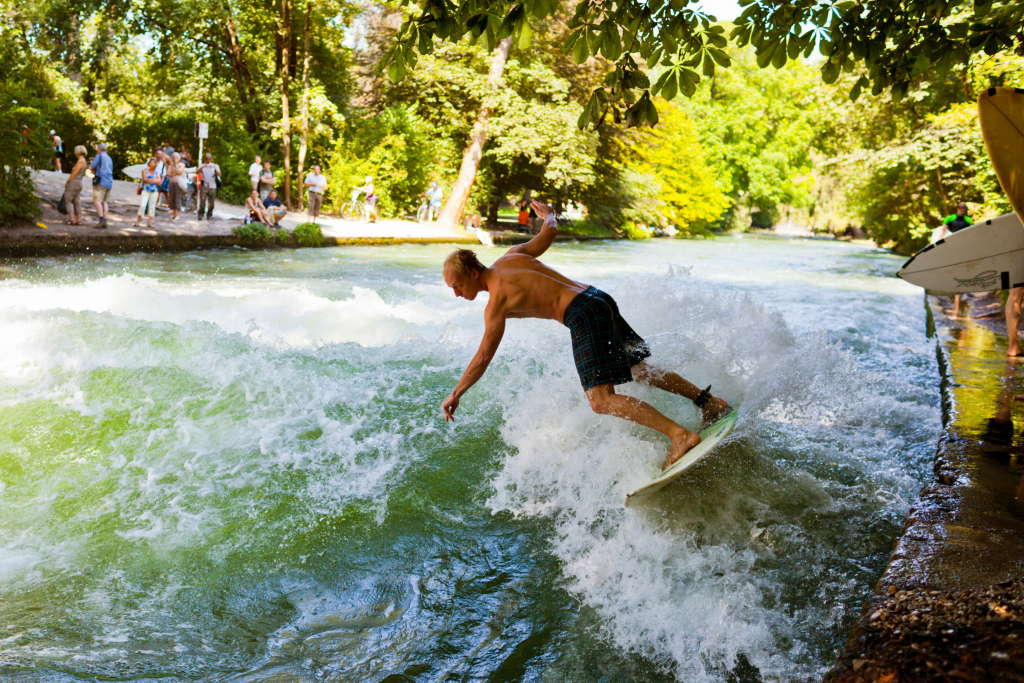

It’s a popular spot for onlookers, tourists, and surfers alike: the Eisbach wave in the English Garden. When it suddenly disappeared last fall, the city and the surfing community alike were left puzzled. No one seemed to know exactly how to bring it back, because no one knew exactly how the wave had originally formed. In the meantime, quite a bit has come to light about the origins of the Eisbach wave, which is now one of Munich’s most iconic landmarks.
The Accidental Surf Spot
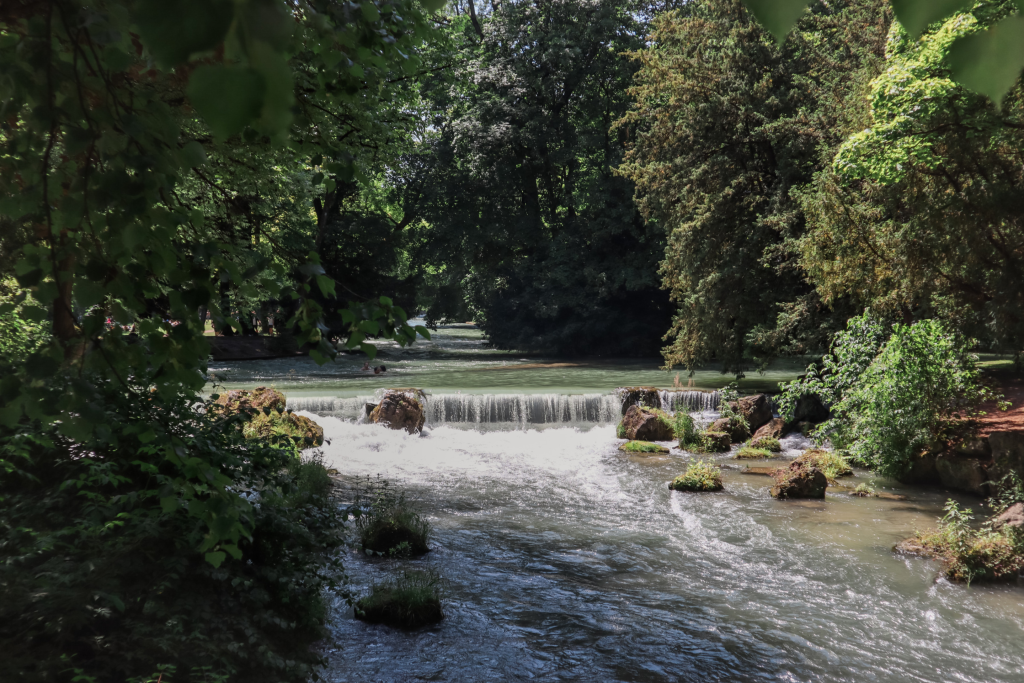
Although the nearest coastline is hundreds of kilometers away, people in wetsuits carrying surfboards are not an unusual sight in Munich. They’re on their way to the Eisbach wave, which attracts surfers from all over the world who come to ride it. After it fell victim to the major stream cleanup last year, every effort was made to rebuild it. A great deal of research was conducted, and the origins of the Eisbach wave were thoroughly investigated. After all, it isn’t nearly as natural as some people assumed.
In the 1970s, the city of Munich reportedly sank concrete blocks into the Eisbach to slow its current. Depending on the river’s flow, this created a flowing wave that formed on 20 to 30 days a year. According to an urban legend, an American soldier was the first to ride it while stationed in Munich, thereby inventing Eisbach surfing. However, Werner Strasser is considered the true creator of the wave as we know it today. He installed a metal rail in the stream bed, which stabilized the wave. In doing so, he permanently created an iconic surf spot that had originally come about by accident.
The Eisbach Wave Today

Over the years, additional structures were added until, eventually, enough sediment had accumulated that they were no longer needed. The Eisbach wave stood on its own and has gained worldwide fame. Even Jack Johnson and Garret McNamara have taken a ride on it. In 2010, the city of Munich legalized surfing on the Eisbach wave, which by that point had already been a tradition for decades. After it was rebuilt this past spring, it was reopened following a months-long hiatus.
If you’re surfing the Eisbach wave yourself, you must comply with the applicable general order. This means you’re only allowed to surf between 5:30 a.m. and 10 p.m. and should wear no leash or a self-releasing leash. Furthermore, you should only venture into the water if you’re an experienced surfer and have someone watching you from the shore. Otherwise, a trip to the Eisbach wave to watch is, of course, always worth it.