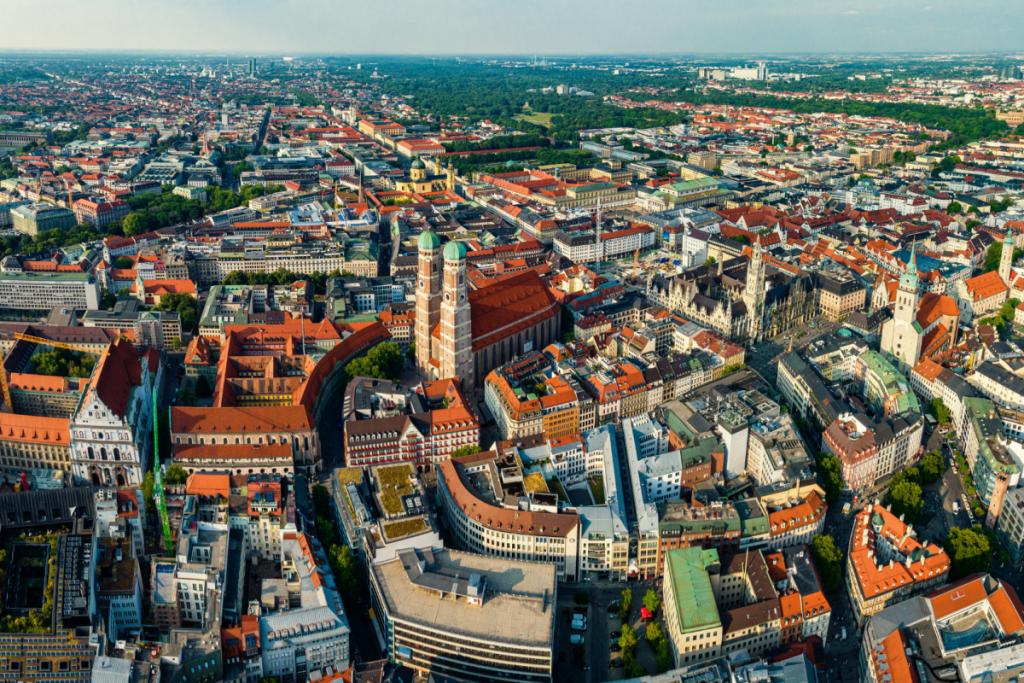

Have you ever wondered why it’s so extremely difficult to find an affordable apartment in Munich? Or have you ever been surprised by the absurdly high prices for overnight stays in Munich during Oktoberfest? A major reason for this often lies in accommodations that are permanently rented out to tourists instead of serving as regular living spaces. Whether it’s simple rooms for hundreds of euros or apartments for around 1,000 euros per night, especially during Oktoberfest , the prospect of making a quick profit off Oktoberfest guests drives prices to absurd peaks. It is precisely this practice that is exacerbating the situation in Munich’s already tight housing market. To give cities and municipalities more leeway in restricting short-term rentals, the European Commission is introducing new, uniform criteria. In Bavaria , these plans are already meeting with broad approval.
Tense Situation on the Munich Housing Market
The new EU rules are intended to make it easier for local authorities to legally restrict rentals to tourists in the future. EU Commissioner for Energy and Housing, Dan Jørgensen, emphasized during the presentation of the draft that ordinary workers, such as teachers or caregivers, often can no longer afford to live in the same places where they work. The Munich Tenants’ Association and the Bavarian branch of the German Tenants’ Association, led by Executive Director Monika Schmid-Balzert, expressly support the move. Furthermore, Munich is already considered the most expensive city in Germany for renters. According to the Munich Tenants’ Association, asking rentshave already risen by half over the past 10 years.
The problem of residential properties being used for non-residential purposes and sublet to tourists isn’t limited to Munich—or even to Germany. Through platforms like Airbnb, Booking.com, or Check24, apartments in a wide variety of tourist areas can be rented out on a short-term basis at significantly higher prices than would be the case for normal rental units. However, this type of profit maximization results in regular housing being taken away from the local population.
Mandatory Registration and 8-Week Limit
Even today, the state capital could attempt to curb illegal vacation rentals through the Bavarian Misuse of Property Act. In Munich, however, the rule is that an entire dwelling may be rented to vacationers for a maximum of eight weeks per calendar year without a permit. Those who rent out individual rooms in their own homes usually do not even fall under this time limit. The main challenge for city officials, however, has been enforcement, since platforms generally do not disclose landlords’ addresses.
Similarly, many municipalities lack information on how many apartments are being offered through booking platforms. A mandatory registration requirement is intended to change that. While other Bavarian municipalities, such as Oberstdorf and Regensburg, also welcome the plans, criticism has come from the German Vacation Home Association. Director Michelle Schwefel points out that vacation rentals make up only a fraction of the total housing stock and that the main causes of the crisis lie more in high construction costs and a lack of new construction.
In any case, all Munich tenants can only hope that the new regulations will provide some relief on the local housing market in the future.