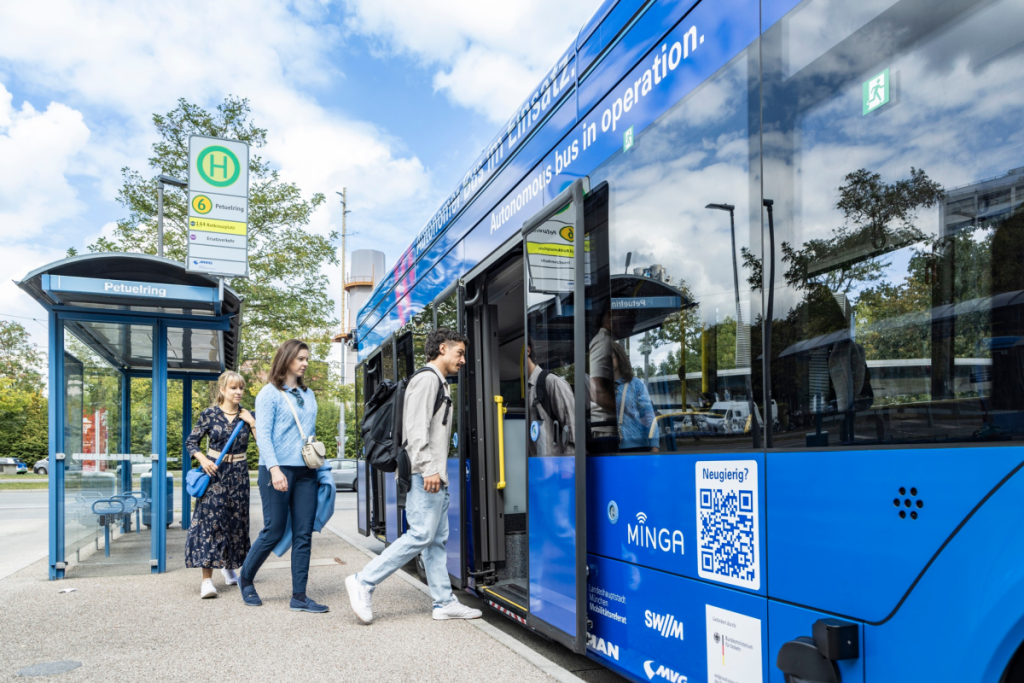

A bus with no one at the wheel, but not without people on board: Starting November 17, the first test users in Munich will board the autonomous electric bus on Line 178. It runs Monday through Friday between Petuelring and Freimanner Hölzl. Approvals from TÜV and the Federal Motor Transport Authority (KBA) have been granted. The MINGA research project is behind this pilot program. MAN Truck & Bus, SWM together with MVG, and the Mobility Department of the City of Munich are jointly operating it. The pilot program with test users is scheduled to run through June 2027.
Here’s how the ride works
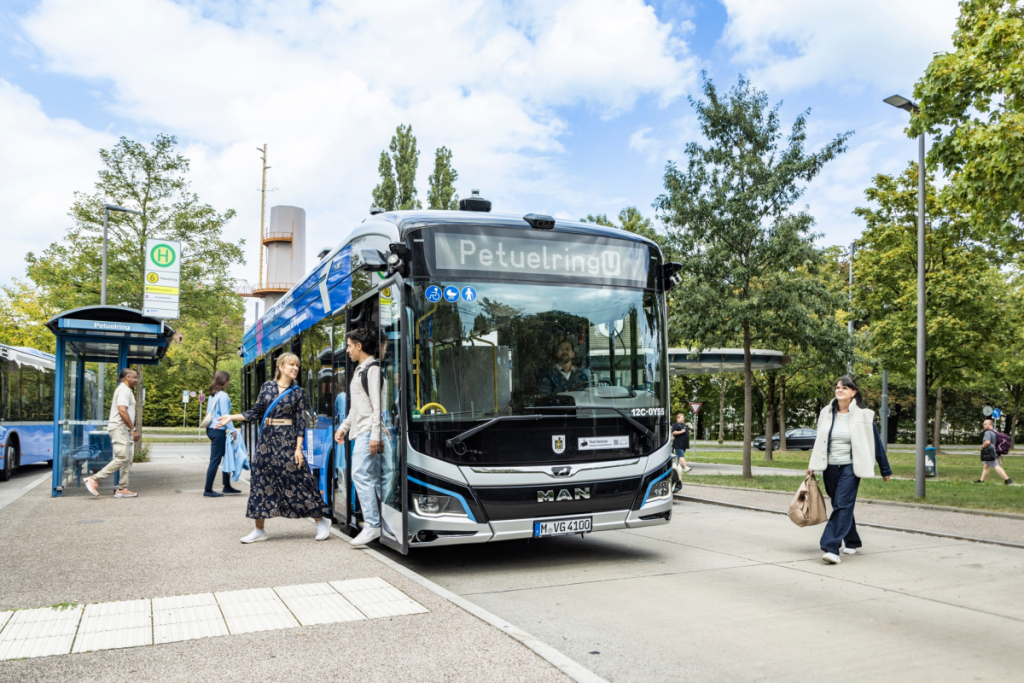
The 12-meter-long MAN Lion's City 12 E operates as an additional vehicle on the existing Line 178 and simulates its future use in regular service. The route offers a wide variety of conditions: major thoroughfares, 30-km/h zones, parking areas, and underpasses. The bus has about 30 seats and one wheelchair space.
Only people from a closed user group can ride along. Anyone who would like to participate can sign up for a waiting list on the MVG website (to register). All further information will be provided via email. Interest is high: Over 2,000 pre-registrations have already been received.
Safety drivers remain on board. Throughout the entire project, trained personnel are in the vehicle at all times and can take over control immediately. The bus steers, accelerates, brakes, and signals on its own. This is made possible by five LiDAR sensors, six radars, eight cameras, and satellite-based positioning. The automation technology is provided by MAN and its technology partner ADASTEC.
The bus has been running on Route 178 since early September, so far without passengers. During this time, the teams collected extensive route data. Prior to this, the vehicle had completed a test program on the MAN campus. The new test runs now represent the next important step in the project toward putting the bus into regular service on the road.
Science Comes Along for the Ride
TUM and the University of Stuttgart are monitoring the test operation of the autonomous electric bus. They survey passengers before and after the ride to gather their impressions and assess their sense of safety. On selected trips, observational studies and interviews are also conducted. Special attention is also being paid to accessibility.
For MVG, the key question is: Can autonomous buses be reliably and economically integrated into regular scheduled service? With this 12-meter vehicle, the company is testing a size suitable for regular bus operations for the first time. Cities are growing, there’s a shortage of drivers, and autonomous systems are expected to help ensure service availability. And it’s not just public transit that’s moving in this direction. Ride-hailing services like WAYMO and Uber also want to test autonomous taxi rides in Munich.