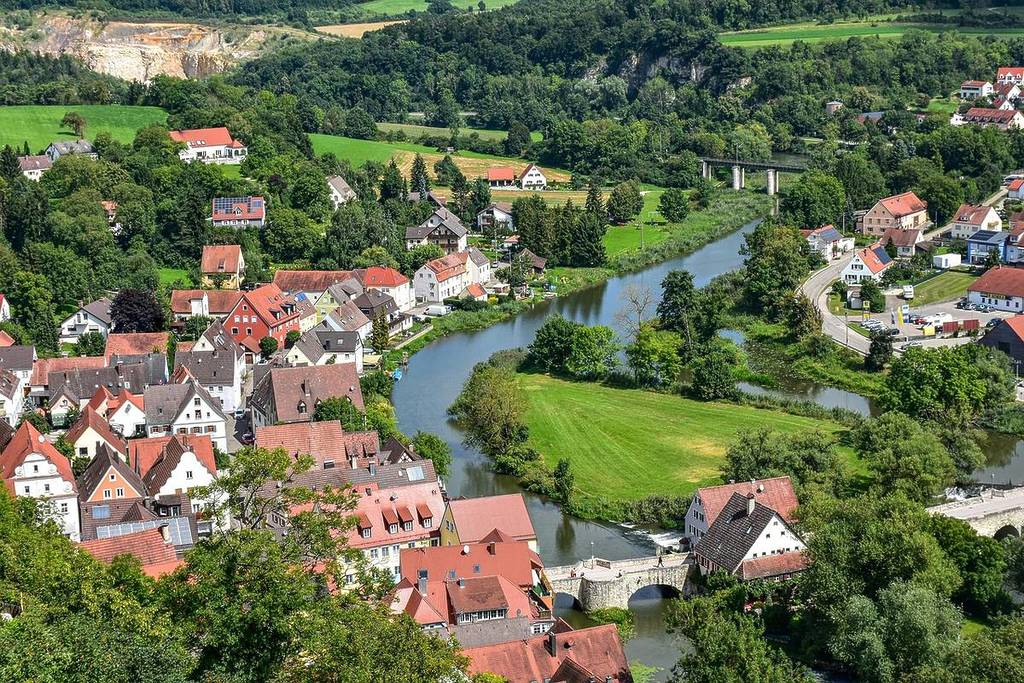
There is no shortage of castles and palaces in Bavaria. Whether it’s a cave castle or a Sleeping Beauty castle, you can enjoy a wealth of different buildings with a long history. While some castles have unfortunately not survived, such as the Phetine in Landsberg an der Lech, others are all the better preserved. This also applies to this stronghold in Swabia, which towers over a picturesque small town on the Wörnitz River and gives it the nickname “castle town.”
The steadfast stronghold
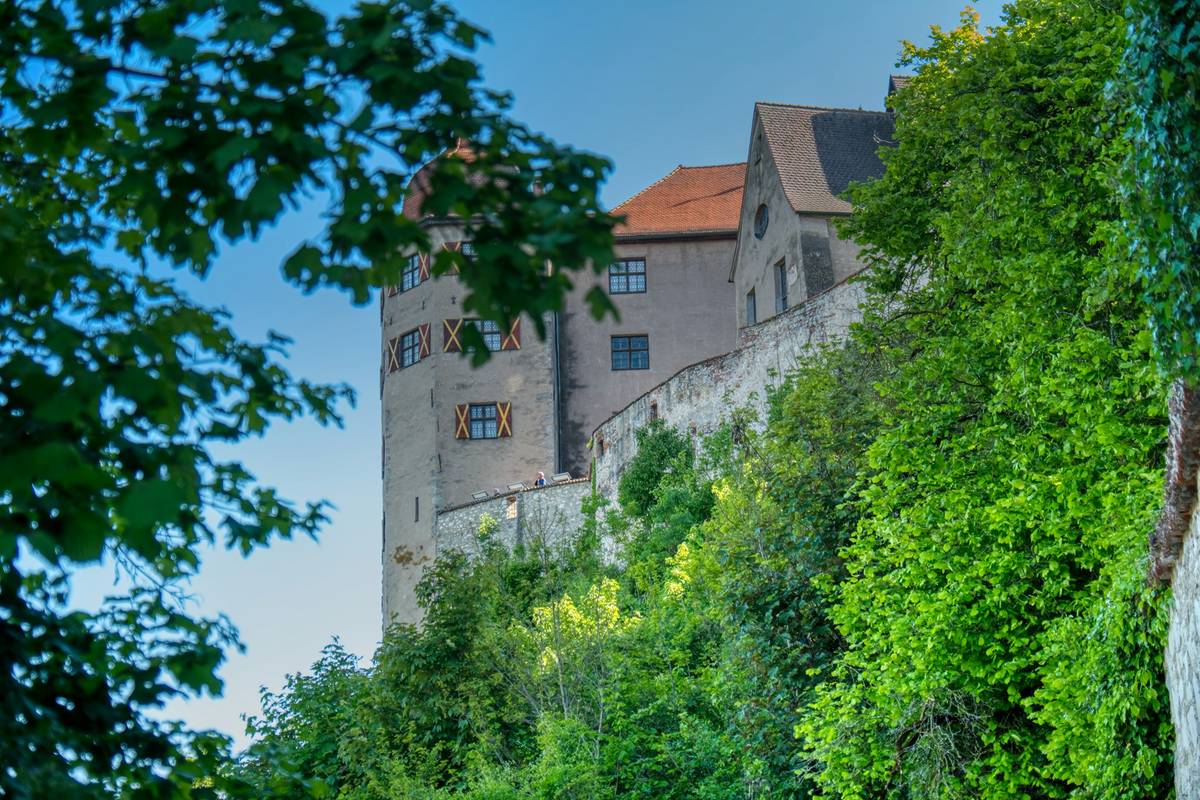 Photo: Sascha Oberman/Unsplash
Harburg in Swabia is located between Nördlingen and Donauwörth near the Ries crater. The town is located at the transition between the Swabian Alb and the Franconian Jura and has an elevation difference of 160 meters. Elevation is a good keyword, because the Harburg Castle of the same name is located at this height. It initially developed independently of any settlement, which was extremely rare in the Middle Ages. It was only later that the town that belongs to it today was built.
Unlike other castles, it survived the Thirty Years’ War largely unscathed, but it was not entirely spared from structural changes. In the 18th century, it was to be converted into a baroque residence, which happened with the castle church, the prince’s building, and the hall building with the tower. The rest of the castle remains unchanged and retained its defensive character. Today, you can visit Harburg Castle from mid-March to November and take a guided tour of the castle. But even outside the season, it is worth climbing up to the castle to see it from the outside and view the town from above.
But be warned, because the devil is said to be up to mischief on the Schlossberg. Once upon a time, an abbot from Kaisheim Monastery was supposed to free the possessed daughter of the Duke of Carinthia. He succeeded in exorcising the devil from her and then locked it in a glass jar. The monks kept this jar in their monastery for 200 years before lightning struck it and broke it. The devil was able to escape and settled on the slope of the mountain on which Harburg Castle is located.
Fairytale Harburg
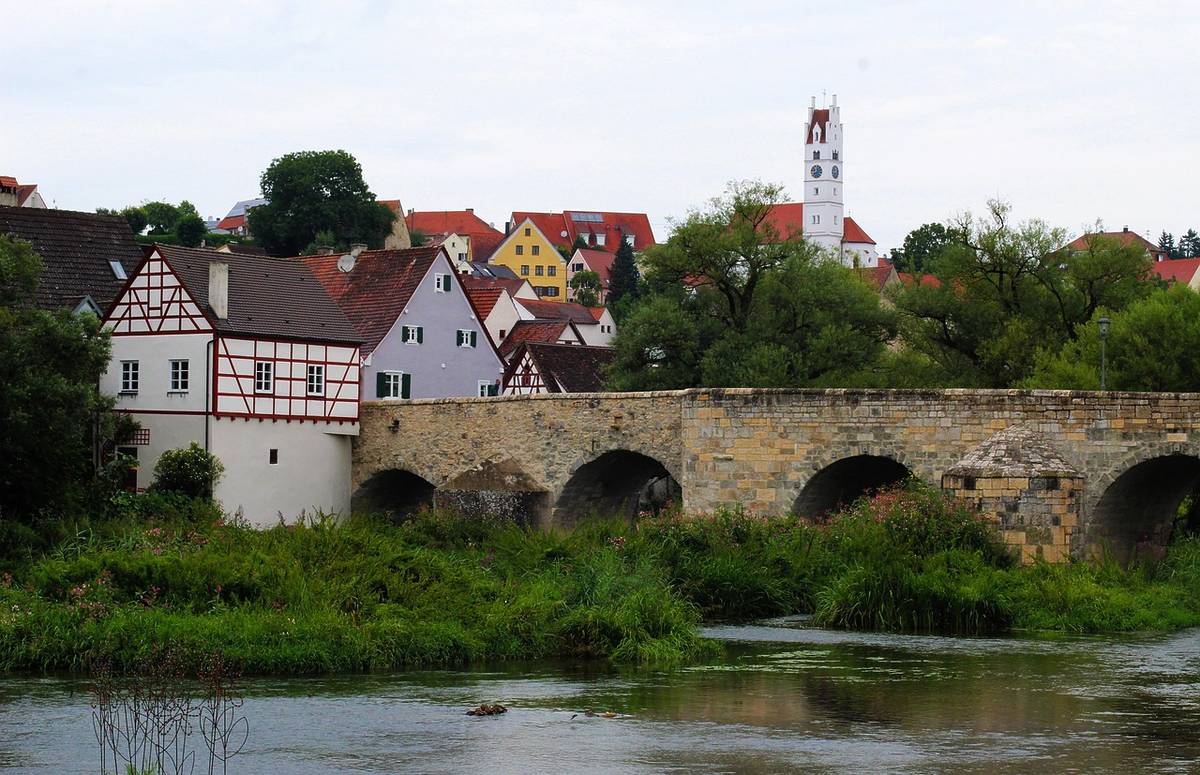 Photo: Pixabay
Harburg also has other sights to offer. The stone bridge, which the locals refer to simply as “alte Bruck” or “Bruck,” is another landmark of the town. For a long time, it was the only way for passers-by to get from one bank to the other without getting their feet wet. The Fairy Tale Trail leads you across the bridge and to the market square, and from there to St. Barbara’s Church and up through the fairy tale forest to the castle. From May to October, you can walk this circular trail, along which various fairy tales are told and brought to life in pictures.
You should also make a detour to the bronze fountain on the market square. It is about three meters high and divided into three levels. The lower basin is marked by the guild symbols of the crafts that were once common in the city, including farriers, coopers, and fishermen. The middle basin shows the city’s history and the upper one shows the castle. At the top sits the blood bell, the original of which hangs in the town hall and was once used to announce death sentences. The town hall is also located on the market square.
Harburg used to have several city gates, five in total. These were gradually demolished between 1861 and 1863, officially because they were too expensive to maintain. It later transpired that people simply no longer liked the gates. Today, you will find commemorative plaques in their place. Harburg never had a city wall, as it is almost completely surrounded by house walls. From Munich, you can reach Harburg in about 90 minutes by car via the A96. It takes about the same time to get there from Pasing on the RB89 towards Ebermergen.