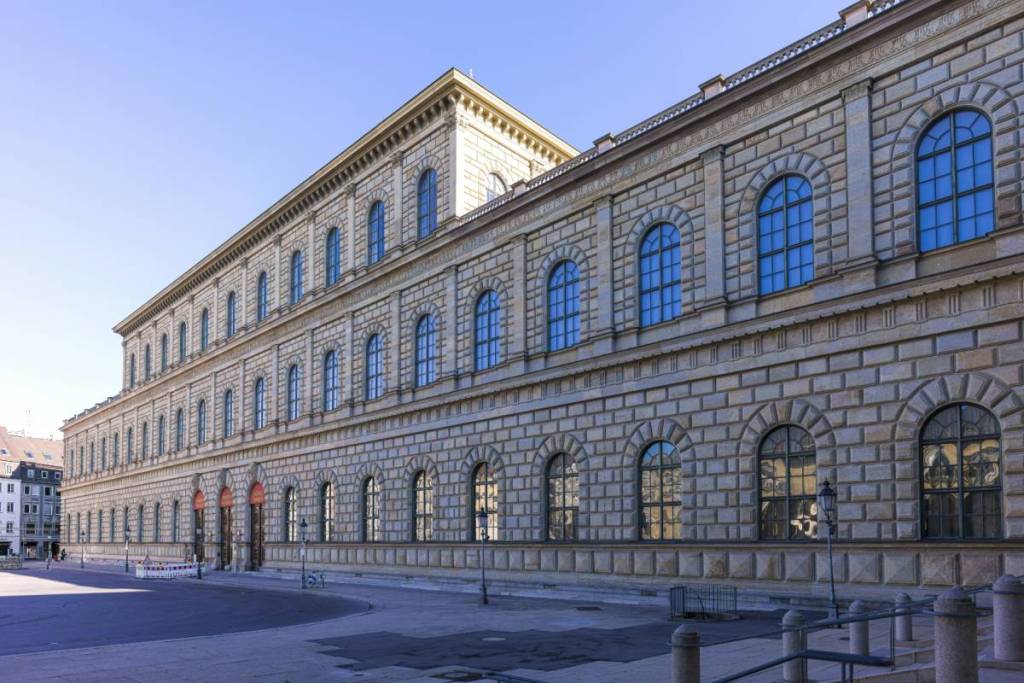

Did you know that Germany’s largest inner-city palace is located right in the heart of Munich ? The Munich Residenz not only invites you on a unique journey through time across several eras, but remains a vibrant venue for numerous cultural events to this day. A visit is therefore well worth it in many ways.
For centuries, the Residenz was the home and center of power of the Wittelsbachs, the Bavarian ruling dynasty. Today, you can explore the former royal residence as one of Europe’s most significant cultural complexes . The ten inner courtyards are particularly fascinating: each tells its own story, dates from a different era, and serves a distinct purpose. Together, they make the Residence appear like an architectural puzzle that has evolved over the centuries.
A journey through time across five eras
On a tour of the Munich Residenz, you’ll experience over 400 years of history of the Wittelsbachs—one of Europe’s oldest and most influential noble families—as well asfive distinct architectural eras. Over the centuries, the family repeatedly expanded the palace complex and adapted it to the tastes of the time. This led to the creation of buildings and magnificent rooms in the Renaissance, Baroque, Rococo, and Neoclassical styles. Each era reflects the vision and aspirations of the respective Wittelsbach rulers—from artfully designed courtyards to impressive art collections. Step by step, the former fortification thus evolved into Germany’s largest inner-city palace and one of Europe’s most significant cultural complexes.
Highlights of the Munich Residenz
More than 150 magnificent halls
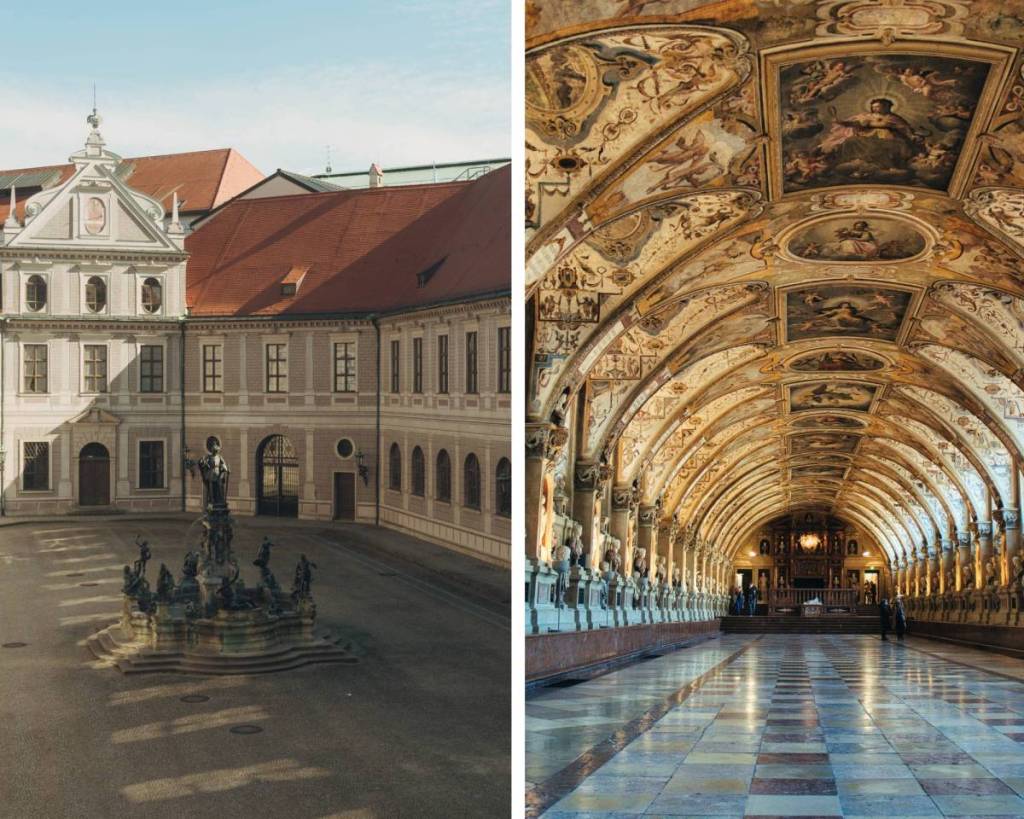
At the Munich Residence, you can marvel at more than 150 magnificent rooms. The impressive Antiquarium —the oldest part of the palace—is particularly eye-catching. This magnificent Renaissance hall initially served as an exhibition space for ancient sculptures before Duke Wilhelm V transformed it into a sumptuous banquet hall. In addition to the Baroque Imperial Hall, the Rich Rooms from the Rococo period, and King Ludwig I’s Neoclassical apartment, another highlight awaits: the Treasury. Here you can marvel at around 1,500 exhibits , including the precious regalia of the Bavarian kings.
The 10 Unique Courtyards
The ten inner courtyards of the Munich Residenz were created over the centuries as the Wittelsbachs expanded the palace. While the service courtyards (Kitchen, Powder, Chapel, and Committee Courtyards) served practical purposes, the ceremonial courtyards reflect the changing eras. The Pharmacy Courtyard marks the castle’s medieval origins, while the fascinating Grotto Courtyard, with its shell-covered wall, celebrates the Renaissance. In the Royal Building Courtyard, Rococo and the Classicism of Ludwig I’s era converge. Today, the idyllic Cabinet Garden provides a serene contrast.
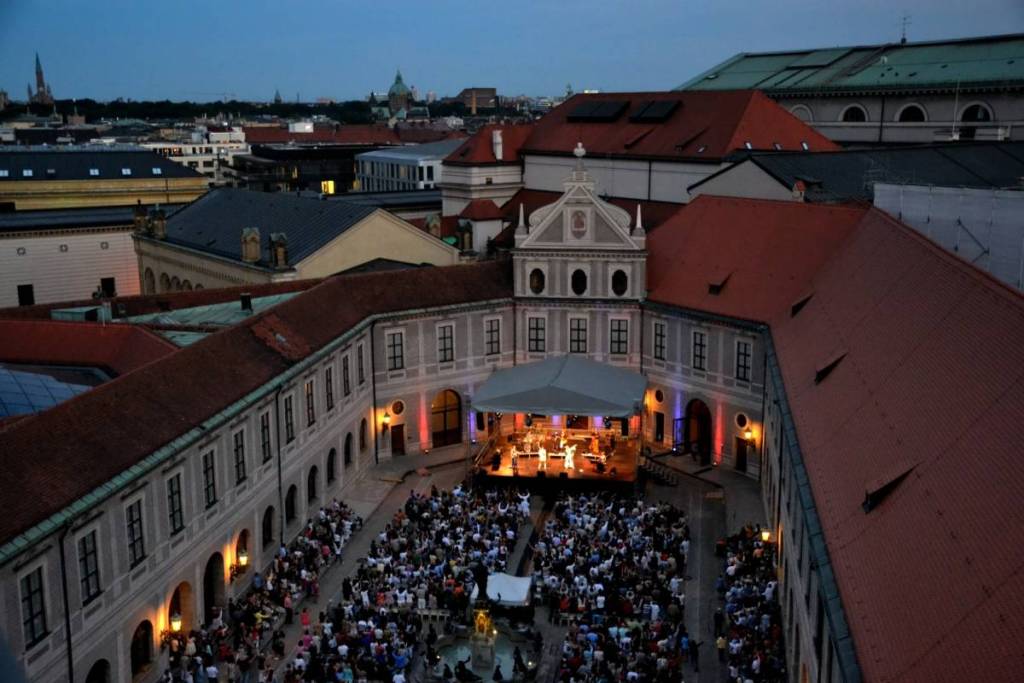
The monumental Brunnenhof once served as the logistical center of the Residenz and today provides an atmospheric backdrop for concerts. The strictly symmetrical Kaiserhof was reserved exclusively for the emperor during the Baroque period , and its impressive architecture provided the setting for lavish court festivities and tournaments. Today, the open-air events held there are open to everyone and delight a wide variety of tastes with a diverse program . A special highlight is the Munich Open-Air Concert Series, which creates a unique “dolce vita” atmosphere every summer.