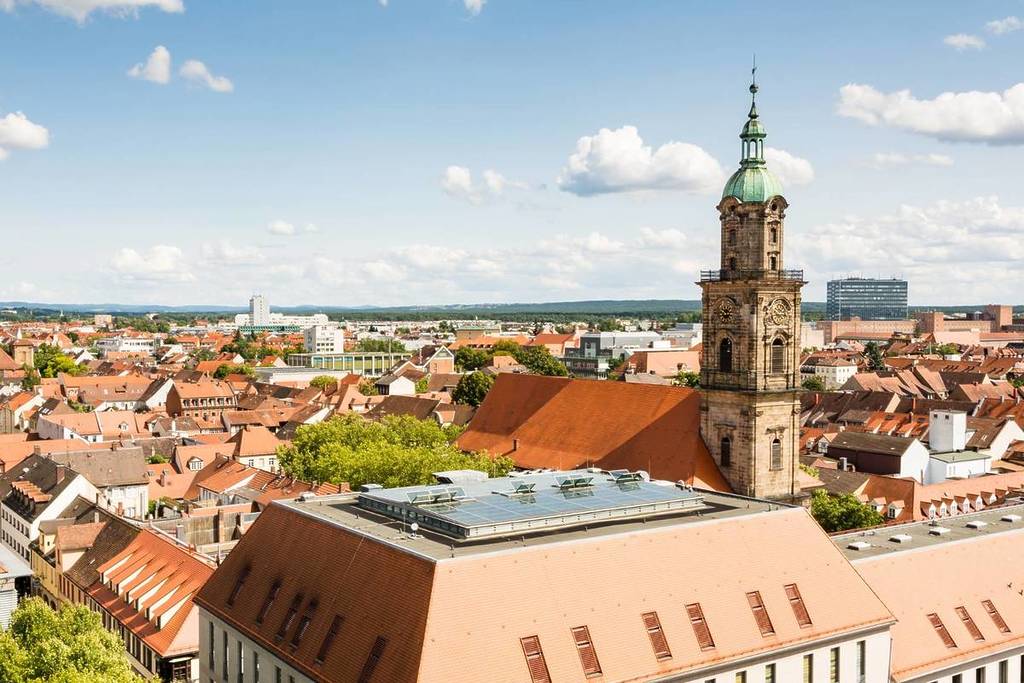

Strolling through the streets of Munich, you discover one Art Nouveau gem after another, and on grand boulevards like Ludwigstraße, one impressive building follows another. But other Bavarian cities also have impressive architecture to offer and have nothing to hide. Erlangen is known for its Baroque buildings and also boasts a wealth of other attractions.
From a villa to a planned city
The history of Erlangen stretches back over 1,000 years, to when Villa Erlangen was first established—a term that at the time still meant “village.” In 1431, the town fell victim to the Hussite invasion and was destroyed for the first time. Over the centuries, Erlangen would suffer this fate many more times, until little remained of it after the Thirty Years’ War. As part of the reconstruction, the town was laid out as a planned city following the golden ratio.
In 1868, construction began on the first 50 of a total of 200 houses, which were to follow the plan of Johann Moritz Richter. In 1700, the Margrave’s Palace was built, transforming Erlangen into a royal seat. Six years later, the old town burned down and was rebuilt as a planned city modeled after the new town, so that the structure of the old town is actually newer than that of the new town. It is characterized by wide, straight streets with houses no more than three stories high, all of which have similar Baroque facades. In the old town, however, you’ll find a somewhat more individual style of architecture.
Erlangen: A Place of Diversity
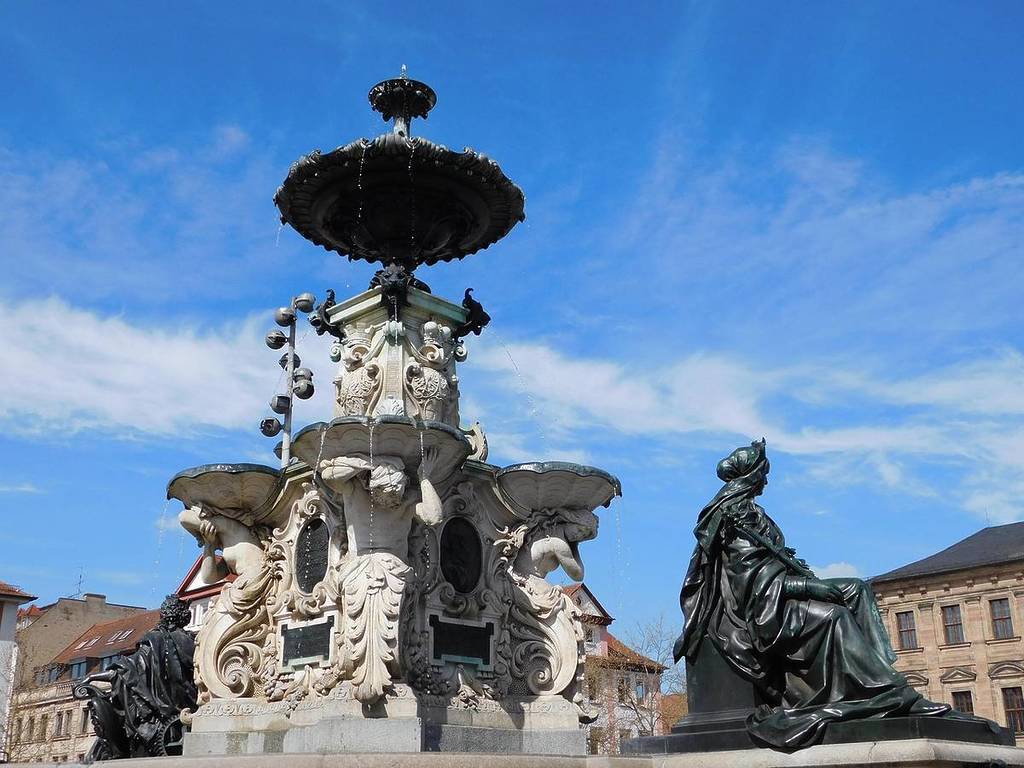
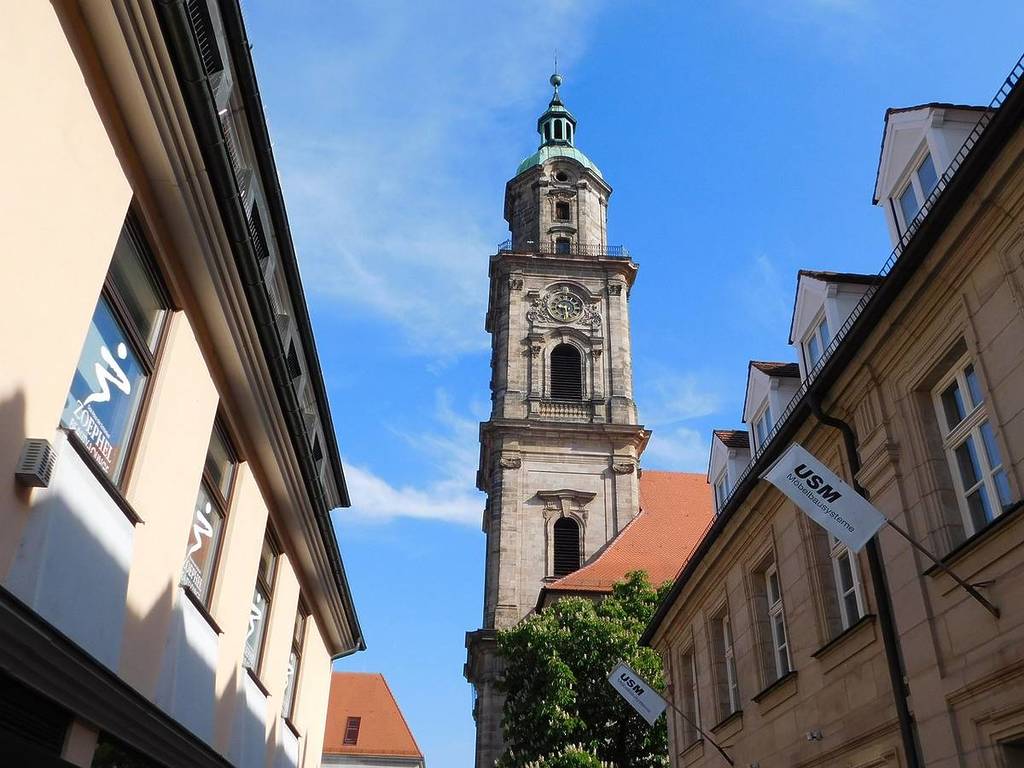
Erlangen is considered one of the best-preserved Baroque planned cities in Germany and is worth a visit for that reason alone. In the heart of the Neustadt ensemble, you’ll find the castle with its spacious castle gardens and the Huguenot Fountain. The grounds are a particularly magnificent sight in spring, when flowers of the most vibrant colors bloom everywhere. Adjacent to the palace gardens is the botanical garden, which you can visit for free. Erlangen also boasts various palaces and churches for you to explore, such as the Huguenot Church, whose tower you can climb. Don’t miss the Palace and Market Square with its imposing Pauli Fountain!
The Burgberg is also a must-see if you find yourself in Erlangen. Whether there was ever a castle here remains unclear to this day, but you’ll still find the city’s oldest building here: the Burgberg Chapel. The hill is also home to the former beer cellar and remains the venue for the legendary Bergkirchweih festival. If you’re in the mood for a bit of culture, stop by the magnificent Margravial Theater, Germany’s oldest Baroque theater still in use. Erlangen has all this and much more to offer, which is why it rightfully bears the title “City of Diversity.”