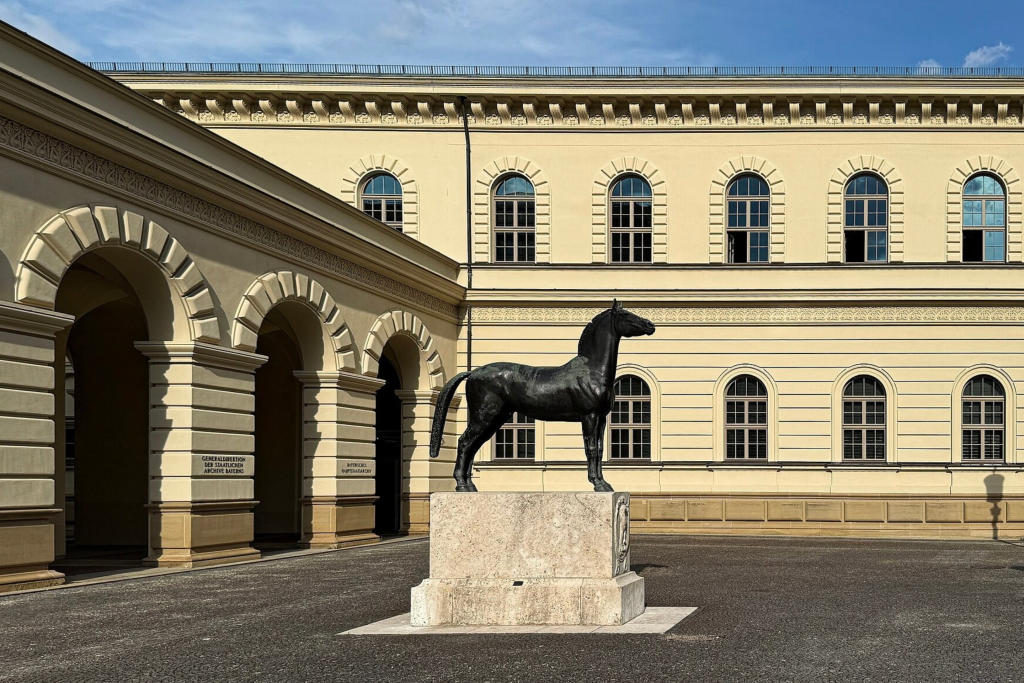

The building of the Bavarian State Archives on Schönfeldstraße is an imposing sight. Where the history of our state is documented today, there once stood the bank of a fraudster well-known throughout the city. Adele Schönfeld took advantage of people’s financial hardship and entangled tens of thousands in a pyramid scheme. She thus went down in Munich’s history as a notorious fraudster.
From Actress to Banker
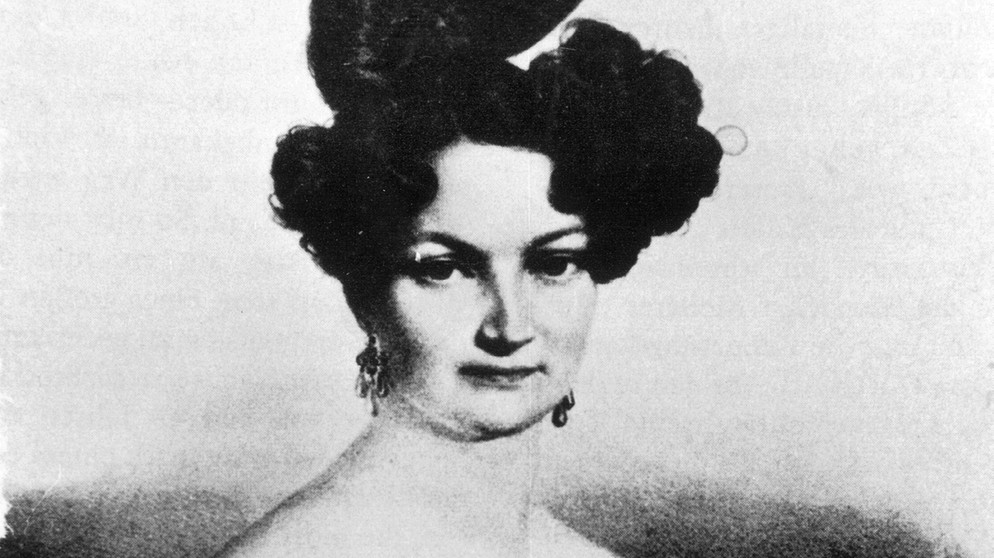
Adele Spitzeder was the daughter of Josef and Betty Spitzeder, who both worked as actors and singers. At first, Adele followed in her parents’ footsteps and also tried her hand at performing on stage as a folk singer and actress. Despite engagements throughout Germany, she failed to achieve great success—and thus, financial gain. And so it came to pass that in 1896, while talking with a poor carpenter’s wife, she had a clever idea. She promised the woman 30% interest in one month if she entrusted her savings to her; she would receive the first 20% immediately. The poor woman agreed and gave Adele 100 guilders, of which she got 20 guilders back.
Secret Munich is now on WhatsApp! Follow us for the best plans and events in our city
And so the Spitzeder Private Bank was born, which Adele initially operated from her hotel room. Instead of actually investing the money profitably and growing it, she simply paid out the interest using deposits from other customers— a classic pyramid scheme. Since she paid out the interest directly in cash, there was a huge rush of customers. Thanks to both word of mouth and five-figure payments to the press by Adele Spitzeder herself , her bank quickly became the talk of the town. Eventually, she opened a full-fledged branch at Schönfeldstraße 9 near the English Garden, which she had previously had extensively renovated. At its peak, the bank employed 83 people and processed more than 1,000 bills of exchange a day.
The End of the Spitzeder Private Bank

While some farmers even sold their farms to live off the interest, Adele Spitzeder herself purchased several estates throughout Bavaria. She portrayed herself as a benefactor, made donations, and opened the soup kitchen at the Platzl. However, she could not keep up the facade for long, and more and more voices grew louder, calling her a fraud. When 60 creditors finally demanded their money all at once, the scam was finally exposed. The bank was unable to pay, and in November 1872, Spitzeder was arrested. She had committed the first documented Ponzi scheme in Germany —and likely even in the world.
Adele defrauded more than 32,000 people out of a total of 38 million guilders and even ruined entire communities through her schemes. She served her sentence in the prison on Baaderstraße and, after her release, tried her hand at folk singing once again. She died of heart failure in 1895 and has been buried at the Old South Cemetery ever since. Her bank on Schönfeldstraße is now part of the building complex that belongs to the Bavarian State Archives. Here, approximately 4.1 million archival records document the history of the Free State of Bavaria and are available to you for research purposes upon registration.